
-
Read 550
-
0
-
Part 37
Completed, First published Mar 02, 2026
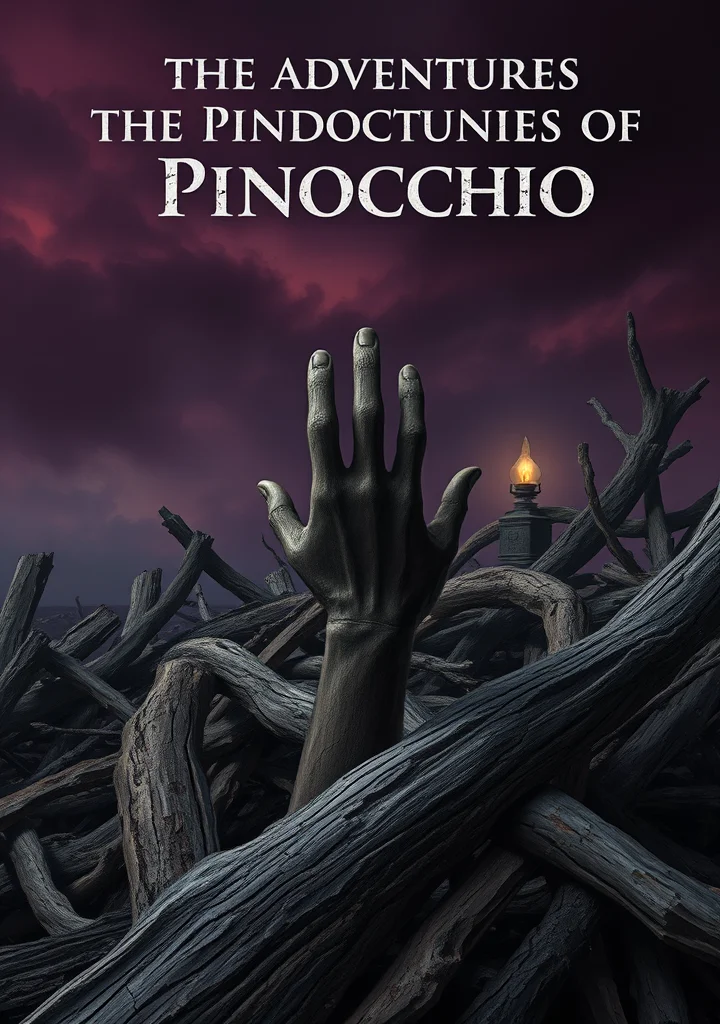
Beneath a sky perpetually bruised plum-color, a wood carved with shadows of regret, this is not a tale of simple boyhood, but of a creature born of splinters and silence. The scent of sawdust and brine clings to every page, a melancholic perfume rising from the coastal towns where Pinocchio’s limbs stumble into being. Each lie he utters is not merely deception, but a splinter lodging deeper within his wood, twisting his form into grotesque parodies of life. The puppet’s journey is a descent into a labyrinth of avarice and regret, where every gilded promise is laced with tar and every kindly face conceals a hunger for the boy’s impossible currency.
The puppet theater itself breathes with a suffocating claustrophobia, its velvet curtains swallowing light and hope. The sea, a ravenous maw, laps at the shores of morality, pulling Pinocchio towards abyssal depths. Transformation is not reward, but a grotesque blooming—first a donkey’s stubborn grief, then a scaled, suffocating rebirth. The Blue Fairy is a phantom of fragile porcelain, her kindness a brittle, icy reprieve. The world is stitched together with threads of desperation, where a boy’s hunger is mirrored by the hollow gnawing within the heart of Geppetto, and where every step forward echoes with the cracking of wood, the inevitable splintering of innocence. It is a story not of becoming human, but of being irrevocably, beautifully *made* of sorrow.
Copyright: Public Domain
This license allows anyone to use your story for any purpose, including printing, selling, or adapting it into a film freely.
This license allows anyone to use your story for any purpose, including printing, selling, or adapting it into a film freely.
Recommended for you