
The Cartographer Of Ghost Maps
  • 74
  • 0
  • 10
  • Read 74
  • 0
  • Part 10
Ongoing, First published May 01, 2026

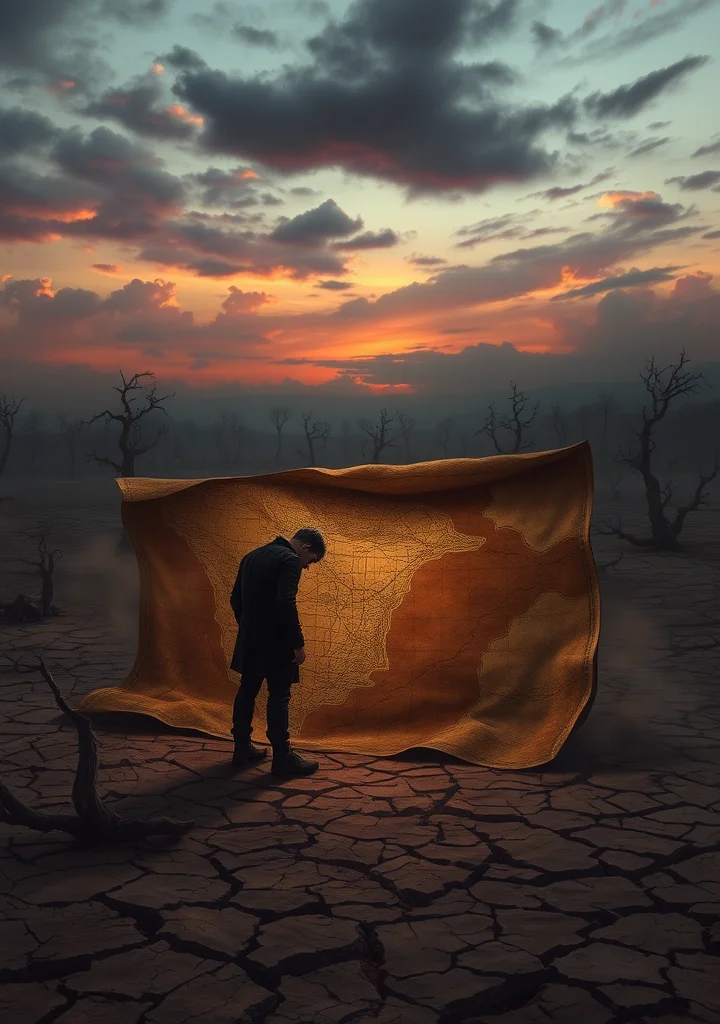
The story opens onto Elias as he uncovers a mysterious map hidden within his father’s belongings, sparking a determined, solitary journey. Driven by an obsessive search, Elias departs despite the pleas of his wife, Clara, embarking on a path shrouded in secrecy. These initial chapters trace his resolute departure and the emotional weight of leaving home behind. Later, lost in a desolate landscape, Elias confronts hardship and desperation, fueled by fragmented memories. The narrative hints at a profound longing and the resilience needed to survive in a barren world, though the ultimate destination remains unknown.
Copyright: All Rights Reserved
No person is allowed to use, redistribute, or modify your work in any form without your explicit permission.
Recommended for you

72 Part
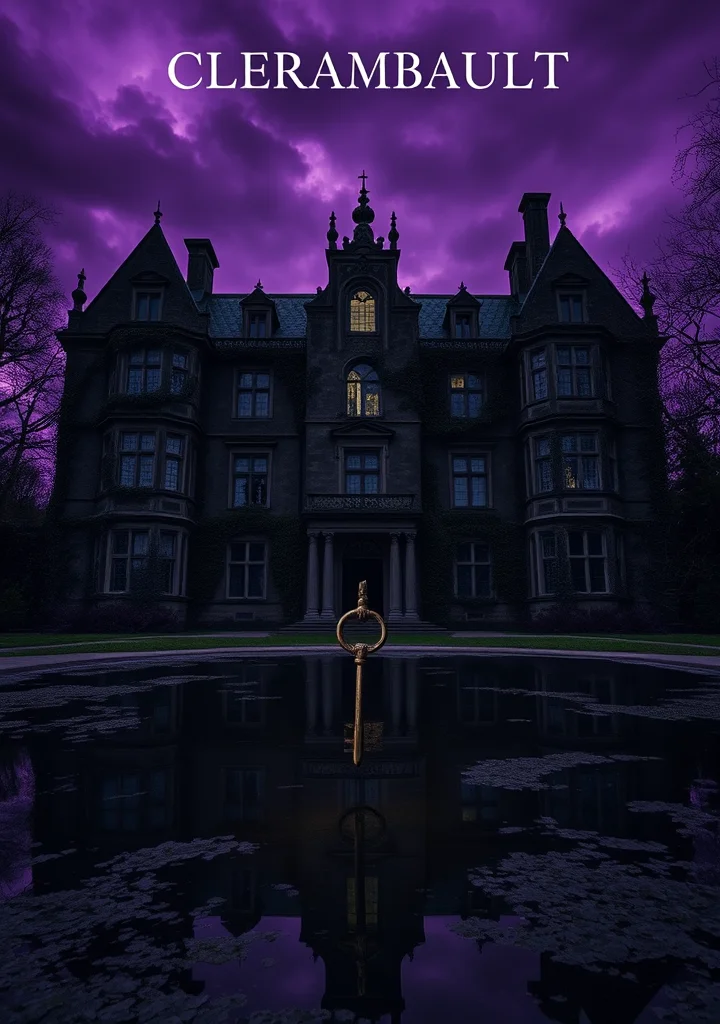
The air hangs thick with the scent of decay and damp earth within the crumbling chateau of Clerambault. Here, amidst shadowed corridors and portraits whose eyes seem to follow your every move, a man named Jean, haunted by a past he cannot escape, wages a silent war against his own fracturing mind. The estate itself is a character—a labyrinthine monument to a noble lineage crumbling under the weight of inherited madness and suffocating isolation. Rolland weaves a suffocating atmosphere of psychological torment, where the boundaries between reality and delusion blur with each echoing footstep. Jean's descent is not marked by dramatic outbursts, but by a creeping, insidious unraveling—a quiet rot consuming him from within. The oppressive weight of family history, the suffocating expectations of his ancestral home, and the insidious whispers of his own internal demons create a sense of dread that clings to the reader like a shroud. Sunlight rarely penetrates the overgrown gardens or the dust-veiled windows, lending the narrative a perpetual twilight. Every creaking floorboard, every rustle of leaves, is imbued with a sinister significance. The true horror isn’t found in specters or ghouls, but in the slow, agonizing disintegration of a man’s sanity, witnessed through the fractured lens of his own unreliable perception. It is a story steeped in the melancholic beauty of ruin, a haunting meditation on the fragility of the self, and the suffocating power of memory.
13 Part
Beneath a canopy of suffocating green, where sunlight splinters into emerald shards and the air hangs thick with the musk of decay and unseen predators, lies a world unbound by civilization’s frail grasp. This is not merely a chronicle of survival, but a descent into the heart of a primal wilderness mirroring the savage instincts within us all. The jungle breathes, a living entity woven with vines that strangle forgotten ruins and the echoing cries of beasts both magnificent and monstrous. Shadows cling to the colossal trees like spectral guardians, obscuring the boundaries between reality and nightmare. A man, stripped bare of his past life, forged anew in the crucible of tooth and claw, becomes something more, something less…a creature of legend. But even as he masters this brutal Eden, a chilling awareness persists—the jungle doesn’t yield its dominion willingly. It tests, it breaks, it consumes. And the whispers of ancient gods, remnants of a forgotten people, linger in the humid air, hinting at a darkness far older than the apes who rule amongst the branches. Every rustle of leaves, every distant roar, carries the weight of untold centuries, a haunting reminder that paradise is built upon bones and stained with the crimson bloom of sacrifice. The very earth seems to pulse with a feverish, untamed energy, threatening to engulf those who dare to trespass within its verdant embrace. A world where beauty is a venomous kiss, and salvation is found not in mercy, but in the cold, calculating gaze of the predator.
53 Part
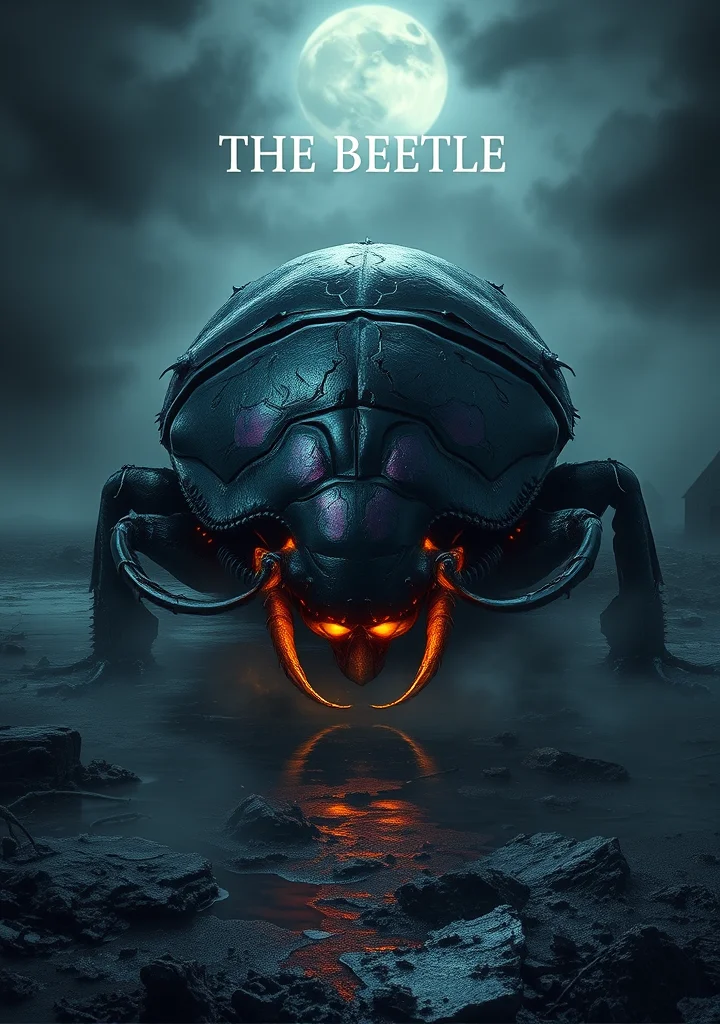
A creeping dread clings to the marshes of northern England, a suffocating fog mirroring the insidious presence that stalks the lives of Arthur Grimstone and his neighbors. It begins with whispers—a monstrous shape glimpsed in the peat bogs, livestock mutilated with unnatural precision, a chillingly human intelligence behind acts of escalating violence. The village of Stilton, already steeped in the melancholy of isolation, is slowly consumed by a terror born of the mire, a thing both animalistic and eerily, deliberately *aware*. Grimstone, a man haunted by his own rigid morality and the suffocating weight of Victorian expectation, finds himself drawn into a desperate pursuit of this creature—a pursuit that unravels not just the boundaries of his sanity, but the very foundations of his world. The Beetle is not merely a beast; it is a distortion, a parasite of the soul, weaving itself into the fabric of their lives, mirroring their darkest desires and festering resentments. Each encounter leaves a residue of cold, damp fear, the scent of decay clinging to the air long after the creature vanishes. The narrative descends into a labyrinth of shadowed alleys, decaying workhouses, and the claustrophobic interiors of Victorian homes—a suffocating world where the line between hunter and hunted blurs, and the monstrous Beetle becomes a terrifying reflection of the darkness within us all. The creeping dread isn't merely *of* the creature, but of the creeping rot *within* the very heart of the village, and within Grimstone himself.