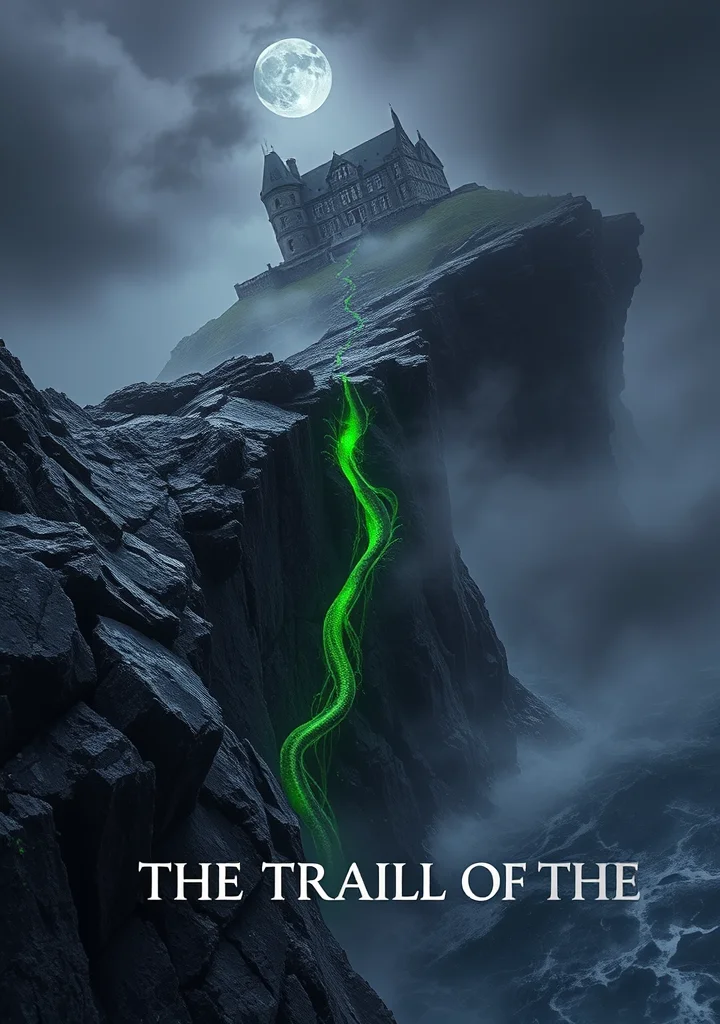

The Trail of the Serpent
  • 152
  • 0
  • 55
  • Reads 152
  • 0
  • Part 55
Completed, First published Mar 02, 2026

A creeping dread clings to the shadowed lanes of Cornwall, where whispers follow the vanished heir to Trevallyn Manor. The air tastes of salt and decay, thick with the scent of brine and secrets buried in the crumbling stone. Old Mrs. Penrose, keeper of the estate’s brittle history, speaks of a serpent coiled around the family’s fate – a legacy of avarice and a curse woven into the very fabric of the cliffs. Every fog-drenched dawn reveals another fragment of the missing man’s unraveling life: a torn glove abandoned in a smuggler’s cove, a coded message etched into a forgotten chapel wall, the chilling echo of a melody played on a harpsichord long silenced. The investigation is a descent into a labyrinth of jealousies, blackmail, and the suffocating grip of a suffocatingly beautiful, yet venomous, woman. The manor itself seems to breathe with a malevolent intelligence, its corridors haunted by the ghosts of past betrayals. Moonlight bleeds through stained glass, painting grotesque figures on the floor as the truth slithers closer—a truth wrapped in the suffocating darkness of a desperate, serpentine plot that will leave the unwary swallowed by the very earth that birthed it. A sense of being watched, of being hunted, permeates every shadowed corner, as the trail of the serpent leads not to resolution, but to a precipice of madness and despair.
Copyright: Public Domain
This license allows anyone to use your story for any purpose, including printing, selling, or adapting it into a film freely.
Chapter List

55

Recommended for you
65 Part
A suffocating fog clings to the cobblestones of Paris, mirroring the miasma of dread that seeps from the shadowed alleys and the decaying grandeur of the city’s heart. Gaboriau doesn’t offer a mere crime to unravel, but a descent into a labyrinthine underworld where the desperate are bound by debts of flesh and spirit to a cabal of silent, unseen masters. The air is thick with the scent of rot—not just of corpses discovered in the Seine, but of lives systematically broken down, of wills surrendered to a creeping, insidious control. Each chapter feels like a stolen glance through a keyhole, revealing glimpses of shadowed figures flitting between pawn shops and opium dens. The narrative winds through a decaying aristocracy, haunted by past sins and complicit in present ones, and a brutalized underworld of forgers, thieves, and the discarded. It’s a Paris where every whispered confidence is a transaction, every act of kindness a snare, and the boundaries between victim and predator blur into a sickening grey. The novel doesn't build to a climactic reveal, but rather unravels like a unraveling shroud, revealing not *who* commits the crimes, but *how* the very fabric of Parisian society is woven with corruption. A sense of helplessness pervades, a suffocating weight that descends with the Parisian rain. The reader is not merely observing a mystery; they’re being submerged in the moral decay of a city on the brink of collapse, where the only true currency is silence, and the price of freedom is paid in stolen breaths.
48 Part
A chill permeates the very pages, a dampness clinging to the ink like graveyard moss. Melmoth’s story unfolds not as a tale *told*, but as a slow, creeping dread unearthed from beneath crumbling stones. Ireland, perpetually shadowed, breathes with a history of pacts made and souls bartered. The Wanderer, cursed with extended life yet shadowed by a demonic compact, drifts through centuries, a spectral witness to the rot within ambition and the hollowness of salvation. Each encounter is a fragment of decay – a Spanish Inquisition’s fervor, a Prussian’s cold calculation, a monastic cell’s suffocating piety – all echoing the same desperate plea for release. The narrative isn’t linear; it fractures, mirroring Melmoth’s fragmented existence. Letters discovered in forgotten corners, confessions scrawled in feverish script, and the fragmented accounts of those he touches weave a tapestry of moral compromise. Sunlight feels like a violation here, replaced by the flickering glow of decaying candles and the oppressive weight of ancestral portraits. Every doorway promises not refuge, but a further descent into the labyrinth of Melmoth’s despair. It is a land where every act of charity breeds a monstrous debt, where faith offers no solace, and where the only escape from the burden of years is to surrender to the darkness willingly. The air itself is thick with the scent of brine and regret, a constant reminder that even in oblivion, Melmoth remains tethered to a world that has long since abandoned its own soul.
27 Part
A creeping dread clings to these tales, woven from the dampest corners of the human psyche and the echoing silences between worlds. Blackwood doesn’t offer horror in the conventional sense, but a chilling unraveling of perception, where the veil thins and something ancient, something *other*, observes from just beyond the reach of lamplight. John Silence, a blind man gifted – or cursed – with an interior vision, navigates a landscape of shadowed sanatoriums, fog-choked moorlands, and the suffocating weight of inherited trauma. His stories aren’t of monsters, but of resonances—a subtle discordance in the fabric of reality that preys on the vulnerable. Each encounter leaves a residue of unease, a blurring of the boundaries between sanity and dissolution. The atmosphere is one of perpetual twilight, a stifling stillness where every creak of the floorboard, every flicker of gaslight, suggests a presence unseen, yet intimately felt. These aren't tales to be *read*, but to be *absorbed*, like a slow poison seeping into the marrow of your bones. The true terror lies not in what Silence *sees*, but in the realization that what he perceives may already be within you, waiting to bloom in the darkness. Expect not jump scares, but the lingering chill of a forgotten room, a face glimpsed in the periphery, and the unsettling certainty that some doors are best left unopened. The stories breathe with a melancholic beauty, a haunting melody born from the decay of reason and the echoes of a world just beyond our grasp.