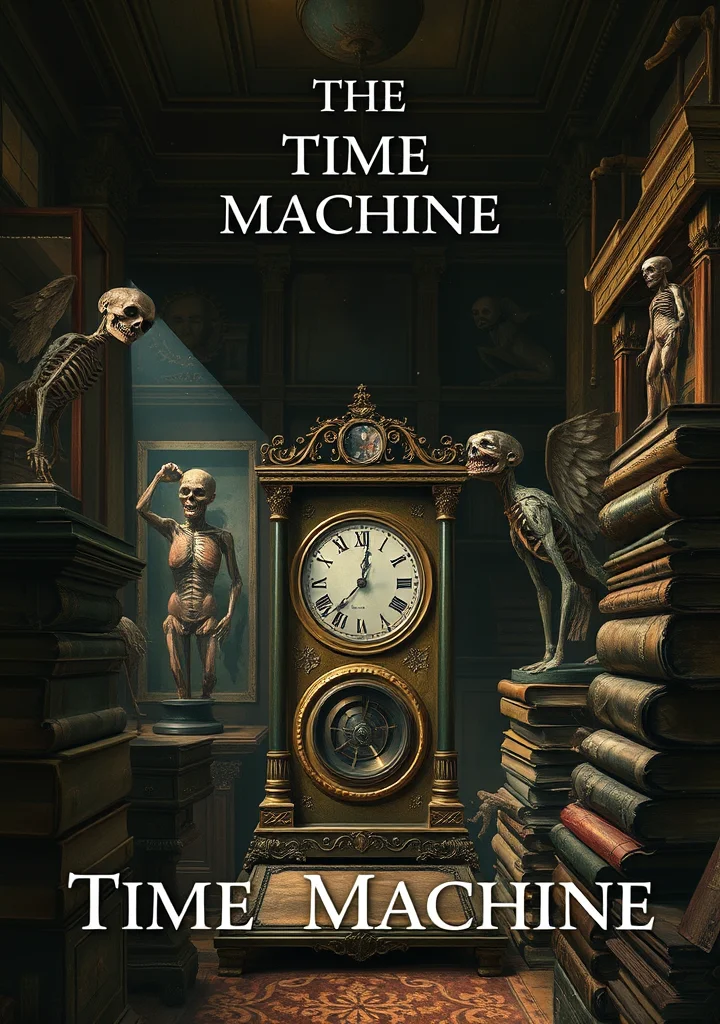

The Time Machine
  • 218
  • 0
  • 12
  • Read 218
  • 0
  • Part 12
Completed, First published Mar 02, 2026

Dust motes dance in the perpetual twilight of a Victorian study, the scent of oiled brass and decaying leather clinging to the air. A chill, not of the season but of ages past, seizes you as the narrative unfolds—not through grand spectacle, but through the creeping dread of observation. The Time Machine isn’t a vehicle of heroism, but a descent into a hollowed earth where humanity has fractured into grotesque caricatures of its former self. Each stratum of the future is draped in a suffocating melancholy, a decaying beauty where pale, languid figures haunt the ruins of industry. The air grows thick with the silence of vast, forgotten epochs, broken only by the rustle of dry leaves underfoot and the echoing cries of creatures both beautiful and monstrous. Wells doesn’t offer a blaze of revelation, but a slow unraveling of hope, a gradual erosion of empathy as the traveller witnesses the atrophy of civilization. The narrative is laced with the taste of ash and the weight of millennia. It is a descent into a sepulchre of lost potential, where the shadows lengthen and the final, suffocating darkness isn't merely temporal, but existential. A creeping sense of isolation permeates the story; the traveller isn't merely *in* the future, he is *apart* from it—a ghost haunting the bones of a dying world. The true horror isn't what is seen, but the realization of what is *become*.
Copyright: Public Domain
This license allows anyone to use your story for any purpose, including printing, selling, or adapting it into a film freely.
Recommended for you
42 Part
A chilling wind sweeps across frozen plains, mirroring the fracturing of ideals within Emma Goldman’s heart. This is not a chronicle of revolution’s triumph, but a descent into the grey, suffocating disillusionment of a promised land turned prison. The narrative unfolds amidst snow-drifted streets and shadowed interiors, where the fervor of anarchist dreams curdles into the bitter taste of betrayal. Goldman’s prose bleeds with the icy resignation of witnessing a people’s hope strangled by bureaucracy and the suffocating weight of a new tyranny. The air hangs thick with the scent of coal smoke and unspoken despair, as Goldman navigates a landscape of whispered accusations and broken promises. Every encounter – a hushed conversation in a cramped apartment, a furtive exchange of pamphlets, a glimpse of hollow eyes in the breadline – is rendered in shades of muted grey, reflecting the erosion of conviction. It is a story of isolation, of the agonizing realization that even in the wake of upheaval, the chains of oppression merely shift their hold, tightening around the spirit. A haunting stillness pervades the pages, broken only by the distant howl of wolves and the echoing thud of boots on cobblestones, a constant reminder of the ever-present surveillance. The narrative doesn't offer explosions of rebellion, but the slow, agonizing freeze of a heart witnessing the birth of a new darkness, a darkness born not of malice, but of the crushing weight of unrealized expectation.
19 Part
Beneath the sun-bleached stones of Sicily, a shadow descends. Not of bandits or political intrigue, but a creeping dread woven into the very fabric of ancient villas and crumbling chapels. The narrative unfolds within a labyrinth of sun-drenched courtyards concealing forgotten histories, and the scent of jasmine masking the rot of decaying grandeur. A young Englishwoman, adrift in a land of simmering passions and veiled secrets, finds herself drawn into a family’s fractured legacy—a legacy haunted by whispers of a tragic past. The air hangs thick with the weight of unfulfilled desires, and the heat breeds not just fever, but a suffocating claustrophobia. Each crumbling archway seems to observe, each darkened corridor to breathe with the ghosts of those who succumbed to melancholy. The landscape itself becomes a character—a brutal beauty that both lures and threatens. A slow unraveling of the heroine’s composure occurs as she navigates a treacherous dance between duty and desire, guided by a charismatic nobleman whose own shadow-self is barely contained. The romance, as it blooms, is laced with the venom of suspicion. Every stolen glance, every whispered confession, is shadowed by the possibility of deception. The story is less about the passion between two souls, and more about the suffocating atmosphere that threatens to swallow them both—a suffocating atmosphere born of isolation, ancient curses, and the slow, insidious decay of a noble line. The Sicilian soil itself seems to drink the light, leaving only an eternal twilight clinging to the heart of the story.
23 Part
The bog breathes cold, a peat-thickened air clinging to the stones of the O’Gill cottage. This is a land where the boundaries between worlds blur with the mist, where laughter echoes from hollow hills and shadows dance with a chilling grace. Old Darby, a man woven into the very fabric of the glen, knows the Good People are real – not sprites of childish tales, but ancient, capricious beings demanding respect, and offering glimpses of a beauty that steals the heart and leaves it aching with longing. Each tale is a trespass into their realm, a slow unraveling of the veil. The hearth fire flickers against the encroaching darkness as Darby’s sons, haunted by stolen coins and promises made in the gloaming, begin to understand the cost of bargains struck with eyes of emerald light. The woods themselves become a labyrinth of whispered warnings, of paths that vanish into the heart of the hills, and of a king’s court held in a cavern echoing with forgotten songs. A creeping dread settles with the dew, a sense of being watched by something old and hungry. The narrative is laced with the scent of damp earth and the melancholy chime of fairy bells, building to a final, desperate race against the fading light, where the fate of a family, and perhaps something far older, hangs upon a single, stolen prize. This is a place where kindness can be its own snare, and the most beautiful things are born of a chilling, otherworldly bargain.