
-
Read 700
-
0
-
Part 48
Completed, First published Mar 02, 2026
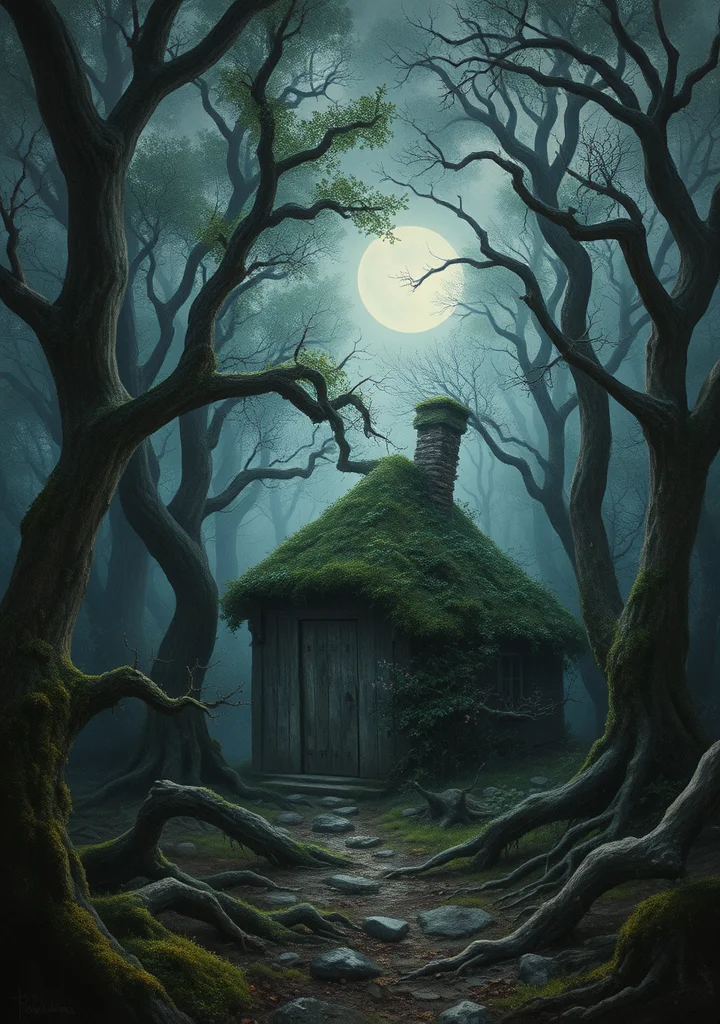
A creeping mist clings to the ancient, gnarled wood, mirroring the secrets held within the hearts of those who dwell amongst its shadowed paths. The novel breathes with the damp earth and the mournful cry of the wind through the pines. It is a story woven from isolation—not of grand castles, but of cottages swallowed by the encroaching forest, of lives tethered to the rhythm of seasons and the whispers of the unseen. A melancholic stillness permeates every chapter, where the boundaries between the natural world and the haunted chambers of the soul blur. Here, love blooms amidst decay, and tragedy is less a singular event than a pervasive rot that consumes hope like moss on weathered stone. The characters are bound to the woodland’s fate, their destinies shadowed by the weight of rural superstition and the inescapable echo of a past that clings to the roots of every tree. It’s a place where the sun barely penetrates, and the darkness yields not to oblivion, but to a lingering, spectral grief. The very air tastes of loss, of promises broken by circumstance, and of the subtle, insidious way the wilderness claims all that remains.
Copyright: Public Domain
This license allows anyone to use your story for any purpose, including printing, selling, or adapting it into a film freely.
This license allows anyone to use your story for any purpose, including printing, selling, or adapting it into a film freely.
Recommended for you