
The Patient in Room 18
  • 156
  • 0
  • 21
  • Reads 156
  • 0
  • Part 21
Completed, First published Mar 02, 2026

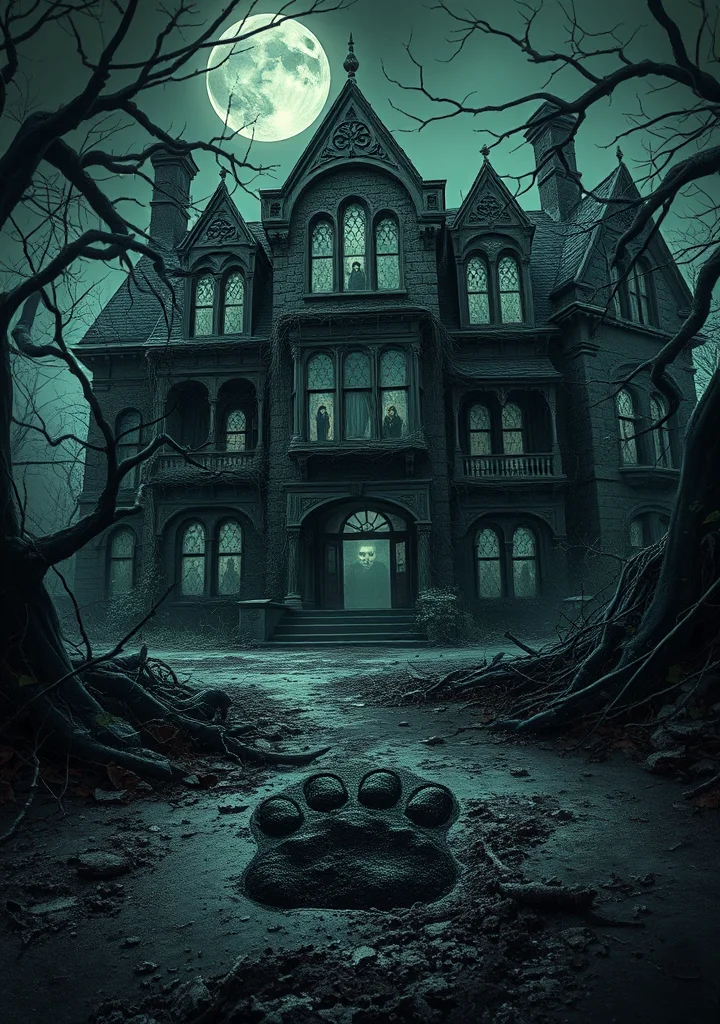
A creeping dread clings to the shadowed halls of Blackwood Sanitarium, where Dr. Mallory Creed, haunted by her own fractured memories, tends to a ward brimming with whispers and locked doors. The patient in Room 18—a woman known only as ‘Lucille’—arrived with a single, chilling claim: she’s been reliving her own death for weeks. As Mallory delves into Lucille’s fragmented recollections—a lavish estate, a stolen inheritance, and a husband swallowed by the sea—she uncovers a web of deceit woven with arsenic and despair. The sanitarium itself seems to breathe with a malevolent history, its stone walls echoing with the screams of forgotten patients. Each flicker of gaslight, each hushed confession, draws Mallory closer to the horrifying truth, blurring the line between healer and hunted. The scent of decay isn’t merely medicinal; it’s the stench of old sins, rising from the Blackwood’s foundations, threatening to consume all those trapped within its suffocating embrace. Is Lucille’s terror a genuine torment, or a cunningly crafted delusion—and will Mallory unravel the mystery before she, too, becomes another ghost haunting Room 18?
Copyright: Public Domain
This license allows anyone to use your story for any purpose, including printing, selling, or adapting it into a film freely.
Recommended for you
19 Part
Dust motes dance in the perpetual twilight of crumbling Rajput fortresses, clinging to the scent of sandalwood and decay. A fever-dream heat hangs heavy, thick with the whispers of djinn and the rustle of silk in shadowed chambers. Burton, ever the scholar-explorer, has unearthed more than ancient texts; he’s awakened a hunger older than the stone itself. Vikram, a scholar steeped in forgotten lore, finds himself drawn into a labyrinthine pursuit of a creature both exquisitely beautiful and terrifyingly predatory. Not a beast of fangs and brute force, but one of elegant seduction and creeping paralysis. The vampire here doesn’t stalk through London fog, but through the saffron-stained ruins of a lost empire. The narrative breathes with the oppressive weight of ritual and obligation, each encounter veiled in layers of veiled glances and stifled accusations. It is a story told in half-tones, in the flickering lamplight of opium dens, in the echoing silence of abandoned temples. The air itself is tainted with the cloying sweetness of jasmine and the metallic tang of old blood. Vikram’s investigation unravels not into a hunt, but an unraveling of his own sanity, as the lines between hunter and hunted, mortal and immortal, blur within the hypnotic gaze of a creature who has tasted centuries and craves a new, willing victim. The land itself seems to conspire to keep its secrets, each step deeper into the mystery a descent into a suffocating, intoxicating darkness where the boundaries of life and death become indistinguishable.
32 Part
A creeping mist clings to the shadowed valley of Blithedale, a haven built on the fractured dreams of reformers and the hollow promises of a new Eden. Within its decaying grandeur, a subtle rot permeates not just the timber and stone, but the very souls of those who seek refuge there. The air hangs thick with unspoken desires, simmering resentments, and the stifled cries of past failures. A young surveyor, drawn into the web of this communal experiment, finds himself caught between the magnetic fervor of a visionary founder and the haunting beauty of a woman haunted by a grief that seems to bleed into the landscape itself. Every shadowed corner breathes with the weight of unfulfilled longing, while the sun-drenched fields conceal a darkness born of obsession. The narrative unravels not as a tale of progress, but as a slow exposure of the decay beneath the surface—a crumbling edifice of idealism haunted by the specters of unacknowledged desires. The scent of dying flowers, the rustle of unseen presences in the overgrown gardens, and the chilling silence of moonlit nights weave a tapestry of melancholy, revealing a world where the pursuit of perfection breeds only despair, and the heart, once aflame with conviction, is left to wither in the cold embrace of disillusionment. It is a place where the boundaries between reality and illusion blur, where the past refuses to remain buried, and where the seeds of ruin are sown within the very soil of hope.

48 Part
A creeping dread clings to the Scottish Highlands, mirroring the chill that settles over Alistair Grant as he returns to his ancestral estate. Not a homecoming, but a summons – a veiled plea from a crumbling manor steeped in generations of shadowed secrets. The air itself tastes of decay and whispered accusations, the stone walls breathing with the ghosts of those who vanished within its labyrinthine halls. Each sunrise feels less a dawn of hope and more a slow exposure of rot, revealing fissures not just in the stone, but within the very fabric of Grant’s family. The moorland stretches like a bruised landscape, mirroring the bruising of Alistair’s spirit as he unravels a legacy of ambition, betrayal, and the cold calculus of inheritance. The estate isn’t merely a place; it's a predator, drawing in those desperate to claim its fractured power. The narrative unfolds as a slow bleed of suspicion, each character a silhouette against a dying fire, their motives obscured by the encroaching fog. The narrative isn’t about what’s *seen*, but what lingers in the periphery - the scent of damp earth, the rustle of unseen wings, the weight of eyes watching from darkened windows. A sense of being watched permeates every page, a growing unease that settles like frost on the heather. It is a story of men consumed by their own histories, bound to a land that demands a reckoning for sins long buried. The Courts of the Morning aren’t merely a place of judgment, but a stage for a final, desperate act of penance – or revenge.
29 Part
A creeping dread clings to the salt-laced air of the Cornish coast, where the crumbling manor of Porthallow stands sentinel against a bruised, perpetual twilight. Within its shadowed halls, Elara Penrose, orphaned and bound by duty to a distant, brittle uncle, discovers a legacy woven not of gold, but of whispers and brine-soaked secrets. The Splendid Fairing is not a vessel of joy, but a spectral ship glimpsed only in the fever-dreams of the dying – a phantom bearing the stolen heirlooms of generations lost to the sea’s avarice. Each chapter descends further into a suffocating claustrophobia, mirroring the labyrinthine coves and forgotten smugglers’ tunnels beneath Porthallow. The scent of decay – damp stone, mildewed velvet, and the metallic tang of old grief – permeates every room. Elara’s investigations unravel a tapestry of local superstitions, tales of drowned women who lure sailors to their doom, and the unsettling obsession of the villagers with the ebb and flow of the tide. A haunting stillness pervades the narrative, broken only by the mournful cry of gulls and the rhythmic pulse of the waves against the cliffs. The manor itself feels less a house and more a tomb, breathing with the weight of centuries. As Elara draws closer to the truth of the Fairing’s spectral voyage, she finds herself increasingly adrift in a world where the boundary between the living and the dead is as porous as the crumbling seawalls, and where the splendor of inheritance is purchased with the currency of despair. The novel is steeped in a sense of inevitable tragedy, a slow, agonizing descent into the shadowed heart of a coastal curse.