
Sapo, Quadribol e Confissões
  • 37
  • 0
  • 8
  • Read 37
  • 0
  • Part 8
Ongoing, First published May 23, 2026

A narrativa traça um ano escolar cheio de rivalidade e afetos inesperados. Dentro desses capítulos, Hermione navega em encontros tensos com Draco Malfoy e Pansy Parkinson, enquanto também lida com o rescaldo das brincadeiras travessas de Rony - uma envolvendo um estudante transformado e uma viagem apressada ao professor McGonagall. medida que a emoção do Quadribol se acumula, uma confissão surpreendente perturba a dinâmica de Gryffindor versus Slyther..
Copyright: All Rights Reserved
No person is allowed to use, redistribute, or modify your work in any form without your explicit permission.
Recommended for you
28 Part
Dust motes dance in the shadowed halls of Sagamore Hill, a spectral presence clinging to the very timbers. This is not a tale of triumph, but of haunted ambition, a self-reckoning etched in the marrow of a man who wrestled beasts both within and without. Roosevelt’s chronicle unfolds like a fever dream—a wilderness of boyhood grief, a frontier of grief-stricken manhood, and the chilling precision of a hunter’s gaze turned inward. The narrative breathes with the scent of damp earth and the musk of dead game, echoing with the cries of vanished buffalo and the hollow resonance of loss. Each chapter is a shadowed room in a sprawling estate, filled with the stuffed trophies of conquered demons and the ghosts of those he left bleeding in the wilderness of his own making. He charts his life as a landscape of perpetual struggle, where the wilderness isn’t merely terrain, but a reflection of his own volatile heart. The sun-drenched plains become a canvas for the shadow play of his grief; his political battles, a war waged within the confines of his own restless spirit. The prose itself is a brittle, bone-dry thing—a meticulous inventory of wounds, both inflicted and endured. This autobiography isn’t a celebration of fortitude, but a chilling testament to the cost of it—a portrait of a man forever haunted by the specters of his own relentless drive, and the wild, untamed country that birthed it. The very pages seem to exhale the cold air of a shadowed study, where a man, even in recounting his victories, confesses to the solitude of his own magnificent, terrible dominion.
26 Part
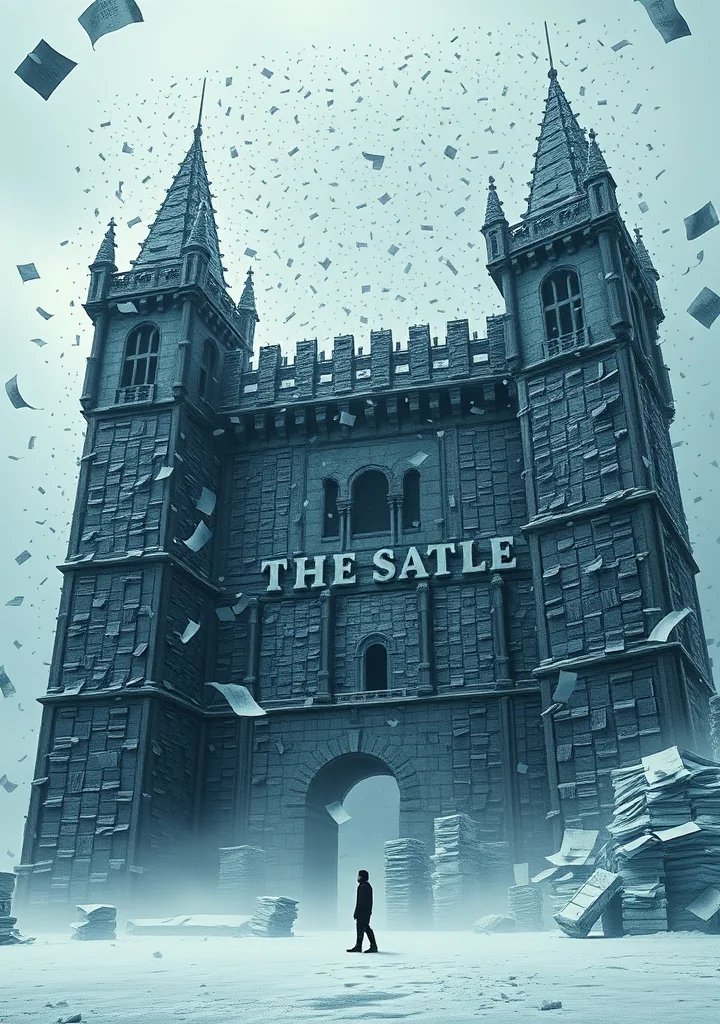
A creeping dread emanates from the snow-blinded peaks surrounding the Castle, a fortress not of stone and mortar but of suffococating bureaucracy and fractured logic. The protagonist, nameless and adrift, is drawn into its labyrinthine corridors not by invitation, but by an insidious compulsion, a need to understand its impossible laws. Each attempt to reach its masters, the unseen Archduke and his attendants, is met with echoing silence, mirrored by the villagers who speak of the Castle only in hushed, fearful whispers. The landscape itself is a character – a perpetual twilight descends, smothering the world in a gray, suffocating weight. Rooms stretch into impossible distances, hallways twist into mirroring repetitions, and the very architecture seems designed to frustrate comprehension. The air is thick with the scent of damp stone and decaying paper, a testament to decades of unfulfilled petitions. A pervasive sense of futility clings to every interaction. The Castle’s inhabitants, pale and withdrawn, engage in rituals of pointless administration, their faces etched with a hollow resignation. Hope is not extinguished, but slowly eroded, replaced by a gnawing awareness of one’s own insignificance within a system that exists solely to perpetuate its own obscurity. The narrative unfolds as a descent into a waking nightmare, a prison built not of bars, but of endless, incomprehensible protocols. The Castle isn’t merely a location; it’s a symptom of a deeper, unknowable malaise, an infection of the soul.
30 Part
A creeping dread clings to the damp stone of Blackwood Manor, where whispers of a forgotten inheritance and a family fractured by shadow weave through the halls. The narrative unfolds not as a grand spectacle, but as a slow unraveling, a descent into the suffocating secrets held within a provincial life. Old man Harwood, a man of routine and quiet despair, finds himself unwillingly entangled in the affairs of others—a vanished solicitor, a resentful ward, and a legacy stained with avarice. The air is thick with the scent of decaying roses and unshed tears. Each chapter feels like a turning of a key in a rusted lock, revealing another shadowed alcove in the manor’s heart. It isn't the horror of what *happens*, but the suffocating weight of what is *known*—the stifled resentments, the furtive glances, the unspoken accusations that fester within the household. The story is told in fragments, overheard conversations and half-remembered incidents, mirroring the fractured memories of those caught within the manor's orbit. Rain lashes against the windows, mirroring the tempest brewing within Harwood’s breast. The middle of things, he comes to realize, is not a position of neutrality, but a vortex—a point where all the dark currents converge. The ending isn't a resolution, but a settling of dust on the things that were always there, waiting for the shadows to lengthen and claim their due. A quiet, insidious despair permeates the pages, leaving the reader with the chilling sensation of being watched from the darkened corners of Blackwood Manor long after the book is closed.
22 Part
A suffocating heat clings to the Louisiana bayou, thick with Spanish moss and the ghosts of fortunes lost. Leblanc weaves a tale where the line between predator and prey dissolves into the humid air. Old money, stained crimson with secrets, bleeds from crumbling plantation houses. The scent of jasmine and decay hangs heavy as a disgraced detective, haunted by his own failures, is drawn into a missing heir case. But this isn’t simply disappearance; it’s a vanishing into something ancient and hungry that dwells in the cypress knees and shadowed waterways. Each investigation feels like peeling back layers of Spanish lace to reveal something writhing beneath – a legacy of voodoo, avarice, and the brutal inheritance of a family whose wealth was built on teeth. The tiger isn't merely a beast of the swamp, but a symbol of the hunger that consumes the living, leaving only bone-white grins in the darkness. The narrative crawls with a creeping dread, a sense of being watched by something both feral and refined. Every whisper of wind through the sugarcane fields carries the echo of a curse, and the bayou itself seems to conspire to keep its secrets submerged. The air grows viscous with the possibility of violence, a slow-boiling tension that culminates in a confrontation with a darkness that has rooted itself within the very soil of the land. It's a story where the rot is not just in the cypress trees, but in the bloodlines themselves.