
-
Read 229
-
0
-
Part 10
Completed, First published Mar 02, 2026
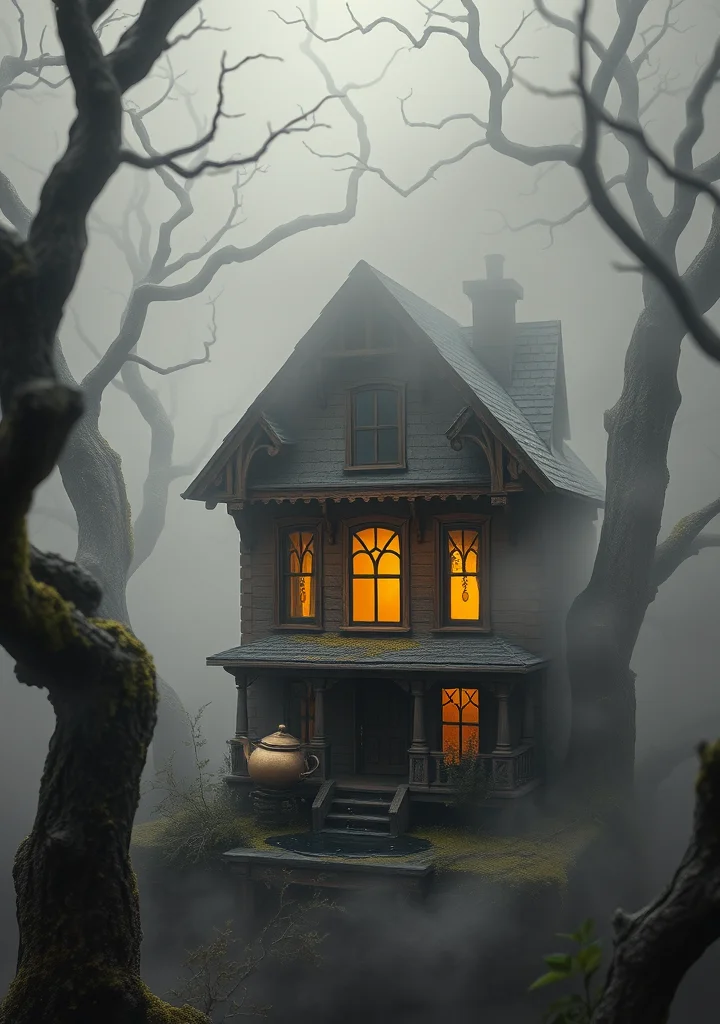
A creeping fog clings to the edges of the Hundred Acre Wood, not of mist, but of memory—a damp, suffocating recollection of childhood innocence curdled by something ancient and hollowed within the trees. Beneath the honeyed sweetness of Winnie-the-Pooh’s world, a stillness festers. The house itself, not merely a dwelling but a labyrinth of forgotten toys and shadowed corners, exhales the scent of dust and decay. Each gentle breeze whispers through the lattice of branches, carrying fragmented echoes of laughter that sour into something akin to grief. The very land seems to hold its breath, waiting for a trespass into the hollows of Pooh's world. A disquieting weight settles on the chest as the comforting shapes of Piglet, Eeyore, and Tigger become distorted in the gloom, their simple forms mirroring the long, slow unraveling of a mind. The wood is not merely a place to play, but a mausoleum of forgotten wishes, where the echoes of a lost child’s joy are slowly consumed by the encroaching darkness. A subtle dread permeates the space between the trees, a sense of something small, something loved, being irrevocably *lost* within the very fabric of this deceptively gentle realm. The scent of honey, once comforting, now clings to the back of your throat like a choking residue, and the simple act of finding Pooh's house becomes an act of unearthing a forgotten tomb.
Copyright: Public Domain
This license allows anyone to use your story for any purpose, including printing, selling, or adapting it into a film freely.
This license allows anyone to use your story for any purpose, including printing, selling, or adapting it into a film freely.
Recommended for you