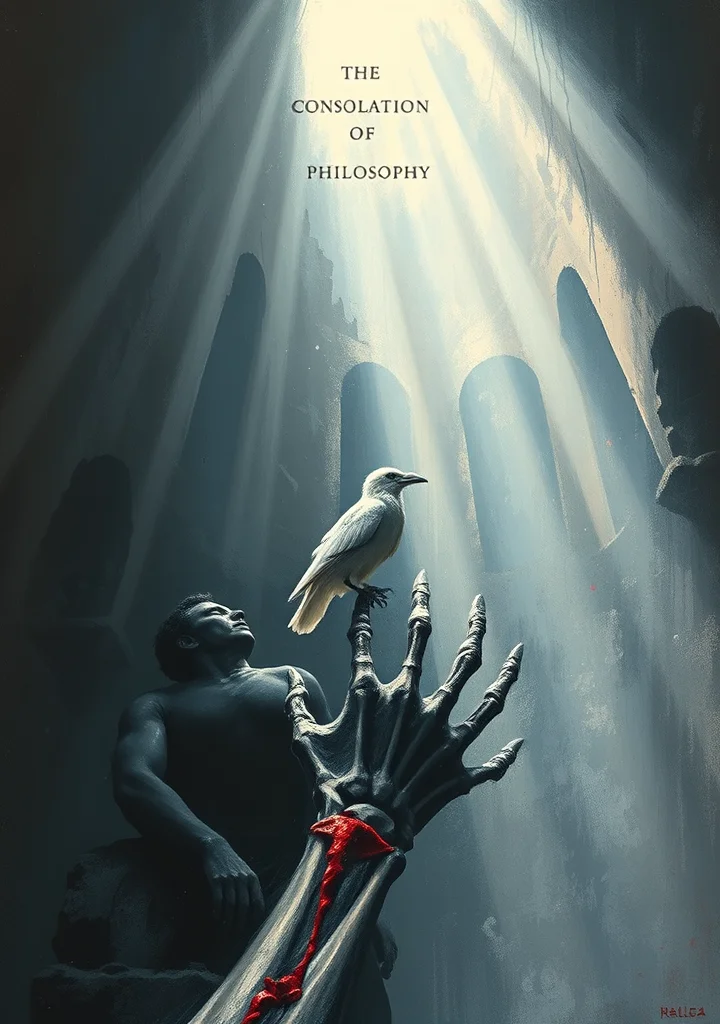

The Consolation of Philosophy
  • 1.8K
  • 0
  • 128
  • Read 1.8K
  • 0
  • Part 128
Completed, First published Mar 02, 2026

Dust motes dance in the fractured light of a crumbling tower, mirroring the fragments of a life shattered by exile and betrayal. Within these stone walls, a man—once a pillar of power, now stripped bare—grapples not with chains or bars, but with a grief that threatens to swallow him whole. He is haunted by the swift, cruel fall from grace, the whispers of accusations echoing in the hollows of his despair. But solace, or a twisted mockery of it, comes in the form of a spectral presence—Philosophy herself, a woman woven from starlight and sorrow, her voice a chilling balm against the wounds of the world. She leads him through labyrinthine corridors of thought, where reason battles with the phantom pain of loss. The air is thick with the scent of decay, both of the body politic and the soul. Visions of fortune’s wheel—a cruel, spinning device—loom large, showcasing the ephemeral nature of earthly power. Each argument, each carefully constructed verse, feels less like a comforting embrace and more like the cold touch of inevitability. The narrative is steeped in the grey of twilight, a perpetual autumn where every leaf falling is a reminder of what is lost. It is a meditation on the nature of good and evil, not as grand battles, but as insidious erosion, a slow poisoning of the spirit. The reader is drawn into a claustrophobic space where the only escape is through the labyrinth of the mind, where the architecture of despair is both beautiful and terrifying. Ultimately, the question lingers: is this consolation a true refuge, or merely a gilded cage built around a broken heart?
Copyright: Public Domain
This license allows anyone to use your story for any purpose, including printing, selling, or adapting it into a film freely.
Recommended for you

37 Part
A creeping dread clings to the shadowed forests of colonial New York, where the boundaries of civilization fray into a wilderness haunted by loss and the ghosts of broken treaties. The air hangs thick with woodsmoke and the scent of pine, heavy with the weight of a dying wilderness and the specter of a brutal, unforgiving war. Here, amidst the towering pines and mist-veiled lakes, a fractured narrative unfolds – not of heroes triumphant, but of figures consumed by the encroaching darkness. The narrative isn't merely observed, it *bleeds* into the landscape; the very stones seem to weep with the agony of the Mohicans’ slow, agonizing disappearance. A desperate flight through a world perpetually twilight, where the rustling leaves whisper of ambush and every shadow conceals a potential grave. The story coils around the fate of a handful of souls – a stoic scout, haunted by the inevitability of his people's extinction, and the fragile bloom of love blossoming amidst the wreckage of a continent torn asunder. It is a fever dream of desperate courage, shadowed by the encroaching doom of a vanishing people. The beauty of the wilderness is not a sanctuary, but a gilded cage – a breathtaking spectacle before the final, inevitable fall into oblivion. The narrative is woven with the chilling cadence of a world fading into silence, where every victory feels like a reprieve, not a triumph, and every glance into the heart of the forest reveals a glimpse of what is lost, and what will *never* return. The reader is left with the taste of ash and the echo of a vanishing song.
23 Part
Dust motes dance in the long shadows of plantation houses, even after the master’s reign has crumbled. This is not a tale of polished triumph, but one clawed from the earth with bleeding hands and a spirit forged in the kiln of hardship. A suffocating humidity clings to the narrative, thick with the scent of pine needles and the unspoken grief of generations. Every step forward is measured in loss—loss of kin, of dignity, of the very earth beneath bare feet. The weight of chains, though broken, echoes in the hollows of every achievement. The story breathes with the stifled cries of children sold like livestock, the rasp of a plow dragged across unforgiving soil, and the quiet desperation of a people rebuilding not just homes, but souls. It isn’t a light that illuminates this path, but a flickering ember—a fragile warmth against a backdrop of perpetual twilight. There’s a spectral presence in the classrooms built from scraps, a haunting in the faces of those who learn to read by the dim glow of a borrowed candle. The narrative doesn’t soar; it *rises* – slowly, agonizingly, from the mire of injustice. It’s a landscape etched with the ghosts of promises broken and the thorns of deferred dreams. A creeping unease permeates even the victories, for even in freedom, the shadow of the whip never fully dissipates. This is a story of resurrection, yes, but one born from the grave—a testament to endurance carved in bone and stained with tears.