
Brood of the Witch-Queen
  • 234
  • 0
  • 35
  • Reads 234
  • 0
  • Part 35
Completed, First published Mar 02, 2026

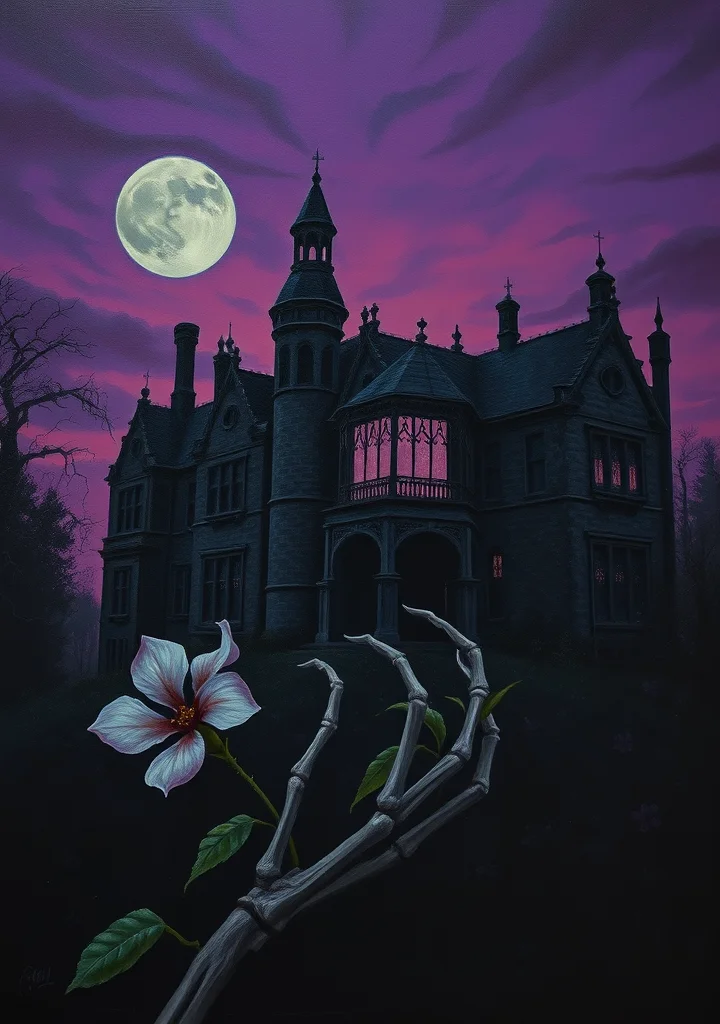
A creeping dread clings to the crumbling estates of the Rohmer estate, a legacy steeped in shadow and whispered blasphemies. The air hangs thick with the scent of decay and the cloying sweetness of night-blooming jasmine, mirroring the rot within the ancestral line. Here, amidst the suffocating grandeur of decaying manor houses and forgotten crypts, a lineage cursed by ancient pacts stirs. The narrative unfolds as a descent into a suffocating matriarchy—a dynasty of women who weave their power from the loam of the land, from the bones of their ancestors. Each generation births a witch-queen, her beauty a gilded cage concealing an iron will and a hunger that transcends mortality. A chilling wind howls through the skeletal branches of ancient oaks, carrying the screams of those who dared to cross the threshold of the Black Abbey—the heart of the Queen’s dominion. The shadows lengthen, twisting into monstrous shapes that writhe with the secrets of the family’s pact with the darkness. This is not a tale of mere witchcraft, but a chronicle of possession, of bodies and wills surrendered to a hunger that predates the stones themselves. It’s a suffocating atmosphere of inherited madness and the insidious corruption of bloodlines, where every kiss is a binding, every birth a sacrifice to the Queen's insatiable hunger. The very earth breathes with her malice, and the ancient stones weep with the sorrow of those consumed by her shadow. The narrative is a spiral into a darkness where the veil between worlds thins, and the boundaries between sanity and oblivion dissolve into a suffocating, sweet-rotted haze.
Copyright: Public Domain
This license allows anyone to use your story for any purpose, including printing, selling, or adapting it into a film freely.
Recommended for you
43 Part
A creeping dampness clings to these pages, smelling of mildewed linen and forgotten dust. The narrative unfolds not as a story *told*, but as one exhaled from the shadowed corners of a decaying manor house. Old Geoffrey Crayon, a man more wraith than host, drifts through spectral landscapes of his own making—half-remembered inheritances of Dutch tradition, half-spun from the brittle threads of New York’s nascent shadows. The chill isn't merely seasonal. It seeps from the very architecture described—barns looming like skeletal fingers against a bruised sky, kitchens haunted by the phantom scents of hearth-smoke and long-vanished feasts. Each tale is a fragment of a larger, fractured dream, echoing with the melancholy of abandoned hearths and the rustle of unseen figures in the orchard. There’s a deliberate blurring of boundary—between the remembered and the imagined, the living and the decaying. The reader is not given a comfortable vantage point, but pulled into the swirling fog of Crayon’s recollections, forced to sift through fragments of folklore, half-formed superstitions, and the chilling echoes of a land where the past doesn’t fade, but *bleeds* into the present. It’s a landscape where the harvest moon casts long, predatory shadows, and the silence between tales is filled with the whispers of something ancient and unwell stirring beneath the floorboards. The sketchbook is not merely read; it is *inhabited*.
6 Part
A suffocating dread clings to the cobbled streets of a London steeped in perpetual twilight. The air itself seems to thicken with the phosphorescent haze emanating from the titular cloud—a malevolent entity born of alchemical hubris and cosmic decay. Within its violet embrace, reality fractures, dissolving the boundaries between the sane and the delirious. Our protagonist, a man haunted by spectral echoes and a creeping sense of unreality, finds himself drawn into a labyrinthine pursuit of the cloud’s creator, a figure shrouded in whispers of blasphemous science and forbidden rites. Each shadowed alleyway pulses with a subtle, sickening vitality, the city’s underbelly mirroring the cloud’s insidious growth. The narrative unravels not as a linear chase, but as a descent into a fever-dream logic, where logic itself dissolves into the purple efflorescence. Rooms twist into impossible geometries, faces morph into grotesque masks, and the very stones beneath your feet seem to breathe with a cold, expectant hunger. The cloud isn’t merely seen, it’s *felt*—a pressure on the temples, a tremor in the lungs, a chilling awareness of something vast and ancient stirring just beyond the veil of perception. It seeps into the minds of those it touches, breeding paranoia, mania, and ultimately, a terrifying acquiescence to its alien will. The story doesn’t offer escape, but a spiraling immersion into the heart of a darkness that threatens to consume not just London, but the very foundations of reason itself.
113 Part
Dust motes dance in the perpetual twilight of Gandersheim Abbey, where the echoes of chanted prayers cling to stone walls thick with centuries of silence. Within its shadowed scriptorium, a young novice, shadowed by visions and whispers, begins to transcribe the plays—not for performance, but for penance. Each line penned, each character sketched, bleeds into the fabric of her waking nightmares, mirroring the fractured history of the convent itself. The dramas are not tales of saints and salvation, but fractured accounts of forgotten queens, possessed by ambition and regret, their stories woven with the scent of damp earth and the taste of iron. The plays are not merely written, they *are* summoned—drawn from the decaying memories of the women who preceded her, each performance a spectral re-enactment within the novice’s mind. A creeping dread descends as she discovers the plays aren’t merely records of past performances, but keys to unlocking something far older, something tethered to the very foundations of the abbey. The lines blur between script and reality, between the living and the dead, until the novice finds herself not writing the plays, but *becoming* them, consumed by the echoing cries of queens dethroned and gods betrayed. The abbey itself breathes with a cold hunger, a silent audience to the unfolding horror as the novice’s hand trembles with the weight of forgotten sins and the chilling truth that the plays are not a lament for the past, but a prophecy of what is to come.