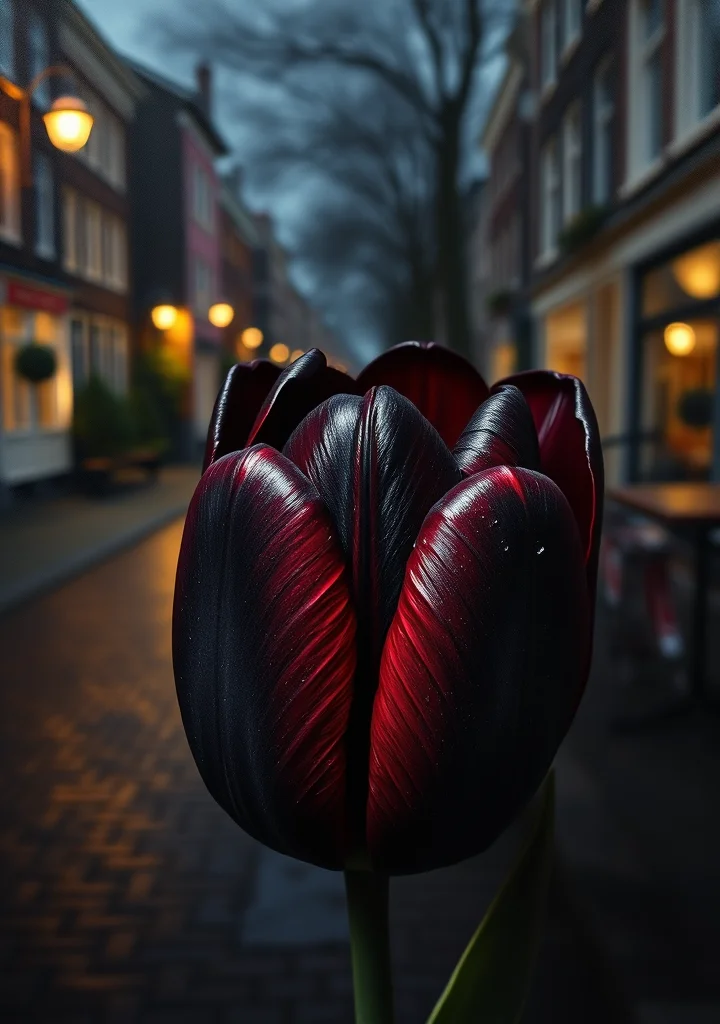

The Black Tulip
  • 205
  • 0
  • 34
  • Reads 205
  • 0
  • Part 34
Completed, First published Mar 02, 2026

A creeping dread clings to the shadowed canals of Haarlem, where obsession blooms alongside the feverish pursuit of a perfect black tulip. Dumas weaves a tale not of mere horticulture, but of a poisoned inheritance—a legacy of vengeance nursed in the dark, damp cellars beneath the cobbled streets. The air hangs thick with the scent of decay and desperation, mirroring the rot within the hearts of men consumed by a single, impossible flower. Each petal unfurls like a whispered accusation, revealing a history steeped in betrayal and fueled by the smoldering embers of past wrongs. Haunted by the specter of the French Revolution, the narrative descends into a suffocating claustrophobia, mirroring the suffocating grip of obsession itself. The narrative breathes with the cold, metallic tang of fear—a fear that clings to the damp stone walls, lingers in the smoky haze of taverns, and blossoms alongside the coveted bloom, as the tulip becomes a morbid symbol of a life lost to an all-consuming, and ultimately destructive, desire. The shadow of the guillotine feels ever-present, threatening to descend upon those who dare to chase the phantom black.
Copyright: Public Domain
This license allows anyone to use your story for any purpose, including printing, selling, or adapting it into a film freely.
Recommended for you
55 Part
Dust-choked prairies stretch towards a horizon perpetually bruised violet, mirroring the ache within the heart. This is a story breathed from the wind-scoured earth, a lament for a lost Eden etched in the bone-white light of Nebraska summers. It unfolds not as a specter of the supernatural, but as a haunting through absence – the absence of youth, of innocence, of a world before the relentless march of progress. The narrative clings to the memory of Ántonia like clinging vines to a crumbling barn, a figure both vital and spectral, forged in hardship and stained with the relentless sun. Shadows lengthen across the farmsteads, mirroring the encroaching anxieties of the immigrant experience, a land both promising salvation and delivering brutal isolation. The beauty of the landscape, vast and unforgiving, becomes a character itself – a silent witness to fractured dreams and the slow erosion of hope. It’s a world built on the hushed whispers of shared toil and the weight of unfulfilled promises, where the past is a phantom limb, forever felt but forever out of reach. The scent of hay and manure, the mournful howl of the winter wind—these are the talismans of a life surrendered to the unforgiving plains, a life observed from a distance, filtered through the gauze of memory and regret. A stillness descends with the dusk, a premonition of the stories buried beneath the fields, whispering of lives broken and rebuilt, leaving only ghosts in the furrows.

21 Part
Dust motes dance in the perpetual twilight of the Egyptian desert, mirroring the fractured memories of Dr. Elias Thorne. He arrives at the crumbling estate of Lord Ashworth, summoned to authenticate a relic – the Eye of Osiris, a gem said to gaze into the soul’s decay. But the manor breathes with a history of madness, its stone corridors echoing with whispers of a lineage cursed by obsession. Each room, a suffocating tableau of shadowed portraits and decaying grandeur, seems to watch Thorne as he unravels the Ashworths’ descent into a morbid fascination with the artifact. The desert wind carries not only sand, but the scent of ancient grief, seeping from the very foundations of the house. Thorne’s investigation is less a search for authenticity, and more a slow immersion into a suffocating dread. He finds himself haunted by reflections, by the unsettling stillness of servants who bear the hollowed eyes of those possessed. The Eye isn’t merely observed, it *compels* – feeding on the fragile sanity of its keepers, revealing glimpses of a forgotten god’s hunger. As Thorne delves deeper, the line between artifact and curse blurs. The estate itself becomes a labyrinth of shifting allegiances, of shadowed figures who seem to emerge from the very walls. He discovers a rot within the Ashworth bloodline, a ritualistic madness enacted under the gaze of the gem. The desert’s sun bleeds into the stained glass of the manor’s chapel, painting the stone floors with crimson, and Thorne realizes he isn’t merely cataloging a relic’s history, but charting his own descent into a darkness older than the sands themselves. The Eye doesn’t just see *into* the soul; it consumes it, leaving only echoes in the endless, echoing halls.
10 Part
A creeping dread clings to the shadowed halls of Blackwood Manor, where Jean Muir, orphaned and veiled in circumstance, arrives as a governess. Not for children, but for the haunted legacy of Lord Ashworth, a man consumed by grief and shadowed by whispers of a stolen inheritance. The estate breathes with a stifled sorrow, mirroring the secrets Jean unearths within the Ashworth family – a lineage fractured by ambition, veiled identities, and a chilling obsession with preserving appearances. Each darkened room seems to hold a phantom echo of past betrayals, while the winter landscape outside mirrors the frigid isolation closing around Jean. Her every kindness, her attempts to unravel the Ashworth’s despair, are met with veiled resistance and a growing sense of being watched. The mask worn by Lord Ashworth is not merely sorrow; it is a shield for something far more sinister, and Jean finds herself drawn into a labyrinth of deception where love and loyalty are bartered for power, and the truth is buried beneath layers of perfidy. A suffocating elegance pervades the manor, a stifling perfume of decay clinging to antique fabrics and polished wood. The air itself feels thick with the weight of unspoken accusations, and Jean, though determined, feels increasingly trapped within a web of inherited malice. The shadows lengthen with each passing day, and the line between protector and prisoner blurs as she discovers that behind every mask lies a darkness eager to consume her.
17 Part
The fog clings to the Thames like a shroud, mirroring the miasma of regret that hangs over the lives of Selwyn Grey and his doomed circle. This is a London steeped in the amber light of fading gas lamps, where conversations unravel in the damp chill of drawing rooms, revealing fractures in memory and the insidious rot of unspoken desires. A man’s upright posture—a rigid attempt at self-possession—becomes a desperate defense against the unraveling of identity itself, against the creeping realization that the past is not a fixed landscape but a shifting, treacherous terrain. The narrative moves like a slow bleed, staining the present with the phantom pain of lost loves and compromised ideals. Each encounter is a half-remembered dream, a fragment of a fractured narrative pieced together through unreliable recollections and the veiled anxieties of those caught in the afterglow of Edwardian decay. The air is thick with the scent of decaying roses and the metallic tang of suppressed emotion. A claustrophobic sense of enclosure pervades, not just within the London rooms but within the very minds of those who believe themselves to be masters of their fate. The story doesn’t reveal itself; it seeps into the skin, a cold dampness that lingers long after the final page is turned, leaving you haunted by the subtle, devastating power of what has been lost—and what has never truly been known. It is a story of men and women adrift on a sea of fractured recollection, each struggling to maintain the illusion of solidity in a world where even the most steadfast foundations are revealed to be built upon sand.
38 Part
Beneath a perpetual twilight, where the cobbled streets of Oxford bleed into the encroaching shadows of dreaming spires, a labyrinth unfolds. Not of logic, nor reason, but of whispers and half-remembered fears. The air hangs thick with the scent of decaying roses and damp earth, clinging to the hems of coats worn thin by regret. A scholar, haunted by a melody only he can hear – a tune woven from moth wings and the rustling of forgotten prayers – finds his investigations twisting into corridors of mirrored reflections, each revealing a sliver of a fractured self. The city itself breathes with a feverish pulse, its inhabitants caught in a slow waltz with madness. Doors open into impossible angles, revealing parlours choked with velvet gloom and populated by figures whose faces shift with every glance. Every clock ticks backwards, unraveling the threads of time. The narrative unravels like a ribbon, tangled with threads of obsession, hinting at a darkness within the heart of academia. A creeping dread descends, born not of malice, but of the unsettling realization that the very foundations of reality are built upon a foundation of delicate, brittle lies. It is a descent into a world where the boundaries between waking and dreaming blur, where the echo of a forgotten smile can drive a man to the brink of despair, and where the most innocent of riddles conceal the key to a suffocating, unspoken terror. The garden is overgrown, the tea party is never ending, and the rabbit hole leads not to Wonderland, but to a suffocating, elegant rot.