
Pierre and Jean
  • 112
  • 0
  • 13
  • Reads 112
  • 0
  • Part 13
Completed, First published Mar 02, 2026

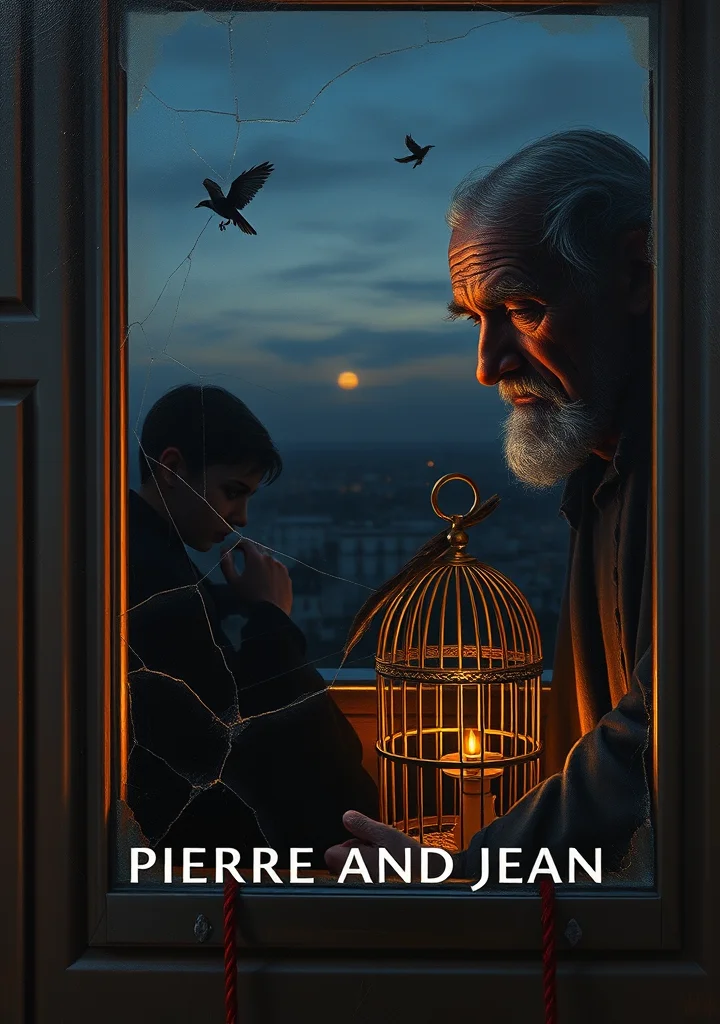
A creeping chill settles from the Parisian rooftops, mirroring the frost that blooms within the hearts of two childhood friends. Maupassant paints a world of shadowed parlors and suffocating bourgeois respectability, where ambition festers like a hidden rot. The narrative clings to Pierre and Jean, bound by a shared poverty and a simmering envy as one finds himself drawn into the gilded cage of a wealthy, aging man's affections. A suffocating dread permeates the air—not of supernatural horrors, but of the slow, insidious decay of morality. Each stolen glance, each whispered confidence, is laced with the metallic tang of betrayal. The city itself breathes with a stifling claustrophobia, trapping them in a web of escalating lies and the suffocating weight of unspoken desires. The scent of damp stone and decaying lace clings to every page, as a subtle, yet relentless, corruption unravels the bonds of friendship and reveals the hollow, grasping core beneath the veneer of polite society. It’s a descent into darkness not through grand spectacle, but through the quiet, agonizing unraveling of two souls consumed by avarice and the poison of ambition. The narrative’s true horror lies in the suffocating realization that the most devastating betrayals are born not of malice, but of a cold, calculating need.
Copyright: Public Domain
This license allows anyone to use your story for any purpose, including printing, selling, or adapting it into a film freely.
Recommended for you
32 Part
The salt-laced wind howls through skeletal chaparral, mirroring the desperation clawing at the throats of men adrift in a California bleached bone-white by sun and regret. Edison Marshall doesn’t offer cowboys or gunfights, but a creeping dread born of isolation, of land that swallows men whole and spits out their ghosts to wander the canyons. Here, the ranchers—the “shepherds”—are less masters of cattle than wardens of a crumbling dominion, haunted by the specter of Spanish conquest and the whispers of native spirits driven to madness. Dust devils dance with the memories of slaughtered herds, the phantom cries of women lost to the desert’s embrace. The narrative unfolds as a slow bleed of violence, not from quick draws but from the rot within families fractured by ambition and thirst. Every cracked adobe wall breathes with the weight of inherited sins, every shadow cast by a Joshua tree seems to lengthen into the shape of a noose. The land itself is a character—a vast, indifferent god demanding sacrifice. The men who cling to it, driven by a desperate need to build something lasting from dust and decay, are shadowed by the realization that they are building their tombs, not empires. This isn't a tale of the West won, but of the West *consuming*, leaving only hollowed men and the bleached bones of a kingdom built on sand. The air is thick with the scent of sage and the metallic tang of blood, both old and freshly spilled, clinging to the canyons like a shroud.
47 Part
A creeping dread clings to the shadowed halls of Ashworth Manor, where the legacy of Silas Blackwood, a man rumored to have made pacts with something ancient and hungry, festers in the very stones. The air hangs thick with the scent of decay and forgotten sin, mirroring the rot within the Blackwood family itself. A suffocating inheritance binds young Arthur to a lineage steeped in whispered accusations of devilry, and the manor’s sprawling, overgrown grounds seem to pulse with a life both alluring and menacing. Every antique mirror reflects not faces, but fleeting glimpses of something *other*, and the relentless drumming of rain against the leaded windows feels less like weather and more like a desperate plea for release. The novel unravels with a slow, agonizing unraveling of sanity, the narrative choked by claustrophobic interiors and the oppressive weight of a past that refuses to stay buried. A creeping paranoia descends, blurring the line between the living and the dead, as Arthur discovers his inheritance is not merely land and title, but a monstrous legacy etched into his very blood. The narrative unfolds like a fever dream, punctuated by stolen glances at shadowed figures, the scent of damp earth clinging to every breath, and a chilling sense that something malevolent stalks the corridors, always just beyond the periphery of vision. A suffocating dread permeates every page, where the true horror lies not in what is seen, but in what is *felt* - the suffocating presence of a darkness that has waited centuries to claim its due.
38 Part
A creeping dread clings to the shores of a dying world. The sun bleeds crimson into a sea choked with silence, where the last echoes of humanity drift amongst the ruins of a forgotten paradise. This is not a tale of monstrous creation, but of monstrous *extinction*. A plague, born not of fever or rot, but of a profound and suffocating ennui, has withered the passions of men and women, leaving them listless, hollowed by a grief they cannot name. The narrative unfolds through journals discovered within a desolate, abandoned fortress – fragmented accounts of a scholar, Lionel, who watches the last vestiges of civilization crumble into dust. His observations are steeped in a melancholic beauty, documenting the slow, insidious unraveling of desire, ambition, even the will to *remember*. The air is thick with the scent of decay, not just of bodies, but of ideals. Every stone whispers of loss, every shadow holds the weight of a forgotten generation. Lionel’s desperate attempts to preserve memory – to catalogue the last songs, the last stories, the last faces – are rendered all the more agonizing by the realization that even *he* is fading, becoming a ghost amongst ghosts. The sea, a constant, mournful presence, mirrors the encroaching nothingness. It is a world adrift, haunted by the ghosts of its own futility, where the final act is not a dramatic struggle, but a quiet surrender to the encroaching darkness, a slow, deliberate letting go of everything that once made life worth living. The final man is not a hero, but a witness, documenting the last, shuddering breaths of a species consumed by its own emptiness.
36 Part
Dust motes dance in the perpetual twilight of a Parisian attic, where Maurice de Barant, a scholar consumed by decadent curiosity, charts the blasphemous genealogy of fallen grace. France weaves a narrative steeped in the scent of wormwood and regret, tracing the lineage of Lucifer not through hellfire, but through the meticulously documented seductions of women—from the Virgin Mary to the courtesans haunting the boulevards. The air thickens with a perverse erudition, as Maurice unravels a history where angels, driven by boredom and a refined taste for earthly pleasure, have quietly infiltrated the human world, their celestial origins dissolving into the amber haze of absinthe-soaked nights. A creeping unease settles in as the novel progresses; a sense that the very foundations of morality are built on shifting sands of desire and hypocrisy. The narrative isn’t one of grand demonic battles, but of whispered heresies, subtle corruptions, and the insidious bloom of beauty in decay. Each chapter feels like a chipped fragment of stained glass, refracting a light that is both sacred and profane, illuminating the shadowed corners of a France where the divine has traded its wings for the weight of gold and the murmur of a lover’s breath. The revolt isn’t a fiery uprising, but a slow, elegant erosion—a surrender to the intoxicating allure of the mortal coil, observed with a chillingly detached, scholarly gaze. A fragrance of sulfur lingers, not from hell’s furnace, but from the burning ambitions of men who dare to name the angels' names.
56 Part
A creeping dread clings to the shadowed corners of Jurgen’s world, a land steeped in the melancholic decay of ancient magic. The tale unfolds as a descent into a half-remembered nightmare, where the boundaries between dream and reality blur with each echoing chime of distant bells. Jurgen himself, a man of humble origins, is swept into a labyrinth of perverse desires and forgotten gods. His journey is not one of heroism, but of insidious corruption, a slow unraveling of innocence amidst courts of spectral royalty and monstrous appetites. The air hangs thick with the scent of moldering tapestries and the rustle of unseen things. Forests breathe with a sentience both alluring and terrifying, and the laughter of faeries carries the chilling promise of stolen souls. Every encounter feels less like progress and more like a tightening coil around the heart. A pervasive sense of loneliness permeates the narrative; Jurgen is always just beyond reach, a phantom glimpsed through fogged windows. The story breathes with a morbid elegance, a decadent rot blossoming beneath a veneer of polite society. It’s a world where kindness is a curse, and every act of love is shadowed by a looming, unspeakable price. The landscapes themselves seem to weep, mirroring the slow, agonizing erosion of Jurgen’s spirit as he becomes irrevocably entangled in the web of his own making. It’s a descent into a darkness that promises not oblivion, but a twisted, eternal mockery of life.