
The Little White Bird
  • 162
  • 0
  • 27
  • Reads 162
  • 0
  • Part 27
Completed, First published Mar 02, 2026

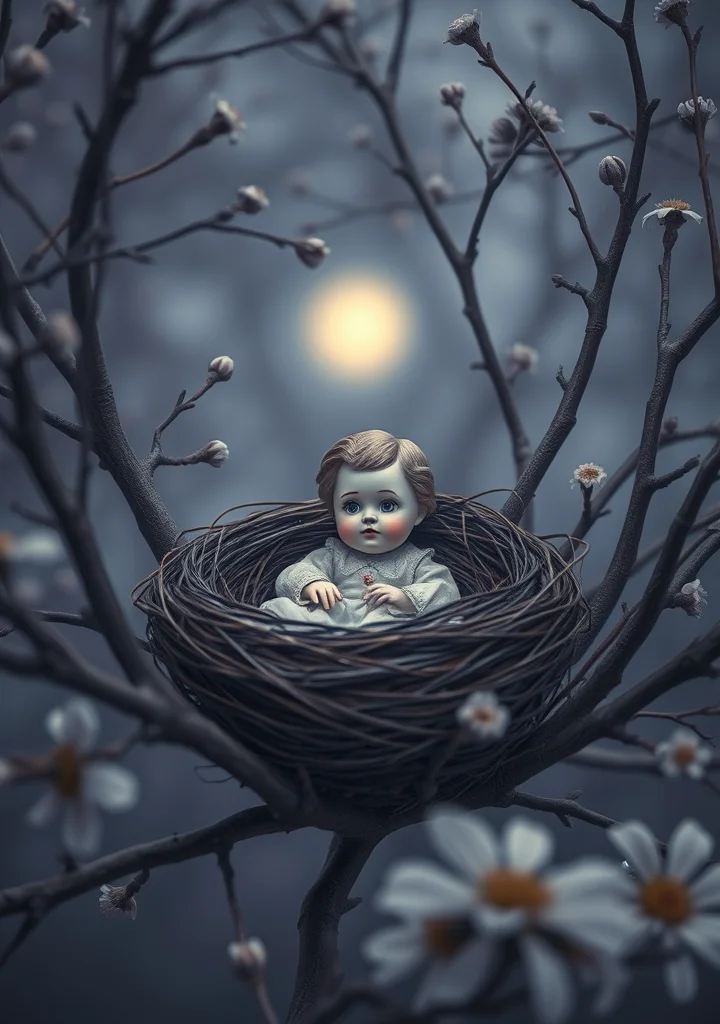
A perpetual twilight clings to the Kensington Gardens, mirroring the melancholic ache within Mary’s heart. Though the story unfolds as a child’s plaything, woven with lost toys and the imagined lives of birds, a deeper current of sorrow permeates the pages. The Little White Bird isn’t merely a tale of Peter Pan’s origins, but a ghostly visitation of grief. Every rescued doll, every whispered conversation with a robin, feels haunted by absence, a desperate attempt to resurrect something irrevocably broken. The Gardens themselves become a labyrinth of remembrance, each bench a monument to forgotten affections, each rustle of leaves a sigh carried on the wind. The narrative drifts, not quite real, not quite imagined, like a half-remembered dream. Shadows stretch long from the trees, obscuring the boundaries between the living and the lost. A fragile, ethereal beauty pervades the text, a beauty born from the delicate dance between hope and despair, leaving a lingering chill that settles deep within the reader's soul. It is a story told in the hushed tones of a forgotten nursery, where the echoes of childhood sorrows never truly fade.
Copyright: Public Domain
This license allows anyone to use your story for any purpose, including printing, selling, or adapting it into a film freely.

Recommended for you
48 Part
The salt-laced wind carries whispers of decay from the crumbling manor, Blackwood, where the remnants of a forgotten Eden cling to the cliffs. A creeping dread permeates the estate, a legacy of shadowed inheritances and the fevered dreams of its last, fractured master. Old Man Silas, driven mad by a grief that blooms in the choked gardens, stalks the halls, haunted by visions of a paradise lost – and a daughter claimed by the sea. The narrative coils tight around the suffocating weight of Blackwood’s history, a relentless tide of obsession that pulls the new ward, young Elias, into Silas’s fractured world. Sunken paths lead to grottoes filled with brine-stained carvings, where the scent of rot mingles with the phantom fragrance of jasmine. Every stone breathes with a sorrowful resonance, a stifled scream locked within the stone. The fog rolls in, thick as gravecloths, obscuring not only the jagged coastline but the fragile boundaries of Elias’s sanity. He finds himself drawn to the dark heart of the estate, to the ruined chapel where the echoes of a desperate faith still linger. The narrative isn’t merely a haunting; it *is* the haunting itself—a slow, inevitable descent into the shadowed embrace of a man consumed by loss, where the line between salvation and damnation dissolves in the salt-stained twilight. The very air seems to weep with the weight of Blackwood’s sorrow, a constant, chilling reminder that Eden, once a promise, is now a tomb.
20 Part
A creeping dread clings to the salt-laced air of Porthaven, a village choked by perpetual mist and shadowed by the crumbling manor of Blackwood Hall. Old Man Hemlock, postmaster and keeper of forgotten grievances, delivers letters not to their intended hands, but to the hollows of regret and festering secrets. Each missive, delivered with a tremor and a whispered apology, unravels a life already frayed by loneliness and the weight of unacknowledged sins. The narrative follows Elara Thorne, a woman haunted by a correspondence she never sent, a confession penned in feverish ink and delivered to a phantom recipient. As she seeks the source of these spectral deliveries, she descends into Blackwood’s labyrinthine halls, where portraits weep with soot and the scent of brine mixes with the dust of forgotten rituals. The house itself breathes with a sorrowful intelligence, its corridors echoing with the murmur of broken promises. Every room is a mausoleum of fractured memory, each object a shard of a life shattered by the wrong letter—a word misplaced, a truth concealed, a love betrayed. The very stones seem to weep with the weight of the past, and Elara finds herself caught in a tightening spiral of delusion and decay, unsure if the horrors she uncovers are real or born of her own unraveling mind. The fog outside mirrors the confusion within, obscuring the boundaries between the living and the dead, and the truth buried beneath layers of whispered accusations and unspoken fears. A chilling silence pervades, punctuated only by the relentless drip of rain and the unsettling certainty that someone, somewhere, is watching her unravel.