Broken Wheels
  • 21
  • 0
  • 3
  • Read 21
  • 0
  • Part 3
Completed, First published Jun 09, 2026

The novel follows Louis, haunted by the aftermath of a hit-and-run. After striking a young cyclist while driving intoxicated, he anonymously delivers remorse and aid to the injured boy, Harry, now recovering in hospital. While Louis fears exposure and legal consequences, Harry grapples with conflicting feelings of gratitude and suspicion towards his anonymous benefactor. As Harry’s mother and a friend debate the merits of a lawsuit, the narrative traces the complex interplay of guilt, deception, and the weight of responsibility. These chapters reveal a story unfolding with anxious, secretive tones.
Copyright: All Rights Reserved
No person is allowed to use, redistribute, or modify your work in any form without your explicit permission.
Recommended for you
35 Part
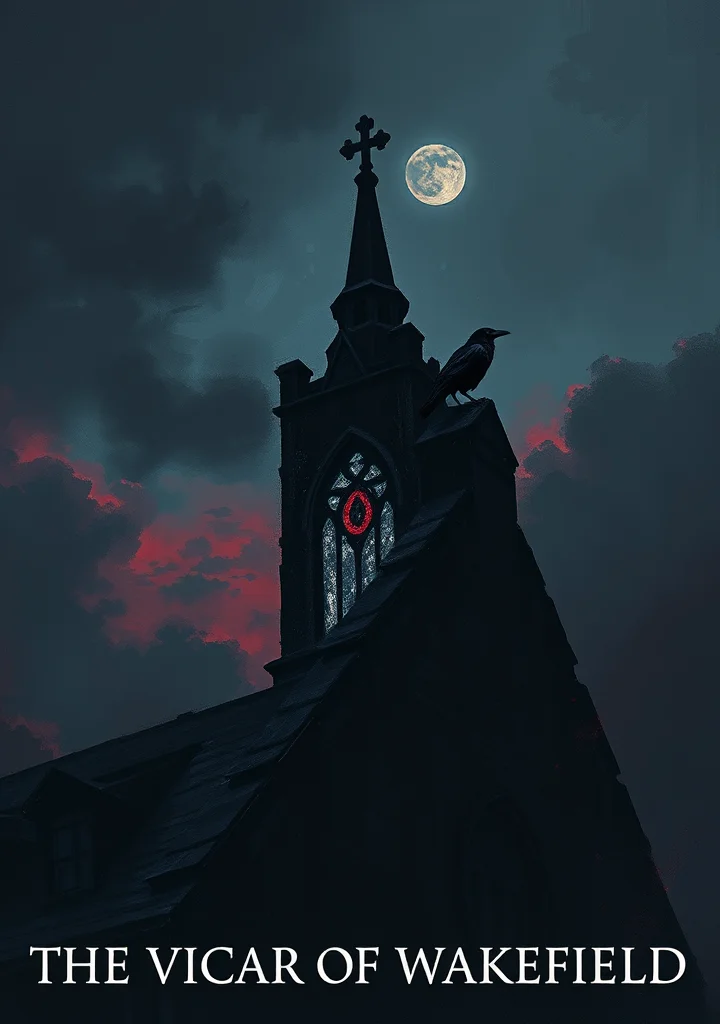
A creeping dread settles upon the reader even before the first page is turned. Wakefield, a village steeped in mist and rumour, becomes a prison of piety and hidden vice. The vicar, a man of gentle intent, finds his world unraveling not through grand tragedy, but through the insidious rot of circumstance and the blossoming sins of those closest to him. Sunlight here is brittle, casting long shadows that cling to the crumbling stone of the church and the shadowed faces of its inhabitants. The narrative breathes with the stifled sighs of daughters seduced by vanity, the desperate gambles of a brother consumed by ambition, and the slow, agonizing decay of a family’s reputation. Each act of kindness, each whispered prayer, is shadowed by the knowledge of impending ruin. A suffocating domesticity, rendered with a cold, precise hand, traps the reader within the suffocating walls of the vicarage. The air is thick with the scent of damp earth and decaying lace, a fragrance of broken promises and fractured faith. The story unfolds less as a sequence of events, and more as a gradual suffocation, the tightening of a noose woven from good intentions and the inevitable unraveling of a life lived in the shadow of expectation. It is a slow poisoning, where the poison is not malice, but the crushing weight of a world too small to contain its desires. Wakefield itself is a character—a silent, watchful entity that feeds on the failings of its inhabitants and buries their secrets in the graveyard’s cold embrace.
15 Part
A suffocating mist clings to the crumbling stone of Wollaston’s world, a landscape haunted by the ghosts of reason abandoned. This is not a tale of spectral apparitions, but of a rot within the very bone of existence, where the boundaries between the natural world and the fracturing psyche dissolve. The narrative unfolds like a slow poisoning, tracing the decay of a man’s faith not through divine revelation, but through the cold, clinical dissection of the world’s mechanics. Every wildflower dissected, every star’s trajectory charted, feels less a discovery and more an incision – revealing not the hand of God, but the gaping void where devotion once resided. A pervasive dread settles not in grand, theatrical horrors, but in the meticulous observation of decay. The prose mirrors the era’s obsession with precision, yet each measured sentence feels like a tightening noose. Sunlight here is not a promise of warmth, but a harsh glare exposing the barrenness of a landscape stripped of all comfort. It is a study in isolation, not of hermits in remote cabins, but of a consciousness slowly entombed within the suffocating rationality of its own design. The silence isn’t emptiness, but the stifled scream of a soul observing its own extinction. The air itself tastes of ash and the scent of dried herbs, hinting at a morbid alchemy where the pursuit of natural law becomes a ritual of self-annihilation. One reads not to understand a religion, but to witness the unraveling of one man’s mind as he methodically charts his descent into the barren, unforgiving wilderness of a godless universe.
10 Part
A creeping twilight descends upon young Emil Sinclair as he’s drawn into the magnetic orbit of Max Demian, a figure both beautiful and terrifyingly unbound. Hesse’s narrative isn’t merely a coming-of-age, but a descent into shadowed chambers of the self, where inherited morality fractures against the raw stone of instinct. The air thickens with the scent of incense and forbidden knowledge as Sinclair’s world fractures – the rigid structure of his upbringing, the suffocating piety of his mother, all crumble beneath Demian’s gaze. Every encounter is layered with a premonition of doom, a cold wind whistling through the hollows of Sinclair’s nascent soul. The novel breathes with the claustrophobia of a gilded cage, the oppressive weight of societal expectations pressing down like lead. Dreams twist into grotesque allegories, mirroring Sinclair’s inner turmoil with unsettling clarity. Ancient symbols, unearthed from the loam of forgotten myths, become obsessions, fueling a desperate quest for liberation. The narrative is haunted by the specter of a fractured duality, a constant blurring of light and shadow, innocence and corruption. Sinclair’s journey isn’t towards enlightenment, but towards a harrowing reckoning with the darkness within—a darkness that threatens to consume him entirely as he spirals towards the inevitable, brutal severing of ties with the world he once knew. The final revelation is less a triumph, more a chilling echo in the vast, empty cathedral of his own becoming.