
-
Read 8.4K
-
0
-
Part 735
Completed, First published Mar 02, 2026
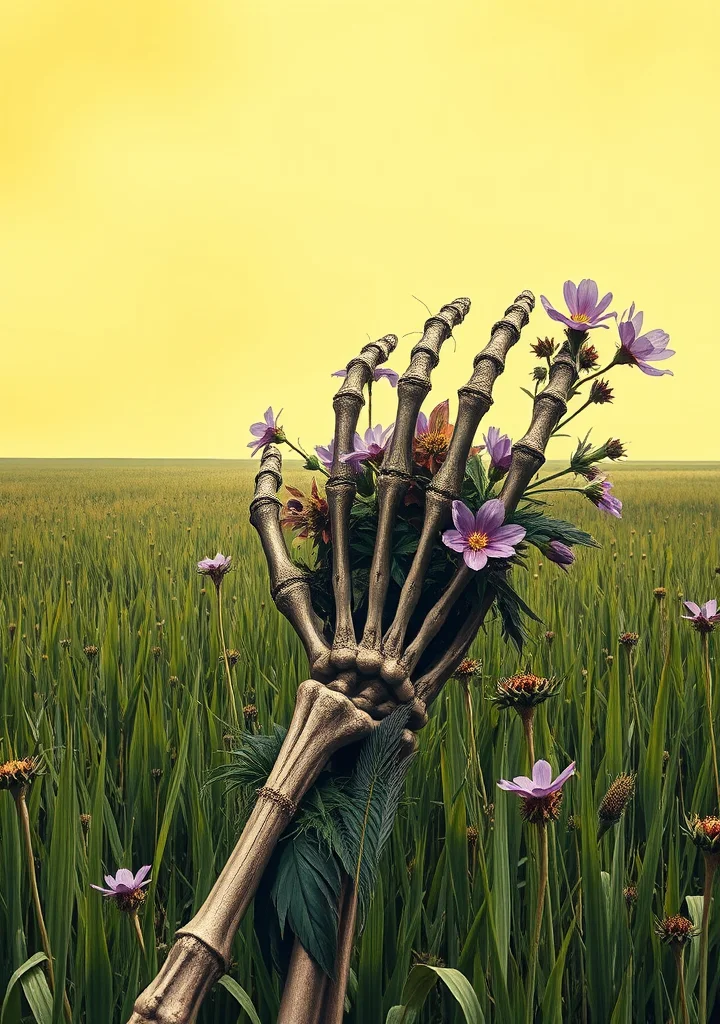
A creeping dread, not of shadowed castles or crumbling manors, but of boundless, suffocating growth. The prairies stretch not as fields of gold, but as an endless, whispering green maw, swallowing men whole into its vegetative heart. Whitman’s America breathes not with freedom, but with a feverish, humid pulse—a suffocating embrace of the natural world where bodies decompose into root and bloom, indistinguishable from the soil. Each blade of grass becomes a raven’s feather, each wildflower a pale, staring eye. The cities are merely pauses in the relentless expansion, choked by vines and the echoing chants of unseen laborers merging into the landscape. The narrative is a fever dream—a slow, intoxicating loss of self within a continent’s verdant decay. There is a haunting, almost erotic, surrender to rot and renewal, a sense of being consumed not by death, but by an eternal, pulsing, green oblivion. The voices—fragments of sermons, laborers’ cries, lovers’ whispers—are less conversations than the murmuring of spores, carried on the wind, seeding further growth in the deepening gloom. It is a landscape that remembers, and the remembering is not kind.
Copyright: Public Domain
This license allows anyone to use your story for any purpose, including printing, selling, or adapting it into a film freely.
This license allows anyone to use your story for any purpose, including printing, selling, or adapting it into a film freely.
Recommended for you