
-
Read 368
-
0
-
Part 17
Completed, First published Mar 02, 2026
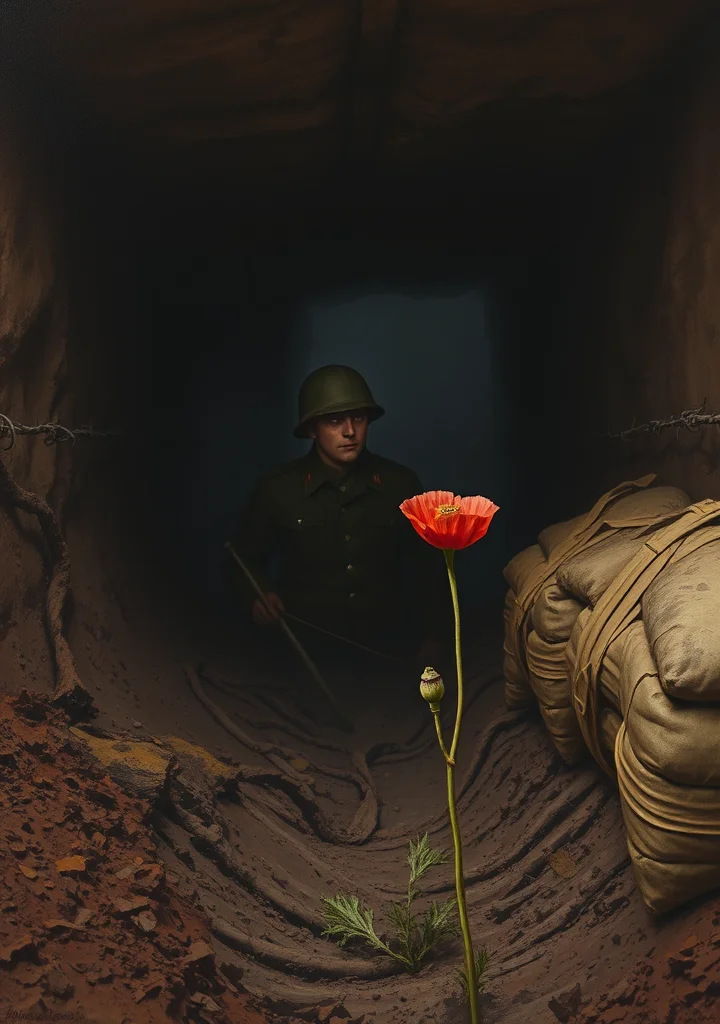
Dust motes dance in the perpetual twilight of a forgotten war. A Yankee, adrift from his own soil and steeped in the mud-choked trenches of a conflict not his own, finds himself not merely amidst the clang of steel and screams of men, but within a slow, creeping rot of the soul. The narrative clings to the loam-stained pages like a phantom limb, detailing not grand battles but the suffocating claustrophobia of a dugout carved into the very heart of despair. Holmes doesn’t chronicle glory; he catalogues the decay – the gnawing isolation of men reduced to shadows, the phosphorescent glow of fungal blooms feeding on corpses in no-man’s land, the echoing silence that descends when the shelling ceases and only the dripping water remains. Each page breathes with the damp chill of the earth, the metallic tang of blood, and the haunting realization that the true enemy isn't across the barbed wire, but within the hollows of one’s own chest. A creeping dread permeates the prose, a sense of something ancient and unyielding stirred by the ceaseless churn of the war machine. The Yankee’s descent isn’t into madness, but into a numb, grey acceptance of a world where hope is as brittle as a shattered bone and oblivion a welcome reprieve. It is a study in the architecture of ruin, both of men and of the landscapes they’ve swallowed whole.
Copyright: Public Domain
This license allows anyone to use your story for any purpose, including printing, selling, or adapting it into a film freely.
This license allows anyone to use your story for any purpose, including printing, selling, or adapting it into a film freely.
Recommended for you