
The Economic Consequences of the Peace
  • 555
  • 0
  • 26
  • Read 555
  • 0
  • Part 26
Completed, First published Mar 02, 2026

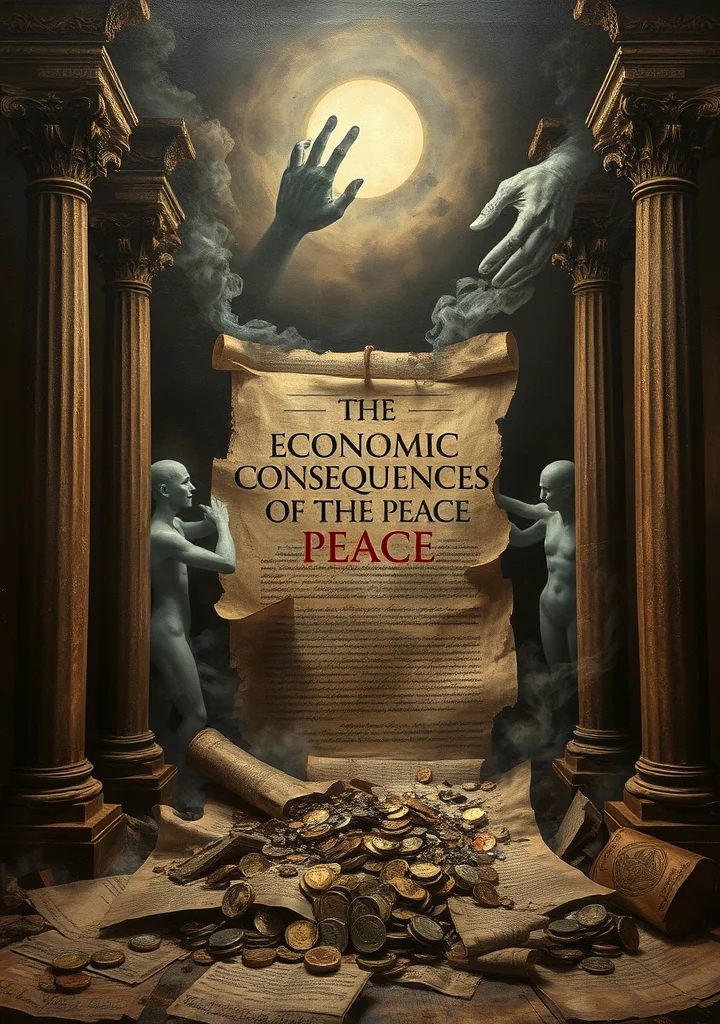
A creeping fog clings to the shattered remnants of empires, mirroring the ruinous calculations etched into every treaty line. This is not a history of battles won, but of debts accrued, of futures bartered away in gilded salons and shadowed counting houses. The air hangs thick with the scent of ash and regret, a chill seeping from the very stone of Versailles. Each paragraph feels like a slow excavation of a buried grief, uncovering the rot beneath the veneer of restoration. The narrative doesn't explode with violence, but unravels in the quiet decay of promises broken. It’s a story told in ledger books and whispered anxieties, a creeping dread that settles not in grand catacombs, but in the hollowed-out eyes of merchants and the tightening grip of creditors. A suffocating weight presses down, not of armies, but of unrealized loans and the spectral hunger of nations left to starve on the bones of their pride. The prose itself is a labyrinth of clauses and caveats, mirroring the intricate, suffocating web of obligations woven after the war. It's a world lit by the flickering gaslight of statistical tables, where every decimal point feels like a nail hammered into the coffin of stability. A subtle, pervasive despair permeates the text, the sense that even in the meticulous charting of consequence, the abyss stares back, indifferent to the logic of man. The true horror isn't found in the carnage of the guns, but in the cold, elegant precision with which hope is systematically dismantled, and the silence that follows.
Copyright: Public Domain
This license allows anyone to use your story for any purpose, including printing, selling, or adapting it into a film freely.
Recommended for you

18 Part
Dust motes dance in the perpetual twilight of N’Baro, a forgotten colony world clinging to the edge of known space. Here, amidst the crumbling remnants of a long-dead civilization, a single, childlike creature—fuzzy, gentle, and utterly alien—is discovered. But this is not merely a find for curious xenologists. This ‘fuzzy’ possesses a mind, a latent intelligence woven into the very fabric of the planet’s strange flora. The story unfolds not as a grand space opera, but as a creeping dread. The silence of the abandoned cities is broken only by the rustle of unseen things in the jungle, and the echoing questions of a man named Blakes who finds himself entangled in its mysteries. The atmosphere is one of pervasive isolation, a sense of being watched by something ancient and indifferent. The crumbling structures are not merely ruins; they are bone cages, echoing with the ghosts of a forgotten race. A slow burn of paranoia grips N’Baro as the truth of the ‘fuzzy’ unravels. It’s a world where the line between predator and prey, sentience and savagery, blurs in the humid air. The colony is not merely threatened by the creature, but by the echoes of its past—a past that suggests the very planet itself is alive, and that humanity has stumbled into the domain of something profoundly, terrifyingly *other*. The narrative is haunted by the weight of centuries, and the chilling realization that what lies hidden within the jungle isn’t merely an anomaly, but a reflection of humanity's own desperate, grasping ambition.
36 Part
Dust motes dance in the perpetual twilight of a Parisian attic, where Maurice de Barant, a scholar consumed by decadent curiosity, charts the blasphemous genealogy of fallen grace. France weaves a narrative steeped in the scent of wormwood and regret, tracing the lineage of Lucifer not through hellfire, but through the meticulously documented seductions of women—from the Virgin Mary to the courtesans haunting the boulevards. The air thickens with a perverse erudition, as Maurice unravels a history where angels, driven by boredom and a refined taste for earthly pleasure, have quietly infiltrated the human world, their celestial origins dissolving into the amber haze of absinthe-soaked nights. A creeping unease settles in as the novel progresses; a sense that the very foundations of morality are built on shifting sands of desire and hypocrisy. The narrative isn’t one of grand demonic battles, but of whispered heresies, subtle corruptions, and the insidious bloom of beauty in decay. Each chapter feels like a chipped fragment of stained glass, refracting a light that is both sacred and profane, illuminating the shadowed corners of a France where the divine has traded its wings for the weight of gold and the murmur of a lover’s breath. The revolt isn’t a fiery uprising, but a slow, elegant erosion—a surrender to the intoxicating allure of the mortal coil, observed with a chillingly detached, scholarly gaze. A fragrance of sulfur lingers, not from hell’s furnace, but from the burning ambitions of men who dare to name the angels' names.
11 Part
The fog clings to the Thames like a shroud, mirroring the miasma of regret that hangs over the lives of Selwyn Grey and his doomed circle. This is a London steeped in the amber light of fading gas lamps, where conversations unravel in the damp chill of drawing rooms, revealing fractures in memory and the insidious rot of unspoken desires. A man’s upright posture—a rigid attempt at self-possession—becomes a desperate defense against the unraveling of identity itself, against the creeping realization that the past is not a fixed landscape but a shifting, treacherous terrain. The narrative moves like a slow bleed, staining the present with the phantom pain of lost loves and compromised ideals. Each encounter is a half-remembered dream, a fragment of a fractured narrative pieced together through unreliable recollections and the veiled anxieties of those caught in the afterglow of Edwardian decay. The air is thick with the scent of decaying roses and the metallic tang of suppressed emotion. A claustrophobic sense of enclosure pervades, not just within the London rooms but within the very minds of those who believe themselves to be masters of their fate. The story doesn’t reveal itself; it seeps into the skin, a cold dampness that lingers long after the final page is turned, leaving you haunted by the subtle, devastating power of what has been lost—and what has never truly been known. It is a story of men and women adrift on a sea of fractured recollection, each struggling to maintain the illusion of solidity in a world where even the most steadfast foundations are revealed to be built upon sand.