
-
Read 244
-
0
-
Part 10
Completed, First published Mar 02, 2026
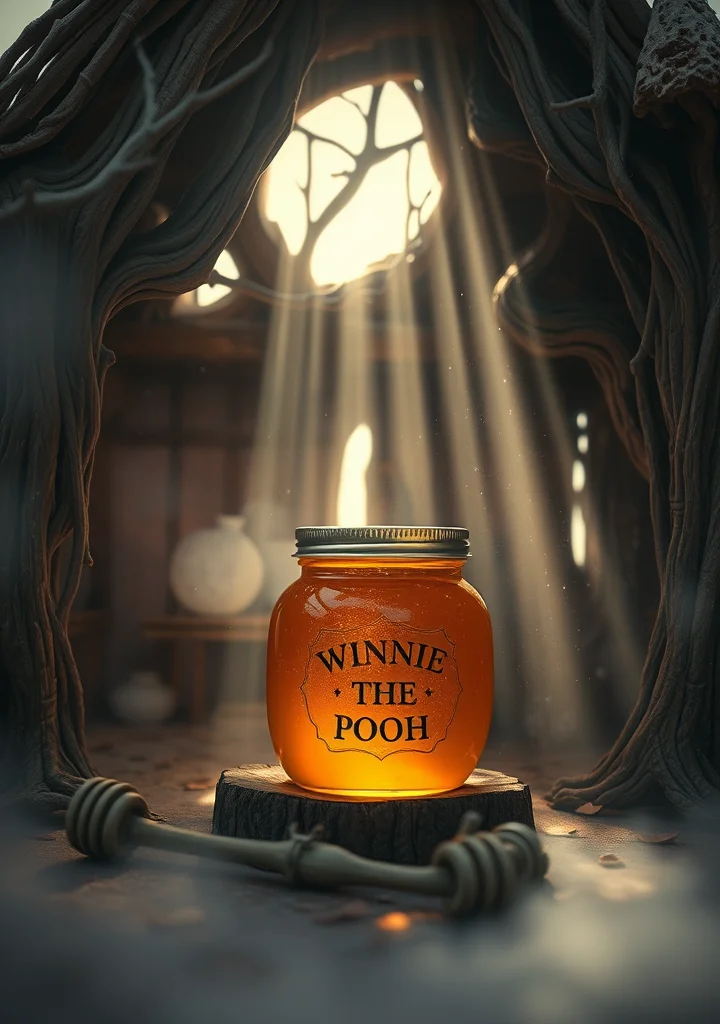
A creeping fog hangs perpetually over the Hundred Acre Wood, not of mist, but of forgotten childhoods. Sunlight filters through the trees like diluted bone-light, illuminating dust motes dancing in the hollows of Pooh’s house – a structure less of comfort than of containment. The honey, perpetually sticky and cloying, feels less a treat than a binding agent, holding the wood’s inhabitants to a loop of ritualistic tea parties and mournful expeditions for lost tails. Eeyore’s grey skin stretches taut over grief, not simply sadness, but the echo of something irrevocably *gone*. Piglet’s terror isn’t of Heffalumps and Woozles, but of the spaces between breaths, the yawning silence that threatens to swallow him whole. Each gentle request for a “smackerel” feels like a desperate plea to ward off an encroaching nothingness. The wood itself breathes with a slow, suffocating rhythm, a place where time folds inward, and the rustling leaves whisper of things better left unremembered. It is a place where innocence is not a virtue, but a fragile shell perpetually cracking under the weight of an unseen sorrow. The very sweetness is laced with rot, and the games played within the wood are not games at all, but desperate attempts to stave off the final, inevitable unraveling.
Copyright: Public Domain
This license allows anyone to use your story for any purpose, including printing, selling, or adapting it into a film freely.
This license allows anyone to use your story for any purpose, including printing, selling, or adapting it into a film freely.
Recommended for you