
Confissões Moonlit
  • 7
  • 0
  • 1
  • Read 7
  • 0
  • Part 1
Ongoing, First published Jun 01, 2026

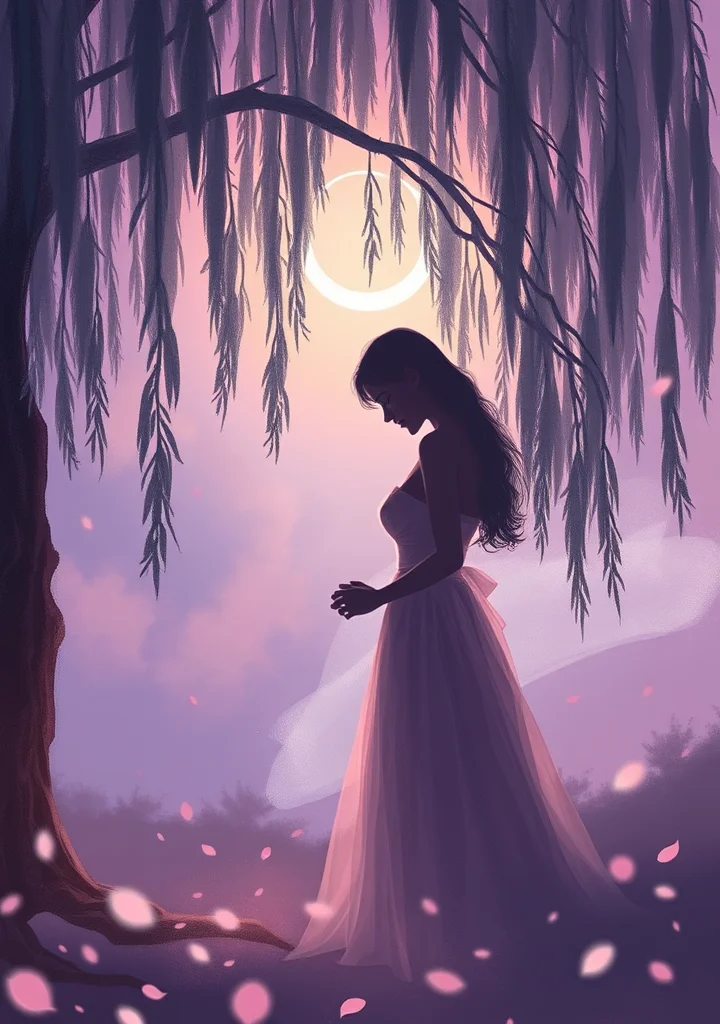
A narrativa traça uma complexa teia de afeto à medida que os personagens navegam seus sentimentos sob o luar. *Confissões Moonlit * inicialmente revela uma troca terna entre Tanjiro e (y / n), insinuando um romance florescente recíproco em segredo. Outros capítulos mostram interações lúdicas e provocantes - particularmente entre (y / n) e Zenitsu - que se desviam de humorístico para emocionalmente volátil. Um desafio proposto por (y / n) para aumentar a tensão..
Copyright: All Rights Reserved
No person is allowed to use, redistribute, or modify your work in any form without your explicit permission.
Recommended for you

5 Part
Dust motes dance in the echoing halls of Vathek, a gilded cage of decadence built upon the bones of ambition. The story unfurls not as a simple journey, but as a slow, suffocating descent into a nightmare of Eastern opulence and ancient, malevolent power. Beckoff’s prose breathes with the stifling perfume of jasmine and decay, weaving a tapestry of shadows where the line between reality and hallucination dissolves. The desert stretches, a silent, sun-bleached witness to Vathek’s relentless pursuit of forbidden knowledge. Each chamber encountered within his vast domain whispers of forgotten sorceries, echoing with the lament of djinn and the cold touch of spectral guardians. A creeping dread permeates the narrative, not from overt horror, but from a subtle erosion of sanity as Vathek, driven by hubris, unravels the very fabric of his existence. The atmosphere is one of exquisite torment, a claustrophobic grandeur where pleasure curdles into despair. It is a story steeped in the scent of burning incense and the weight of ancestral curses, where every indulgence draws Vathek closer to a chasm of cosmic indifference. The narrative chills with the realization that the true terrors lie not in the supernatural, but in the monstrous potential within the human heart, consumed by its own insatiable desires. It is a descent into a darkness not of demons, but of the self, mirrored in the endless, desolate landscapes that mirror the fracturing of a soul.
32 Part
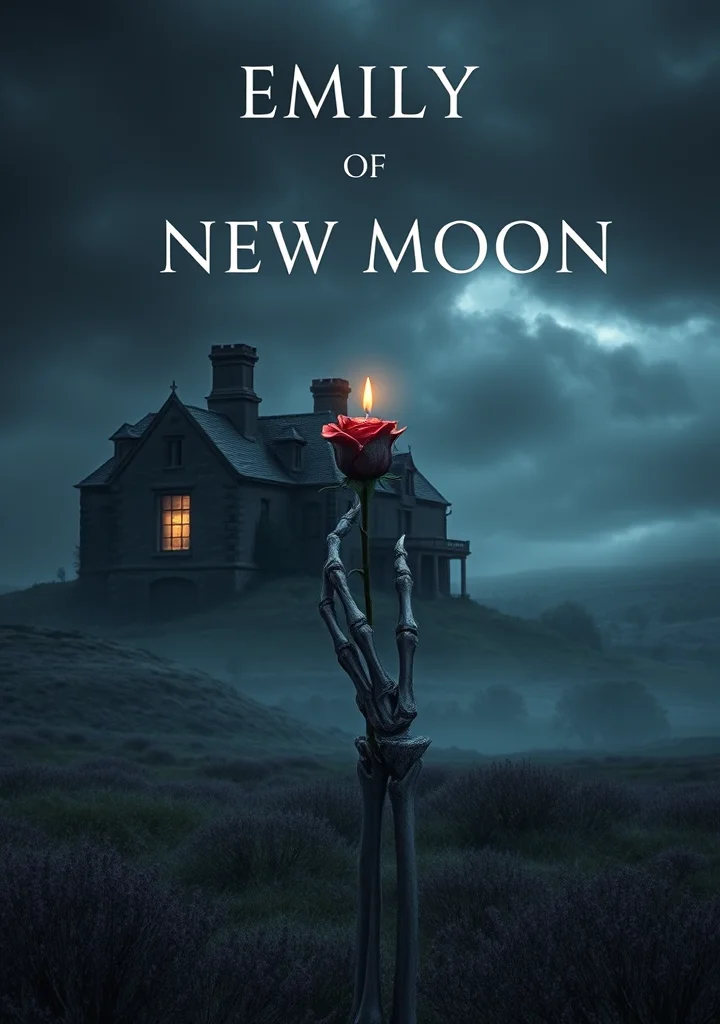
A perpetual twilight clings to the shadowed corners of New Moon, a desolate, windswept inheritance haunted by whispers of misfortune. The orphaned Emily Byrd, a creature of wild imagination and fiery spirit, arrives to claim her legacy—a decaying ancestral home steeped in the lore of a cursed lineage. But the house breathes with a sorrow that seeps into Emily's very soul, mirroring the spectral grief of her mother, a phantom presence woven into the very fabric of the moors. The narrative unfolds as a slow, melancholic descent into a world where dreams and realities blur, where the scent of heather and brine mingles with the bitterness of forgotten promises. Each chamber of New Moon holds a fragment of the past—a tarnished mirror reflecting a forgotten face, a faded portrait hinting at a tragic fate, a diary bound in leather stained with tears. Emily’s burgeoning poetic gifts become a conduit to the unseen, drawing her closer to the secrets buried within the family’s history. She is watched over by the silent, watchful eyes of the old servants, their faces etched with the weight of generations past. But the beauty of the landscape is deceptive, for the moor itself seems to possess a hungry darkness, a longing to reclaim what was lost. As Emily’s heart blossoms with both love and loss, she finds herself entangled in a web of family secrets, shadowed by the looming possibility that she too is destined to be consumed by the curse of New Moon. The novel is a slow burn, a haunting exploration of loneliness, resilience, and the enduring power of memory—a place where the boundary between life and death feels fragile as a moonbeam on a stormy sea.
129 Part
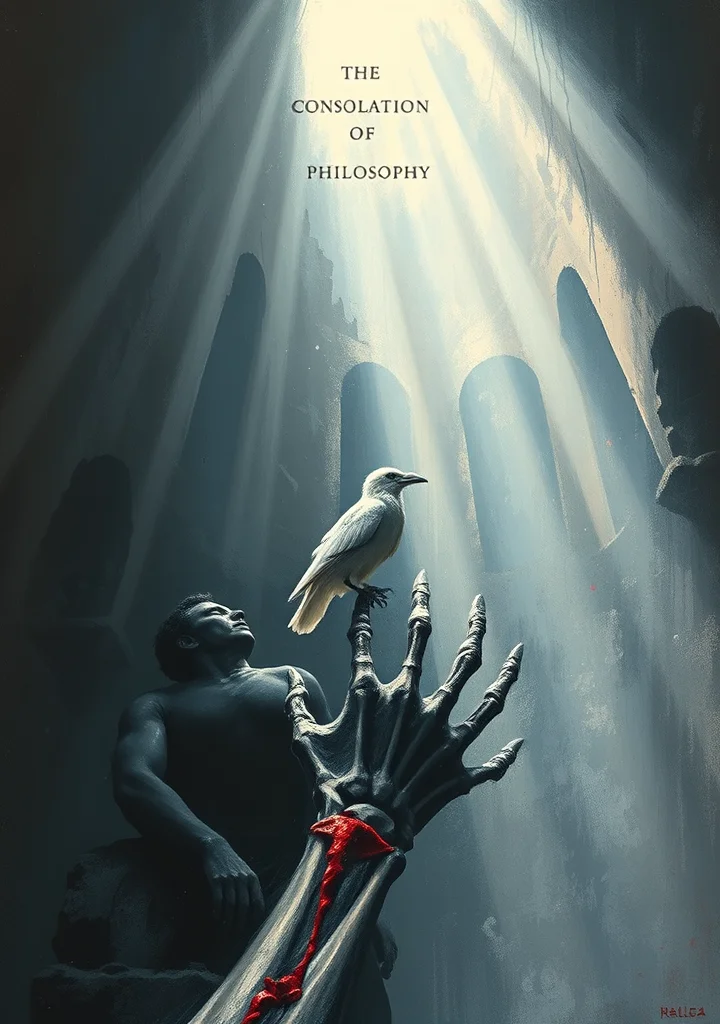
Dust motes dance in the fractured light of a crumbling tower, mirroring the fragments of a life shattered by exile and betrayal. Within these stone walls, a man—once a pillar of power, now stripped bare—grapples not with chains or bars, but with a grief that threatens to swallow him whole. He is haunted by the swift, cruel fall from grace, the whispers of accusations echoing in the hollows of his despair. But solace, or a twisted mockery of it, comes in the form of a spectral presence—Philosophy herself, a woman woven from starlight and sorrow, her voice a chilling balm against the wounds of the world. She leads him through labyrinthine corridors of thought, where reason battles with the phantom pain of loss. The air is thick with the scent of decay, both of the body politic and the soul. Visions of fortune’s wheel—a cruel, spinning device—loom large, showcasing the ephemeral nature of earthly power. Each argument, each carefully constructed verse, feels less like a comforting embrace and more like the cold touch of inevitability. The narrative is steeped in the grey of twilight, a perpetual autumn where every leaf falling is a reminder of what is lost. It is a meditation on the nature of good and evil, not as grand battles, but as insidious erosion, a slow poisoning of the spirit. The reader is drawn into a claustrophobic space where the only escape is through the labyrinth of the mind, where the architecture of despair is both beautiful and terrifying. Ultimately, the question lingers: is this consolation a true refuge, or merely a gilded cage built around a broken heart?
68 Part
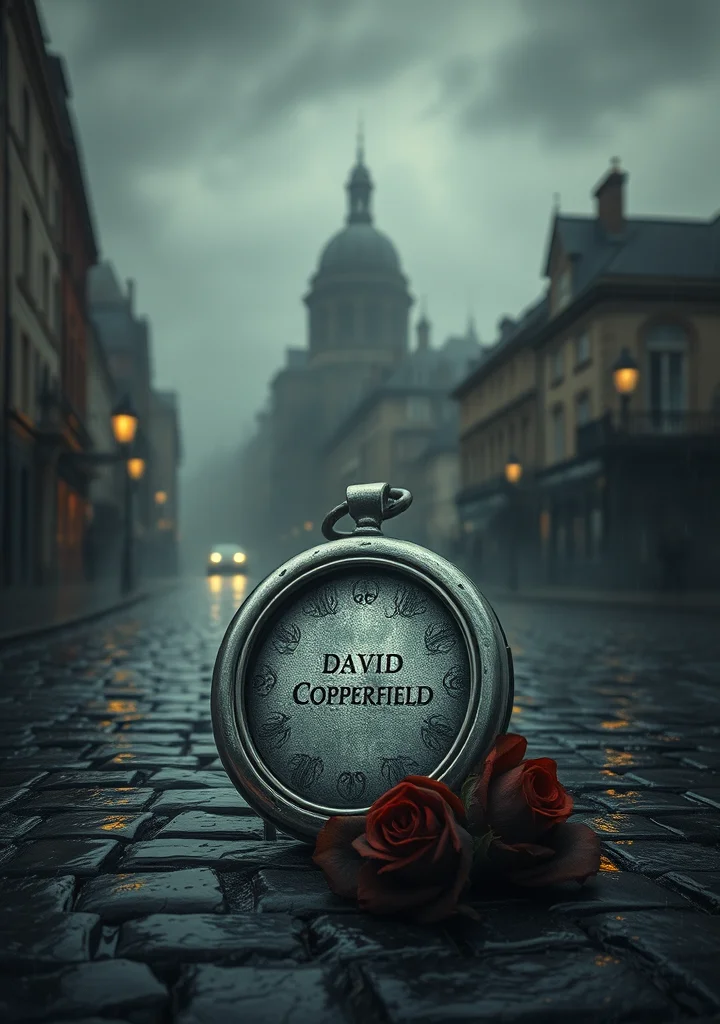
A creeping fog clings to the cobbled streets of a childhood shadowed by loss. The scent of damp wool and decaying roses permeates the air, clinging to the memory of a vanished father and a stifled mother. Within the cavernous, echoing halls of bleak estates, a boy’s innocence unravels thread by thread, woven with the chilling whispers of ambition and the gnawing hunger of want. Every hearth fire casts dancing, skeletal shadows that mimic the grasping hands of creditors and the predatory smiles of those who feast on vulnerability. The narrative drifts, a spectral current carrying fragments of fractured lives – a brutal stepfather, a suffocating benefactor, a labyrinthine London choked with soot and despair. Each character is a haunted reflection, their faces etched with secrets and their voices laced with the ache of unspoken sorrow. A pervasive melancholy clings to the narrative, thickening like the grime on windowpanes, obscuring the fragile hopes that flicker within the suffocating darkness. The story unfolds not as a simple ascent, but as a slow descent into the labyrinth of the human heart, where every gilded room holds a ghost, and every whispered confidence carries the weight of a forgotten grave. The very air vibrates with the stifled cries of those swallowed by circumstance, their fates echoing in the hollow chambers of a society built on crumbling foundations. It is a world where the brightest smiles conceal the deepest wounds, and where the pursuit of happiness leaves only a trail of dust and regret.