The Woodsman's Claim
  • 12
  • 0
  • 5
  • Read 12
  • 0
  • Part 5
Completed, First published May 23, 2026

The story opens onto a landscape fraught with tension as Dahlia navigates a world where a simple journey to her grandmother’s house becomes a series of unsettling encounters. These chapters trace Dahlia’s attempts to assert her independence amidst unwanted attention from men who challenge her path. From a suggestive proposition for marriage to increasingly fraught confrontations in the wilderness, the narrative hints at complex power dynamics and the dangers of rural life. The narrative reveals a world where travel is not free, and even a borrowed belt can draw unwanted scrutiny. These early chapters suggest a story where a woman’s journey is continually interrupted and questioned.
Copyright: All Rights Reserved
No person is allowed to use, redistribute, or modify your work in any form without your explicit permission.
Recommended for you
15 Part
A suffocating miasma hangs over the provincial heartland of Russia, clinging to decaying estates and the spectral ambitions of its masters. Here, amidst crumbling manor houses and the relentless expanse of frozen fields, a man named Chichikov arrives, not seeking land, but the very *absence* of it. He purchases not living flesh, but the names of deceased serfs – ‘dead souls’ – to resurrect them on paper, claiming their phantom holdings for his own avarice. The air is thick with the stench of rot – not just of bodies in shallow graves, but of a society consumed by stagnation and parasitic need. Each provincial town is a mausoleum of faded grandeur, haunted by the petty tyrannies of landlords and the hollow echoes of their wasted lives. A creeping dread permeates the narrative, a sense that this isn’t merely a comedy of manners, but a descent into a perverse, bureaucratic hell. The landscape itself seems to mirror the moral decay, a grey, skeletal world where the boundaries between reality and nightmare blur. Fog clings to the roads, obscuring the faces of those encountered, hinting at hidden sins and the festering secrets buried within the soil. Chichikov’s journey is a macabre pilgrimage through a realm of spectral possession, where the ghosts of the dead are both commodity and curse, and the living are already half-rotted by their own corruption. The novel doesn't simply *tell* of decay; it *breathes* it, a suffocating weight pressing down on the reader, leaving a lingering chill long after the final page is turned.
74 Part
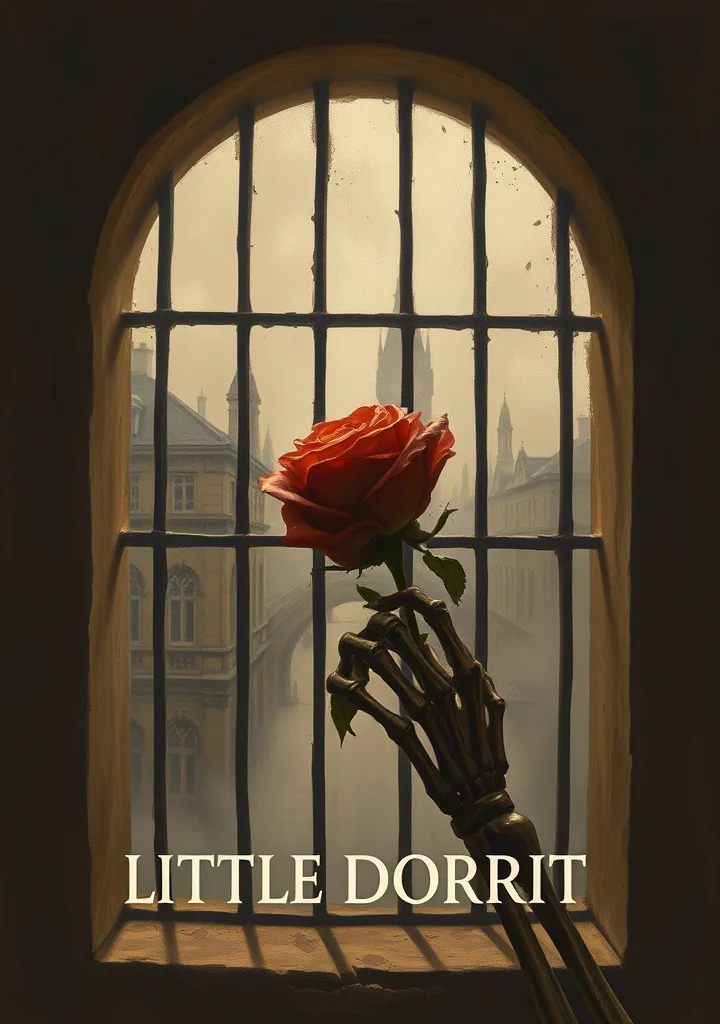
A perpetual twilight clings to the Dorrit family, born within the suffocating walls of the Marshalsea Debtors’ Prison. Dust motes dance in the shafts of pallid sunlight that penetrate the gloom, illuminating a world built on inherited despair. The narrative unfolds not as a story of escape, but of entrenchment – a slow, creeping rot within the heart of London’s shadowed districts. A suffocating domesticity, laced with the scent of decay and stale hope, pervades every corner. The city itself breathes a feverish sickness, its cobblestones slick with rain and regret. The weight of ancestral debts presses down like a leaden shroud, mirroring the labyrinthine streets where shadows stretch and lengthen, obscuring the boundaries between freedom and imprisonment. There’s a fragility to the light, a constant sense of something crumbling beneath a veneer of civility. Even the briefest glimpses of sun-drenched fields feel haunted by the prison’s pervasive darkness. The narrative whispers of forgotten inheritances, of lives spent meticulously charting the boundaries of their own cages, and the suffocating intimacy of a family bound by misfortune, not love. A creeping melancholy clings to the prose, a sense of inevitability that echoes in the hollow chambers of the heart. It’s a world where the smallest kindness feels like a desperate plea against oblivion, and where every act of charity is stained with the knowledge of inevitable loss.