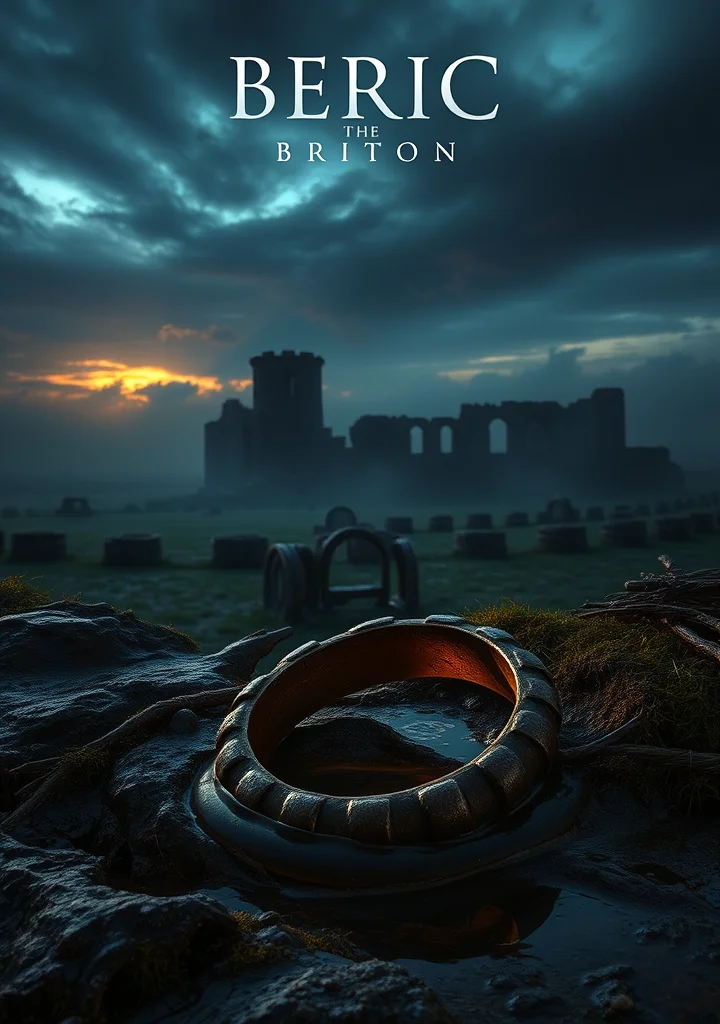

Beric the Briton
  • 153
  • 0
  • 24
  • Reads 153
  • 0
  • Part 24
Completed, First published Mar 02, 2026

The mists cling to the crumbling Roman walls of Britannia, a land haunted by the ghosts of legionaries and the whispers of druids. Beric, son of a British chieftain, is drawn into a swirling vortex of betrayal and rebellion as the Saxon tide rises, fueled by greed and shadowed by ancient pagan rites. Every shadowed forest holds the threat of ambush, every stone circle a forgotten god demanding sacrifice. The air itself is thick with the scent of woodsmoke, damp earth, and the metallic tang of blood. Ancient barrows yawn open, revealing not just bones, but a creeping darkness that seeps into the very soil. Loyalty is a brittle thing, shattered by ambition and whispered prophecies. The narrative unfolds amidst a landscape of perpetual twilight, where the line between the living and the dead blurs with each clash of steel, each guttural war cry echoing through the haunted valleys. It is a story steeped in the iron smell of courage, and the chilling awareness that even victory offers no escape from the encroaching shadows of a dying age. The very stones seem to weep with the memory of a fallen empire, and Beric’s desperate struggle is merely a flicker against the vast, uncaring darkness consuming the land.
Copyright: Public Domain
This license allows anyone to use your story for any purpose, including printing, selling, or adapting it into a film freely.
Recommended for you
54 Part
A creeping fog clings to the cathedral spires of Barchester, mirroring the insidious tendrils of ambition and deceit that tighten around the lives within its ancient walls. The air hangs heavy with the scent of damp stone and decaying gentility, a perfume of hushed scandal and simmering resentments. Here, amidst the shadowed cloisters and echoing halls, a web of delicate, yet poisonous, social machinations unfolds. Miss Eleanor Bold, adrift in a sea of inherited wealth and uncertain affections, finds herself a pale moth drawn to the flickering flames of power held by the ambitious and calculating Reverend Mr. Slope. But Barchester is a place where smiles are brittle as frost, and piety masks a hunger for advancement. Each stolen glance, each murmured secret, is weighted with the burden of expectation and the threat of ruin. The very stones seem to listen, absorbing the whispers of gossip and the slow, agonizing unraveling of reputations. A sense of claustrophobia permeates the narrative, not of physical confinement, but of the suffocating weight of convention. The story unfolds like a slow bloom of mildew, spreading across the polished surfaces of respectability, revealing the rot beneath. It is a world where the slightest transgression casts a long, chilling shadow, and where the pursuit of a comfortable life can lead one down corridors of unbearable loneliness and regret. The shadows lengthen as the novel progresses, obscuring the true motives of the characters, leaving only the hollow echo of their desires in the cavernous silence of Barchester Cathedral.

16 Part
Dust motes dance in the violet light filtering through the orbital glass of Aptor, a city built on the bones of forgotten gods and fueled by the psychic residue of fractured realities. Here, amongst the chrome-slicked spires and the echoing, hollowed-out plazas, the jewels are not gems of wealth, but fragments of memory—stolen glimpses of past lives woven into the very fabric of the city’s decaying architecture. Each stone pulses with a stolen emotion, a lost identity, and the pursuit of these fragments consumes the fractured elite who haunt the higher levels. The air itself is thick with regret, a constant, low thrum of sorrow that clings to the skin like a second shadow. Every reflection is a betrayal, every conversation a veiled transaction in fractured histories. Beneath the polished surfaces, a labyrinth of abandoned levels stretches into a suffocating darkness—a place where the city’s discarded memories fester and the ghosts of Aptor’s architects whisper their broken designs into the static-filled air. A slow rot permeates everything, not of decay, but of *remembering*. The jewels aren't just found, they're *unlocked* from those who've lost themselves in the city's endless halls. To possess one is to inherit a fragment of another’s life, a burden of stolen consciousness that threatens to unravel the self. The closer one gets to the heart of Aptor, to the source of the jewels' power, the more the boundaries between memory and reality blur, and the more one risks becoming nothing more than another echo in the city’s haunting symphony of loss. The city doesn't just watch its inhabitants fall apart—it *remembers* their disintegration.
35 Part
The sea claws at the edges of a crumbling estate, a place where the land itself seems to breathe with a malign intelligence. Here, the narrator, adrift in a crumbling, isolated house, charts the slow creep of dread as the boundaries between the real and the spectral dissolve. It is not merely a haunting, but an invasion – not of ghosts, but of things *between* worlds, drawn to the house’s peculiar position between dimensions. The walls themselves weep with an unearthly moisture, mirroring the encroaching nightmares that bleed from the landscape. A suffocating, claustrophobic terror permeates the narrative. The house is not simply a location, but a prison constructed of shifting geometries and suffocating silence. Each room echoes with the residue of forgotten horrors, and the very foundations seem to buckle under the weight of unseen presences. Outside, the sea delivers not wreckage, but fragments of impossible geometries, whispering of cyclopean structures and blasphemous shapes lurking beneath the waves. The air hangs thick with the scent of brine and decay, punctuated by the rasping of unseen claws on stone. It’s a descent into the abyss, not of madness, but of cosmic indifference. The narrator’s sanity frays as the house reveals its true purpose: a nexus point for horrors beyond human comprehension, a place where the veil between realities thins to a gossamer thread, and the darkness beyond stares back with cold, ancient eyes. A suffocating despair settles in, as the realization dawns that escape is not a matter of distance, but of oblivion.
62 Part
Dust motes dance in the fading light of provincial chateaux, mirroring the slow decay of ambition and the brittle fragility of hope. These letters, unearthed from forgotten bureaux and damp attics, whisper of two women bound by circumstance and the suffocating weight of societal expectation. One, a bride purchased for lineage, haunted by the spectral echoes of a loveless marriage. The other, a bride of convenience, her youth traded for the preservation of a crumbling estate. The narrative unfolds not in grand pronouncements, but in the tremor of a penned word, the bleed of ink mirroring the slow erosion of their spirits. Each missive is a fragment of a fractured life, stained with the bitter residue of betrayal, the chill of isolation, and the gnawing desperation for a love that exists only in the shadowed corners of their dreams. A pervasive melancholy clings to the pages, thick as the fog that shrouds the ancestral homes. The air hangs heavy with the scent of dying roses and the unspoken resentments that fester beneath layers of silk and lace. The landscapes—bleak vineyards, crumbling manors, and the oppressive silence of shadowed forests—become extensions of the women's internal landscapes: barren, desolate, and haunted by the ghosts of promises broken. The letters themselves are not merely communication, but desperate pleas cast into a void, each echoing with the chilling realization that they are trapped within a labyrinth of obligation and despair, their fates inextricably intertwined with the decaying grandeur of a bygone era.
12 Part
A suffocating dread clings to the steel decks and shadowed machinery of a transatlantic liner, where the brute force of labor grinds against a creeping, animalistic despair. The air itself is thick with coal dust and the greasy tang of engine rooms, mirroring the primal urges stirring within the hulking, ape-like figure of Paddy Donovan. He’s a man reduced to muscle and instinct, a creature of the hold, yet haunted by a phantom touch, a fleeting glimpse of something *other* than grime and iron. The narrative descends into a feverish, claustrophobic descent through the ship’s bowels—a world of flickering gaslight and the rhythmic throb of pistons, echoing the frantic beat of a caged heart. Donovan’s desperate attempts to connect, to *feel* something beyond the metallic clang of his existence, twist into a grotesque parody of yearning. The city above, glimpsed through grates and hatches, becomes a mocking reflection of a humanity he can no longer grasp. He is drawn to the grotesque carnival of the docks, to the desperate, predatory gazes of those who’ve lost their footing in the mire. The narrative bleeds into a brutal, fractured landscape of waterfront dives and shadowy alleys—a world where the ape’s rage finds a chilling resonance in the distorted cries of street preachers and the hollow laughter of the dispossessed. It is a slow, agonizing unraveling, a descent into a feral howl that echoes not with human protest, but with the guttural loneliness of a beast trapped in the ruins of its own making. The final, echoing space is one of concrete and cold, the raw, exposed nerve of a fractured soul finding its final, devastating release.