
Brewster’s Millions
  • 184
  • 0
  • 35
  • Reads 184
  • 0
  • Part 35
Completed, First published Mar 02, 2026

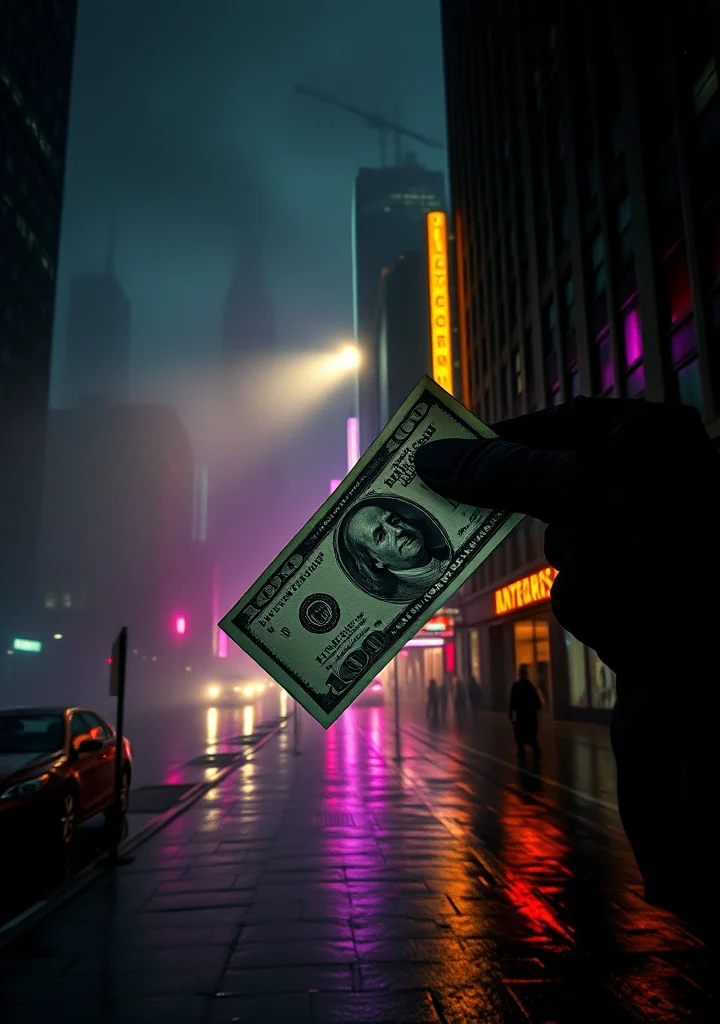
A creeping fog clings to the shadowed streets of New York as Montgomery Brewster inherits a fortune so vast it threatens to unravel his very soul. Not with gold, but with a burden—a million dollars to spend in thirty days, with no trace allowed to cling to him afterward. The city itself becomes a labyrinth of temptation, each reckless purchase shadowed by the icy gaze of Palliser, the executor of Brewster’s bizarre will. It’s a descent into gilded madness, fueled by champagne and desperation, where every dollar spent feels like a nail hammered into the coffin of Brewster’s sanity. The air thickens with the scent of decay, not of rot, but of opportunity devoured and regret lingering in the ornate ballrooms and shadowed alleys. The true horror isn't losing the money, but the creeping realization that Brewster's fortune is a gauntlet of human weakness, and the most lavish waste becomes a grotesque parody of redemption. The chill isn’t winter’s, but the growing dread of a man drowning in excess, haunted by the specter of a legacy built on ruin. Each extravagant act echoes in the cavernous silence of a city indifferent to its own corruption, a slow burn towards an ending shrouded in the dust of broken promises.
Copyright: Public Domain
This license allows anyone to use your story for any purpose, including printing, selling, or adapting it into a film freely.
Recommended for you
15 Part
The last cities cling to the underside of a perpetual twilight, choked by dust and the ghosts of ambition. Generations have forgotten the sun, trading it for the cold, efficient glow of orbital mirrors – mirrors that now flicker and fail. Elias Thorne, a salvage man haunting the skeletal remains of skyscrapers, doesn’t look up anymore. He knows the sky isn’t empty, not after the Collapse. It’s filled with things better left unseen, whispers of what was, and the hollow ache of what’s lost. But a signal, a desperate plea coded in obsolete frequencies, cracks across his receiver. A ship, adrift for decades, claims to have found *something* beyond the Rim. Something the architects of the Sky-Cities buried with their dying light. Thorne, driven by a debt he can't outrun and a curiosity he can't suppress, takes the offer. Each mile upward is a descent into a deeper, more suffocating decay. The ship, the *Argos*, is a mausoleum of forgotten promises, haunted by the lingering echoes of its crew. The further they climb, the more the sky seems to press down, a suffocating weight of metal and shadow. The signal isn't just a beacon; it's a lure, drawing them toward a truth that will unravel not just the city’s foundations, but the very fabric of Thorne's memory. It's a place where the stars are cold, the silence screams, and the last vestiges of humanity are consumed by a hunger older than the dust itself. The sky doesn't give up its secrets easily. It demands a reckoning.
33 Part
Dust motes dance in the perpetual twilight of a decaying Italianate palazzo, mirroring the spectral ambitions of the self-styled Emperor Hadrian. A fever-dream of aesthetic obsession, the novel unfolds through the brittle correspondence of a man consumed by a vision of restored glory—a baroque, melancholic Rome resurrected through his own meticulously curated existence. Each letter breathes the scent of incense and decay, of crumbling marble and the stifled sighs of a servitude born of artistic vanity. The air hangs thick with regret, with the weight of unfulfilled desire, and the gnawing loneliness of a man who has built his empire on the shifting sands of delusion. A creeping dread permeates the narrative, not of overt horror, but of a slow, exquisite unraveling. The palazzo itself becomes a character—a suffocating labyrinth of shadowed galleries and forgotten chambers, reflecting the labyrinth of Hadrian’s own mind. He is both architect and prisoner, a gilded cage of his own making. The prose, brittle and mannered, mimics the fragility of the objects he collects—antique reliquaries, faded tapestries, and the hollowed-out faces of those who attend his spectral court. A sense of stifled violence lingers beneath the surface, the unspoken price of beauty, the rot hidden within the gilded frame. The story is not one of grand spectacle, but of insidious decay, a slow, elegant poisoning of the soul. It is a whisper of madness, echoing through the empty corridors of a life spent chasing shadows.
22 Part
A suffocating heat clings to the Louisiana bayou, thick with Spanish moss and the ghosts of fortunes lost. Leblanc weaves a tale where the line between predator and prey dissolves into the humid air. Old money, stained crimson with secrets, bleeds from crumbling plantation houses. The scent of jasmine and decay hangs heavy as a disgraced detective, haunted by his own failures, is drawn into a missing heir case. But this isn’t simply disappearance; it’s a vanishing into something ancient and hungry that dwells in the cypress knees and shadowed waterways. Each investigation feels like peeling back layers of Spanish lace to reveal something writhing beneath – a legacy of voodoo, avarice, and the brutal inheritance of a family whose wealth was built on teeth. The tiger isn't merely a beast of the swamp, but a symbol of the hunger that consumes the living, leaving only bone-white grins in the darkness. The narrative crawls with a creeping dread, a sense of being watched by something both feral and refined. Every whisper of wind through the sugarcane fields carries the echo of a curse, and the bayou itself seems to conspire to keep its secrets submerged. The air grows viscous with the possibility of violence, a slow-boiling tension that culminates in a confrontation with a darkness that has rooted itself within the very soil of the land. It's a story where the rot is not just in the cypress trees, but in the bloodlines themselves.
8 Part
A suffocating stillness clings to the Gabler estate, a mausoleum of inherited wealth and decaying ambition. Within its shadowed parlors, Hedda, a bride newly returned, breathes a discontent that curdles the air. Not a tale of spectral hauntings, but of a hollowness that consumes from within. The scent of withered blooms and unsent letters permeates every room, mirroring the slow rot of Hedda’s spirit. A suffocating marriage, a stifled legacy—these become the bars of her gilded cage. The narrative unfolds as a slow bleed of frustration, a poisonous flowering of cruelty masked by polite society’s veneer. Each conversation, a brittle exchange of veiled threats and unspoken desires. A creeping dread settles with the dusk, fueled by whispered secrets and the echoes of past tragedies. The estate itself becomes a character, its oppressive architecture mirroring Hedda’s constriction, the scent of decay clinging to her every action. The air thickens with the weight of unfulfilled longing, a perverse obsession with control blooming in the shadows of her discontent. A sense of inevitable collapse permeates the story, not through grand catastrophe, but through the quiet, agonizing unraveling of a woman suffocated by expectation, driven to desperate measures within the suffocating confines of her own making. The ending lingers not as a resolution, but as a chilling residue—a cold, elegant despair that seeps into the very foundations of the house and the reader’s soul.
24 Part
London breathes under a fog thick with coal dust and righteous fury. A singular, colossal figure – Michael Fane, the self-proclaimed Napoleon – stalks the streets of Notting Hill, not for conquest, but for a peculiar, escalating series of acts of civic “improvement.” He doesn’t steal, not precisely. He *rearranges*. He dismantles a building here, subtly alters a square there, all in the name of a deranged, geometric vision of order. The air hangs heavy with the dread of unspoken intentions. The narrative unravels through the eyes of a bewildered, increasingly horrified populace, and the desperate, flailing attempts of the police to understand a man who claims to be enacting a divine geometry. Each rearrangement isn’t merely vandalism, but a surgical excision of the city's soul, a chipping away at its haphazard, human beauty. A creeping claustrophobia settles in as Fane’s “improvements” become more audacious, more…necessary. The gas lamps cast elongated shadows that seem to mimic his reshaping of the streets. The scent of damp brick and decaying plaster clings to the air, mirroring the decay of reason within Fane’s mind. It’s not a story of violence, but of insidious, creeping control. The dread doesn't lie in what is *done*, but in the chilling logic behind it – a perverse, obsessive love for a perfect, sterile London that will be born from the rubble of the old. A city remade in the image of one man’s madness.