Confiança Quebrada
  • 19
  • 0
  • 3
  • Read 19
  • 0
  • Part 3
Ongoing, First published May 23, 2026

A narrativa traça uma reunião sombreada pela dúvida e ressentimento. Depois de cinco anos, Anika e Shivaay finalmente se encontram após sua libertação da prisão, mas seu abraço é rapidamente fraturado pelas revelações de Shivaay e seu apelo desesperado por confiança. Voltando à mansão Oberoi, eles enfrentam hostilidade e acusações, particularmente de Rudra, que suspeita de Shivaay de um crime terrível. Apesar da tensão crescente, a fé inabalável de Anika em Shivaay permanece, mesmo enquanto ele luta..
Copyright: All Rights Reserved
No person is allowed to use, redistribute, or modify your work in any form without your explicit permission.
Recommended for you
129 Part
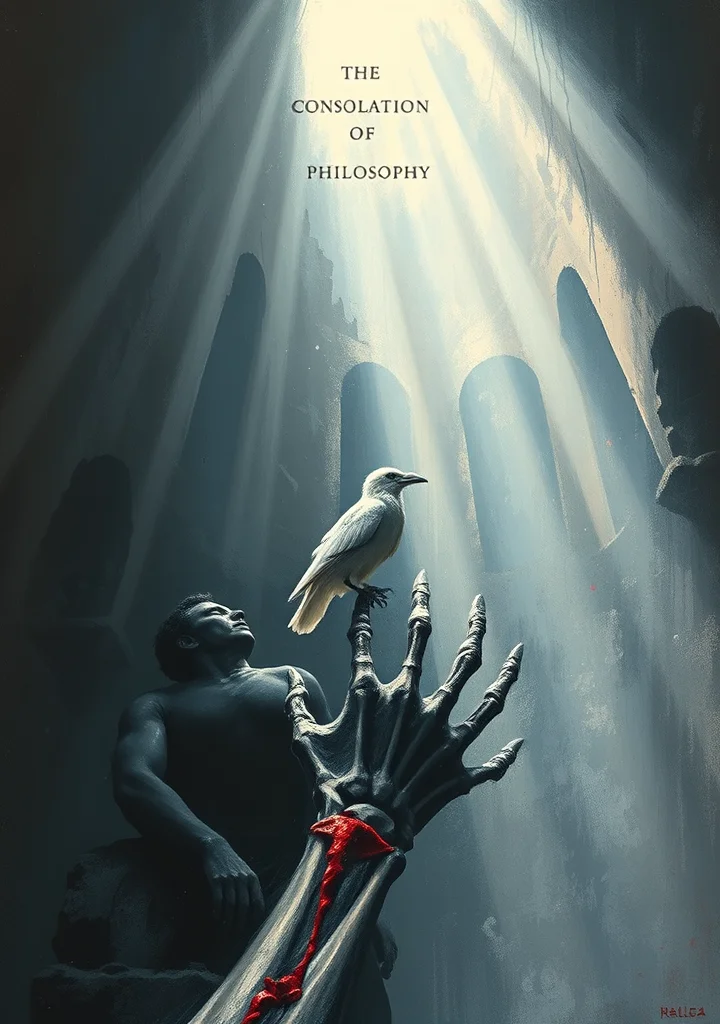
Dust motes dance in the fractured light of a crumbling tower, mirroring the fragments of a life shattered by exile and betrayal. Within these stone walls, a man—once a pillar of power, now stripped bare—grapples not with chains or bars, but with a grief that threatens to swallow him whole. He is haunted by the swift, cruel fall from grace, the whispers of accusations echoing in the hollows of his despair. But solace, or a twisted mockery of it, comes in the form of a spectral presence—Philosophy herself, a woman woven from starlight and sorrow, her voice a chilling balm against the wounds of the world. She leads him through labyrinthine corridors of thought, where reason battles with the phantom pain of loss. The air is thick with the scent of decay, both of the body politic and the soul. Visions of fortune’s wheel—a cruel, spinning device—loom large, showcasing the ephemeral nature of earthly power. Each argument, each carefully constructed verse, feels less like a comforting embrace and more like the cold touch of inevitability. The narrative is steeped in the grey of twilight, a perpetual autumn where every leaf falling is a reminder of what is lost. It is a meditation on the nature of good and evil, not as grand battles, but as insidious erosion, a slow poisoning of the spirit. The reader is drawn into a claustrophobic space where the only escape is through the labyrinth of the mind, where the architecture of despair is both beautiful and terrifying. Ultimately, the question lingers: is this consolation a true refuge, or merely a gilded cage built around a broken heart?
34 Part
Dust motes dance in the perpetual twilight of Dutch drawing rooms, mirroring the spectral procession of memory. A grand tour, ostensibly undertaken for convalescence, unravels instead into a slow, suffocating unraveling of the soul. The air hangs thick with the scent of decaying grandeur, of inherited melancholia clinging to velvet curtains and polished mahogany. Each meticulously described city – Rome, Florence, Naples – isn’t a destination, but a layer of gauze drawn over a festering wound. The protagonist, adrift amongst Roman ruins and Venetian canals, isn’t discovering Italy, but the hollowness at the core of his own existence. A creeping unease permeates every encounter, a sense of being observed by ghosts of past desires and unspoken betrayals. Sunlight feels less like illumination and more like a cruel exposure of fragility. The narrative breathes with the damp chill of catacombs, the suffocating opulence of decaying palazzi. It’s a tour not of places, but of the exquisite, agonizing precision with which one man’s spirit is disassembled, leaving only the echoing emptiness of rooms once filled with laughter and now haunted by the ghosts of a lost aristocracy. The silence between conversations is more potent than any confession, the weight of unspoken truths pressing down like the stone archways of forgotten chapels. It is a journey into the labyrinth of a heart, paved with regret and lit by the flickering flame of a dying ember.
12 Part
Dust motes dance in the perpetual twilight of a London nursery, where a carpet woven with ancient symbols stirs to life. Not with thread and dye, but with the embers of forgotten djinn, bound to obey a boy’s whim. A phoenix, magnificent and terrible, unfolds from its crimson threads, a creature of scorching desire and ash-grey regret. The house itself seems to breathe with the bird’s fiery heart, shadows lengthening into monstrous shapes as the carpet’s magic pulls at the seams of reality. The scent of cinnamon and burning feathers clings to the air, thick with whispers of a past where wishes are bought with stolen sunsets. Each flight of the phoenix, each murmured command, unravels another layer of the nursery’s gilded cage, revealing a world both exhilarating and deeply, unnervingly lonely. The very floorboards groan beneath the weight of impossible journeys, echoing with the laughter of children lost in the labyrinth of their own making. A creeping dread settles amongst the velvet curtains and porcelain dolls, a premonition that the power granted is not freely given. The carpet doesn't merely transport; it *remembers*. It holds the echoes of every longing, every secret, every shadowed bargain struck within its weave. And as the phoenix circles higher, the nursery – and the lives bound within it – begin to unravel, consumed by a hunger that stretches beyond the reach of childish dreams. The air itself tastes of smoke and forgotten promises.
23 Part
Dust motes dance in the long shadows of the schoolhouse, clinging to the chill stone walls where generations of boys have scraped their futures onto the rough-hewn desks. This is not a tale of grand horrors, but of a creeping dread found in the hollow spaces between loyalty and betrayal, the weight of tradition pressing down like a tombstone. Young Tom Brown enters this world, raw and untamed, and is slowly, inexorably, broken down and reshaped by the brutal currents of school life. It’s a darkness born not of malice, but of indifference—the casual cruelty of boys desperate to prove their dominance, the stifling conformity demanded by an unyielding system. The echoing hallways become a labyrinth of whispers and shoves, a constant negotiation of power where a single misstep can mean weeks of torment. Fog hangs heavy in the yards, obscuring the faces of those who haunt Tom's waking hours, their actions unseen yet felt in the tightening of chests and the tremor of hands. The narrative unfolds like a slow, agonizing bleed, the innocence of youth curdling into a grim acceptance of the inevitable—a descent into a shared, silent complicity born of necessity and fear. It is a world where the true monsters are not found in the shadows, but in the very hearts of the boys who forge their manhood within these unforgiving walls. The scent of damp wool and old wood clings to the pages, a testament to the enduring chill of those days.