Westward Signals
  • 9
  • 0
  • 3
  • Read 9
  • 0
  • Part 3
Completed, First published May 31, 2026

The narrative traces the beginnings of unexpected connections as players in the online game *Heroes of Olympus* navigate real-world change. Initially sparked by rivalry, a playful rapport develops between Annabeth and a mysterious opponent, ‘Sonofposeidon_seaweedbrain,’ hinting at consequences yet to unfold. As characters like Percy grapple with relocation and anticipate new schools, friendships are tested and strengthened. Meanwhile, Annabeth finds herself preoccupied with the possibility of recognizing ‘Seaweed Brain’ in person, and the arrival of Thalia raises questions about his identity. These early chapters reveal a story unfolding through online interactions and the anxieties of adolescence.
Copyright: All Rights Reserved
No person is allowed to use, redistribute, or modify your work in any form without your explicit permission.
Recommended for you
13 Part
A creeping mist clings to the borders of the forgotten continent, where three men—Van, Terry, and Jeff—dare to venture into a realm whispered about only in the fever dreams of sailors. This is Herland, a land populated solely by women, born of an ancient, impossible isolation. But the silence is not peaceful. It’s a suffocating weight, pressing down on the explorers as they discover a society built not on conquest or domination, but on an unnervingly serene, biological perfection. The air itself tastes of fecundity and decay, a sweet rot blooming in the humid shadows of colossal, vine-choked trees. Each encounter with the Herland mothers—pale, luminous creatures with eyes that hold the weight of millennia—is a slow unraveling of the explorers’ masculine assumptions. The beauty is not inviting, but predatory, a hypnotic lure promising both salvation and annihilation. Walls of emerald moss hide crumbling structures, remnants of a civilization older than history, hinting at a terrible, organic evolution. The men’s desires—lust, ambition, the need to control—become grotesque caricatures reflected back at them in the unnervingly placid faces of their hosts. Herland isn’t a paradise; it’s a chrysalis, and the men are moths drawn to a flame that will consume them, remaking them into something alien and utterly, irrevocably *other*. The further they delve, the more the land breathes around them, a living entity testing, observing, and ultimately, *claiming* them for its own insidious purpose. It is a land not of monsters, but of a singular, terrifying grace.
13 Part
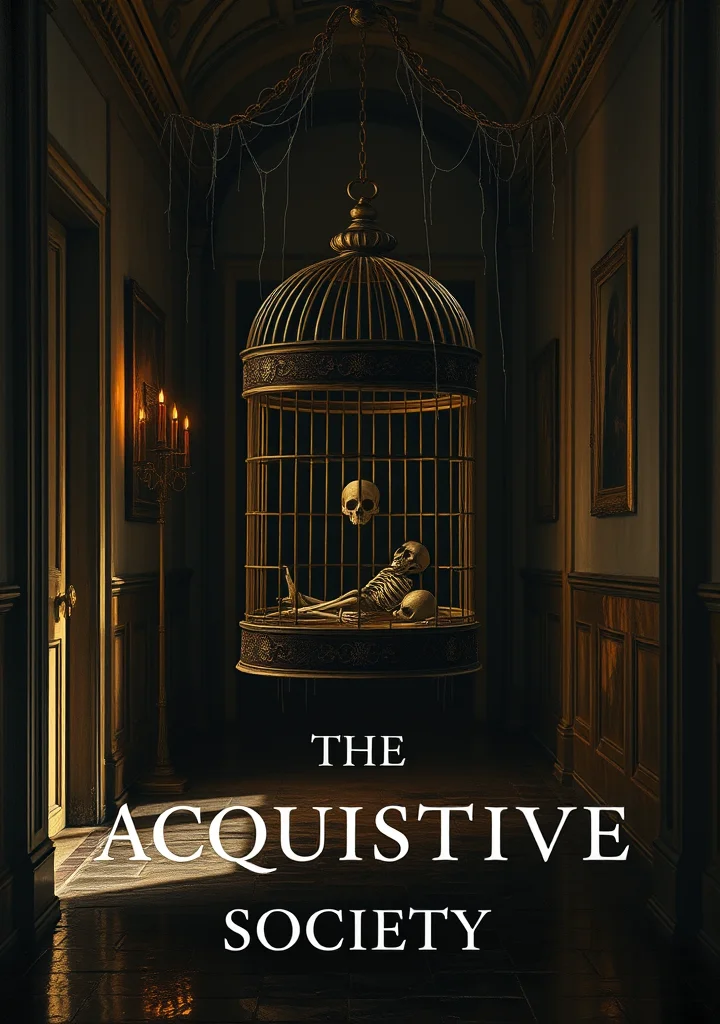
A creeping dampness clings to the cobblestones of Harrowgate, mirroring the rot within the gilded cages of its elite. Tawney’s narrative exhumes a city suffocated not by plague, but by insatiable appetite—a hunger for legacy, for possessions, for the very husks of lives consumed by ambition. Each manor house exhales secrets in the draughty hallways, whispers of fortunes built on shadowed deals and the slow, deliberate erasure of inconvenient kin. The air is thick with the scent of beeswax polish masking decay, of velvet drapes concealing dust-motes dancing in the perpetual twilight. A brittle elegance permeates everything, a performance of refinement barely masking the desperation beneath. The protagonist, a scholar of inherited debts, is drawn into a labyrinth of estates where the acquisition of wealth has birthed a monstrous lineage, each heir a parasite feeding on the dwindling inheritance of their predecessors. Shadows stretch long from the gas lamps, revealing not merely figures in the gloom, but the spectral remnants of those whose possessions were claimed—their faces etched into the very wallpaper, their voices woven into the fabric of the antique furniture. The true horror isn’t the taking of things, but the hollowness that remains when everything has been bought and sold, leaving only the echoing emptiness of a soul willingly traded for another’s gain. A creeping dread permeates every room, a sense of being watched by the objects themselves, each piece of furniture a silent judge, each portrait a veiled accusation.