
Seven Pillars of Wisdom
  • 716
  • 0
  • 145
  • Reads 716
  • 0
  • Part 145
Completed, First published Mar 02, 2026

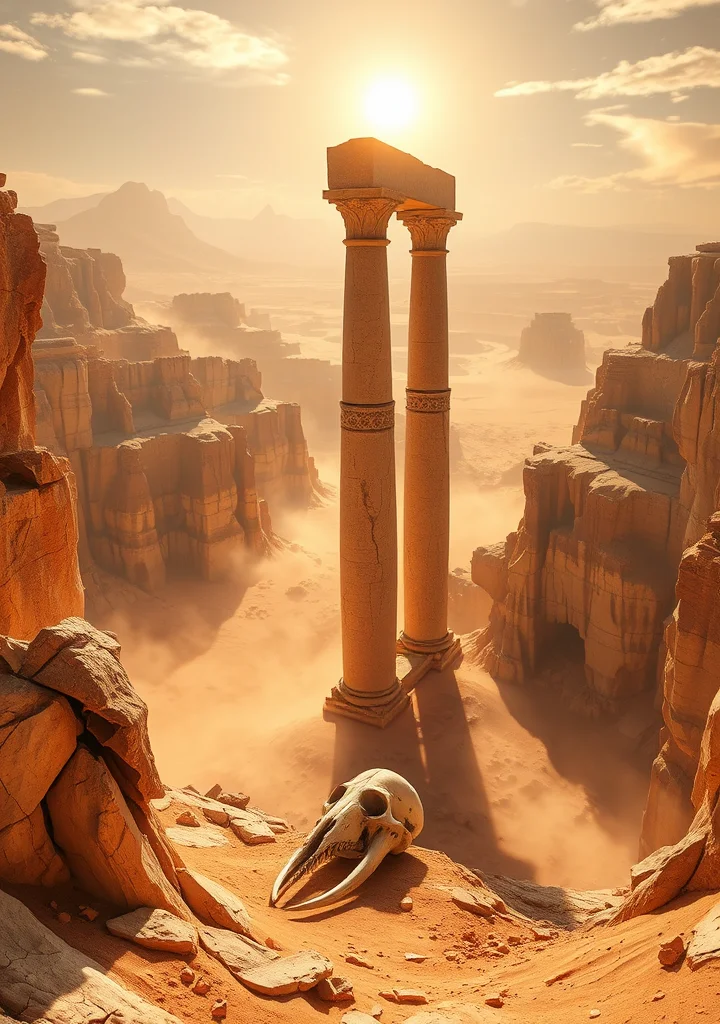
Dust-choked canyons exhale the ghosts of Bedouin raids and fractured loyalties. A sun-bleached land bleeds into mirage, mirroring the fracturing within the man who walks it. This is not a tale of conquest, but of erosion—of self devoured by the desert’s hunger. Each pillar, a bone-white testament to ambition, rises from a foundation of shifting sand and fever dreams. The air tastes of gunpowder and regret, the silence punctuated by the rasp of wind carving scripture into stone. Here, faith is a delirium, a shimmering heat haze obscuring the line between holy war and madness. A slow unraveling occurs, not of empires, but of the soul—a descent into the hypnotic rhythm of a landscape that offers both salvation and annihilation. The scent of date palms and decay clings to every breath, and the horizon itself is a haunting, skeletal hand reaching for a lost paradise. It is a landscape of brutal beauty where every victory is a betrayal, and every oasis, a tomb. The desert remembers everything, and its echoes will hollow you out, leaving only the brittle shell of a man who dared to believe he could command its fury.


Copyright: Public Domain
This license allows anyone to use your story for any purpose, including printing, selling, or adapting it into a film freely.
Chapter List

145

Recommended for you
10 Part
A suffocating heat clings to the Portuguese coast, mirroring the stifled ambitions and decaying grandeur within the crumbling estates. This is a land where translation is not merely linguistic, but of souls – where the very act of speaking fractures identity. The narrative unfolds through a haze of humid nights and the relentless drone of cicadas, a fever dream of miscommunication and simmering resentment. Every phrase, every misplaced comma in the titular lexicon, becomes a weapon wielded by the disenfranchised, a subtle sabotage against the colonial power that dictates their very tongues. Shadows stretch long from the whitewashed buildings, concealing not just illicit liaisons but the creeping rot of a society built on borrowed language. The air itself is thick with the scent of jasmine and desperation, laced with the metallic tang of unfulfilled desires. A claustrophobic sense of surveillance pervades, not from visible guards but from the insidious awareness that every utterance is parsed, every inflection judged. The story breathes with the slow, deliberate pace of a decaying bureaucracy, where each attempt at clarity only deepens the mire of misunderstanding. It’s a world where silence is a luxury few can afford, and where even the most ardent declarations of love are warped by the insidious demands of a foreign tongue. The novel’s unease doesn't lie in dramatic outbursts, but in the insidious erosion of meaning itself, leaving readers adrift in a sea of fractured syntax and unspoken dread.
8 Part
A suffocating dread clings to the cobbled streets of Saint Petersburg, mirrored in the hollowed eyes of Nikolai Semyonov, a man publicly branded a fool and stripped of his name. Andreyev doesn’t offer melodrama, but a slow, creeping asphyxiation of the spirit. Each calculated insult, each jeering dismissal isn’t simply humiliation, but a surgical carving of Semyonov’s identity. The narrative coils like a winter fog, obscuring the boundaries between sanity and delusion as Semyonov descends into a self-imposed exile, drawn to the dark magnetism of a circus performer, Diana. The circus itself is a charnel house of fractured souls, a stage for the macabre dance of obsession. Here, the air is thick with the scent of decay and the metallic tang of desperation. Diana, a goddess of broken glass and whispered promises, offers Semyonov not solace, but a reflection of his own fractured existence. His pursuit of her is a descent into a labyrinth of warped mirrors, where love and madness bleed into one another. The prose is less concerned with plot than with the erosion of the self. The city is a predator, the snow a shroud, and Semyonov, already marked for oblivion, willingly walks into the waiting shadows. It’s a story not of revenge, but of the beautiful, terrible grace of annihilation, a haunting testament to the power of societal cruelty to hollow a man until he is nothing but an echoing shell, eager to be shattered. The final act doesn't explode in violence, but implodes with a quiet, agonizing surrender.
99 Part
A creeping dread clings to the crumbling manor of Blackwood Hall, where shadows lengthen with each passing hour and the scent of decay permeates the very stones. Within its suffocating embrace, young Alistair Finch inherits not fortune, but a legacy of whispered madness and fractured memories. The estate is not merely old; it *bleeds* history, each echoing corridor a testament to generations consumed by a nameless sorrow. Alistair’s arrival stirs something long dormant within the Hall’s heart – a melancholic entity woven into the tapestry of Blackwood’s decline. He finds himself haunted by spectral echoes of a forgotten bride, her grief woven into the damp tapestries and the brittle bones of the ancient oaks surrounding the estate. The air grows thick with the weight of unspoken promises and broken vows. Every mirror reflects a distorted glimpse of something *other* – a glimpse of Alistair’s own unraveling sanity. The boundaries between dream and reality blur, and the garden, once a haven of roses, becomes a labyrinth of thorns mirroring the tangled web of Blackwood’s past. A chilling stillness descends as Alistair descends further into the Hall’s heart, compelled by a spectral melody that promises revelation…or annihilation. The narrative unfolds not as a tale of monsters and ghouls, but of a soul eroding under the slow, suffocating weight of inherited despair – a descent into a twilight realm where beauty curdles into rot, and every breath tastes of dust and regret.
56 Part
A creeping dread clings to the shadowed lanes surrounding Wildfell Hall, a manor steeped in rumour and whispered anxieties. The narrative unfolds through the anxious observations of a young gentleman drawn into the isolated community, but quickly becomes consumed by the mystery of its reclusive mistress, Helen. She arrives fleeing a monstrous secret, a husband whose depravity festers within the confines of their marriage. The Hall itself breathes with a history of decay, a gothic fortress concealing not merely stone and timber, but the unraveling of a woman’s spirit. The story is one of entrapment—not within walls, but within a marriage that slowly poisons the soul. Helen’s diary, unearthed like a tomb’s unearthed remains, reveals a descent into darkness, fuelled by alcohol-soaked brutality and the insidious erosion of self-worth. Every shadowed room, every stolen glance, echoes with the suffocating weight of a life slowly extinguishing under the weight of a monstrous devotion. The landscape mirrors the internal torment; bleak moors and desolate farmhouses reflect the emotional barrenness of her existence. A relentless tension builds, punctuated by the chilling details of her husband’s escalating cruelty, until the reader is left gasping with Helen, trapped within a nightmare of domestic horror. It is a tale of escape, yes, but the price of freedom is etched in scars both visible and unseen, leaving Wildfell Hall a monument to the harrowing power of abuse and the desperate will to survive.
73 Part
Dust motes dance in the perpetual twilight of abandoned mills and shadowed bakeries. A creeping dread clings to the cobblestones, not of starvation’s gnaw, but of a cold, methodical dismantling of habit. This is not a tale of revolution’s fire, but of its slow, fungal growth within the bones of a dying world. Kropotkin’s vision isn’t one of barricades and blood, but of a silent, relentless erosion of ownership, a reclamation not through violence, but through the ghostly presence of communal need. The narrative exhales a peculiar stillness, like a mausoleum filled with the scent of rising dough and the whispers of forgotten hands. Each chapter unfolds as a spectral blueprint of a possible future, sketched in the dim light of necessity. It’s a world where the boundaries between labour and leisure dissolve into a perpetual, aching grey, where the very act of sharing becomes a haunting ritual. There's a chilling beauty in the prose, a meticulous accounting of resources that feels less like instruction and more like an incantation. The atmosphere is one of damp earth, the metallic tang of tools left to rust, and the unnerving quietude of fields yielding not to a lord, but to the communal breath of those who understand the earth’s yielding is not conquest, but communion. The book doesn’t promise liberation, it presents a slow, unsettling haunting of the old order, a creeping tendril of possibility that leaves one wondering if the ghosts of hunger have finally found their bread.