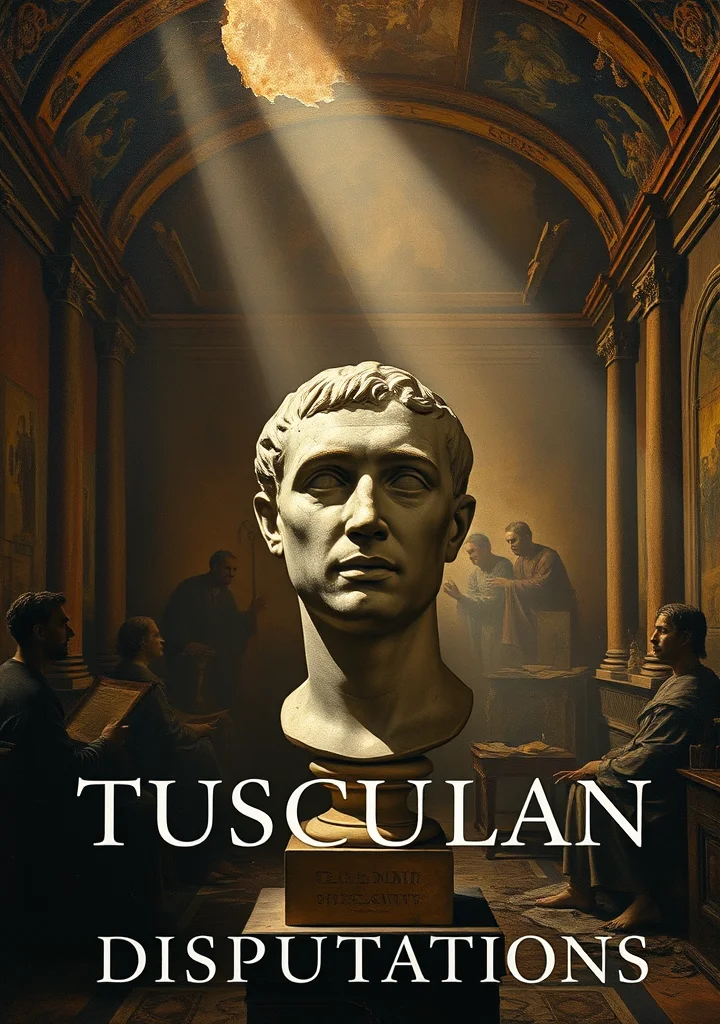

Tusculan Disputations
  • 78
  • 0
  • 8
  • Reads 78
  • 0
  • Part 8
Completed, First published Mar 02, 2026

Dust motes dance in the perpetual twilight of shadowed villas, where the echoes of Roman ambition cling to crumbling marble. These are not tales of triumph, but of the slow rot consuming a republic’s heart. Cicero’s voice, brittle as parchment, doesn’t recount battles won, but the feverish arguments waged in sun-bleached rooms, where logic is a weapon honed for betrayal. Each disputation unfolds like a creeping dread, the elegance of rhetoric masking a deeper, suffocating despair. The air hangs thick with the scent of decay – not of bodies, but of ideals, of a civilization fracturing under the weight of its own eloquence. A stifling heat radiates from the crumbling stones, mirroring the burning passions that fuel these debates, passions that will ultimately consume all who dare to listen. Every polished phrase is a shard of glass, reflecting a fractured world where truth is a phantom limb and every victory is purchased with a fragment of a soul. The silence between words is a tomb, and within it, the ghosts of lost empires whisper.
Copyright: Public Domain
This license allows anyone to use your story for any purpose, including printing, selling, or adapting it into a film freely.
Recommended for you
16 Part
A creeping dread clings to the Yorkshire moors, mirroring the decay within Ravensthorpe Manor. The estate, a skeletal silhouette against perpetual twilight, holds a silence thicker than the November fog—a silence punctuated only by the frantic whispers of servants and the brittle coughs of its ailing master, Sir Alistair. He is a man haunted by shadows, both real and imagined, obsessed with uncovering a family curse tied to a missing heir and a portrait whose eyes seem to follow every movement. The narrative unfolds through fragmented diary entries and feverish accounts from those trapped within Ravensthorpe’s stone embrace. Each revelation unravels not a solution, but another layer of suffocating grief and ancestral guilt. The scent of damp earth and dying roses permeates every room, clinging to the velvet drapes and tarnished silver. A suffocating claustrophobia settles over the reader as the investigation descends into a labyrinth of secret passages, forgotten crypts, and the chilling echoes of past tragedies. The manor itself is a character, breathing with a malevolent history. Rain lashes against the leaded windows, mirroring the tempest brewing within the hearts of those who dare to seek the truth. But the truth, when it finally surfaces, is not a grand revelation, but a splintering of sanity, a descent into the madness that has always festered within Ravensthorpe’s walls. It is a tragedy not merely witnessed, but inhaled—a slow, insidious poisoning of the soul.

25 Part
A creeping dread clings to the shadowed corners of Kay’s, a crumbling manor house where the scent of brine and decay mingle with the brittle laughter of forgotten things. Not the boisterous, sun-drenched world Wodehouse usually paints, but one submerged in perpetual twilight, where the sea gnaws at the foundations of sanity. The head, you see, is not a person, but a relic – a grotesque carving found wedged within the manor’s oldest tower, radiating a cold, insidious influence. The narrative unravels like seaweed on a corpse, choked with whispers of familial curses and the slow, suffocating weight of generations past. A young man, drawn to Kay’s by a dubious inheritance, finds himself trapped not by obligation, but by the house itself, its stone heart beating with a rhythm of madness. Fog rolls in with the tide, bringing with it fragmented memories, the ghosts of those who came before, and a chilling conviction that the head isn’t merely *found*, but *called* – summoned by a ritual of desperation, a pact made with something ancient and hungry in the depths. The rooms breathe with a suffocating stillness, each antique object a witness to a slow, unraveling horror. The air itself tastes of salt and regret. Even the sunlight, when it dares to pierce the gloom, feels tainted, reflecting off polished wood like the glint of teeth. A subtle rot pervades everything, a sense that the manor is not simply decaying, but actively *consuming* those who dare to linger within its walls, drawing them down into the suffocating darkness at the heart of Kay’s. The story is one of unraveling sanity, of a lineage haunted by its own desperate acts, and a growing, unbearable fear that the head isn't merely an object, but a gateway to something utterly, irrevocably lost.