
-
Read 627
-
1
-
Part 47
Completed, First published Mar 02, 2026
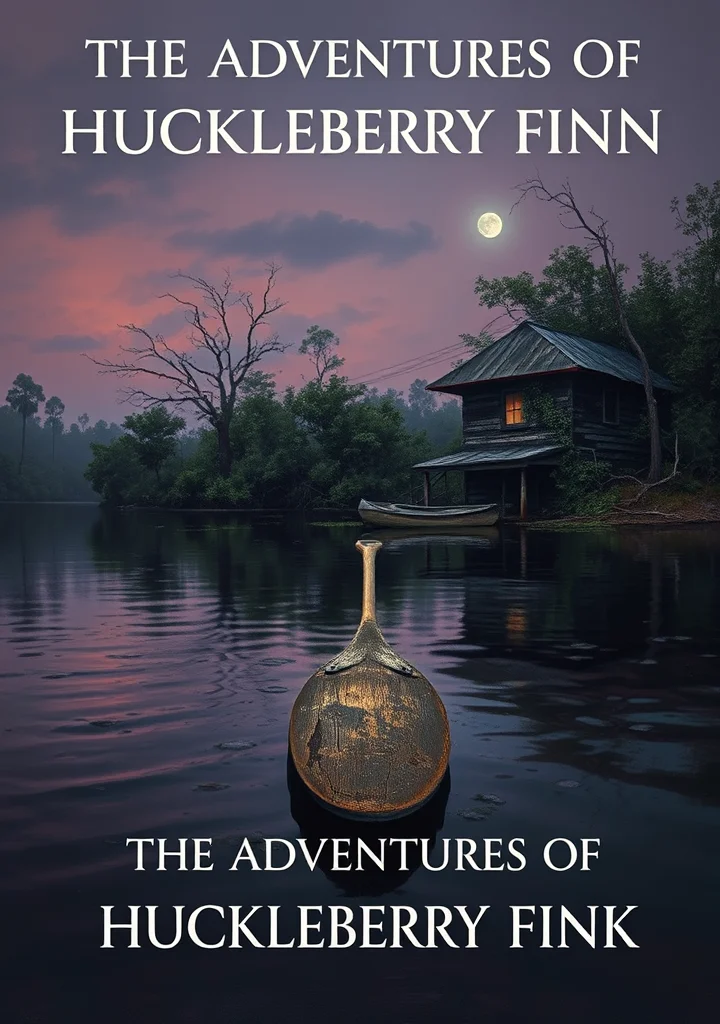
A suffocating humidity clings to the Mississippi’s banks, mirroring the stifled desperation within young Huck’s heart. The river itself is a bruised artery pulsing with secrets, carrying him not towards freedom, but deeper into a mire of shadowed morality. Each bend in the waterway reveals not progress, but the decaying grandeur of a world rotting from the inside – abandoned cabins choked by vines, phantom lights flickering in distant windows, the scent of damp earth and forgotten sins rising with the mist. Jim’s presence isn’t solace, but a spectral weight – a man born of the river’s darkness, tethered to Huck by a fragile thread of shared desperation. The rafts drift not on water, but on a current of fractured dreams and whispered bargains with the devil. Every shore holds the echo of a hanged man’s sway, every town a mausoleum of broken promises. The laughter of the King and the Duke is a brittle, hollow sound, a mockery of humanity echoing across the desolate landscape. It’s a journey not toward light, but into the heart of a suffocating, inescapable gloom where the line between salvation and damnation dissolves into the murky depths of the Mississippi's soul. The air itself tastes of ash and regret.
Copyright: Public Domain
This license allows anyone to use your story for any purpose, including printing, selling, or adapting it into a film freely.
This license allows anyone to use your story for any purpose, including printing, selling, or adapting it into a film freely.
Chapter List
-
« The Adventures of Huckleberry Finn »📖 Continue Reading
-
« Notice »
-
« Explanatory »
-
« The Adventures of Huckleberry Finn »
-
« I »
-
« II »
-
« III »
-
« IV »
-
« V »
-
« VI »
-
« VII »
-
« VIII »
-
« IX »
-
« X »
-
« XI »
-
« XII »
-
« XIII »
-
« XIV »
-
« XV »
-
« XVI »
-
« XVII »
-
« XVIII »
-
« XIX »
-
« XX »
-
« XXI »
-
« XXII »
-
« XXIII »
-
« XXIV »
-
« XXV »
-
« XXVI »
-
« XXVII »
-
« XXVIII »
-
« XXIX »
-
« XXX »
-
« XXXI »
-
« XXXII »
-
« XXXIII »
-
« XXXIV »
-
« XXXV »
-
« XXXVI »
-
« XXXVII »
-
« XXXVIII »
-
« XXXIX »
-
« XL »
-
« XLI »
-
« XLII »
-
« Chapter the Last »
47
-
« The Adventures of Huckleberry Finn »
-
« Notice »
-
« Explanatory »
-
« The Adventures of Huckleberry Finn »
-
« I »
-
« II »
-
« III »
-
« IV »
-
« V »
-
« VI »
-
« VII »
-
« VIII »
-
« IX »
-
« X »
-
« XI »
-
« XII »
-
« XIII »
-
« XIV »
-
« XV »
-
« XVI »
-
« XVII »
-
« XVIII »
-
« XIX »
-
« XX »
-
« XXI »
-
« XXII »
-
« XXIII »
-
« XXIV »
-
« XXV »
-
« XXVI »
-
« XXVII »
-
« XXVIII »
-
« XXIX »
-
« XXX »
-
« XXXI »
-
« XXXII »
-
« XXXIII »
-
« XXXIV »
-
« XXXV »
-
« XXXVI »
-
« XXXVII »
-
« XXXVIII »
-
« XXXIX »
-
« XL »
-
« XLI »
-
« XLII »
-
« Chapter the Last »
More like this