
Lakeside e depois
  • 2
  • 0
  • 2
  • Read 2
  • 0
  • Part 2
Ongoing, First published Jun 01, 2026

A narrativa traça as vidas entrelaçadas de Taehyung, Jungkook, Shireen e Chloe enquanto explora as complexidades dos relacionamentos modernos. Esses capítulos seguem Taehyung enquanto ele se prepara para aprofundar seu compromisso com Shireen, um caminho inesperadamente interrompido por sua confissão de sentimentos por outro homem. Enquanto Taehyung luta com o coração partido, Jungkook oferece uma presença tão firme, refletindo sobre seus próprios desejos e limites. A história se desdobra com o apoio emocional..
Copyright: All Rights Reserved
No person is allowed to use, redistribute, or modify your work in any form without your explicit permission.
Recommended for you
37 Part
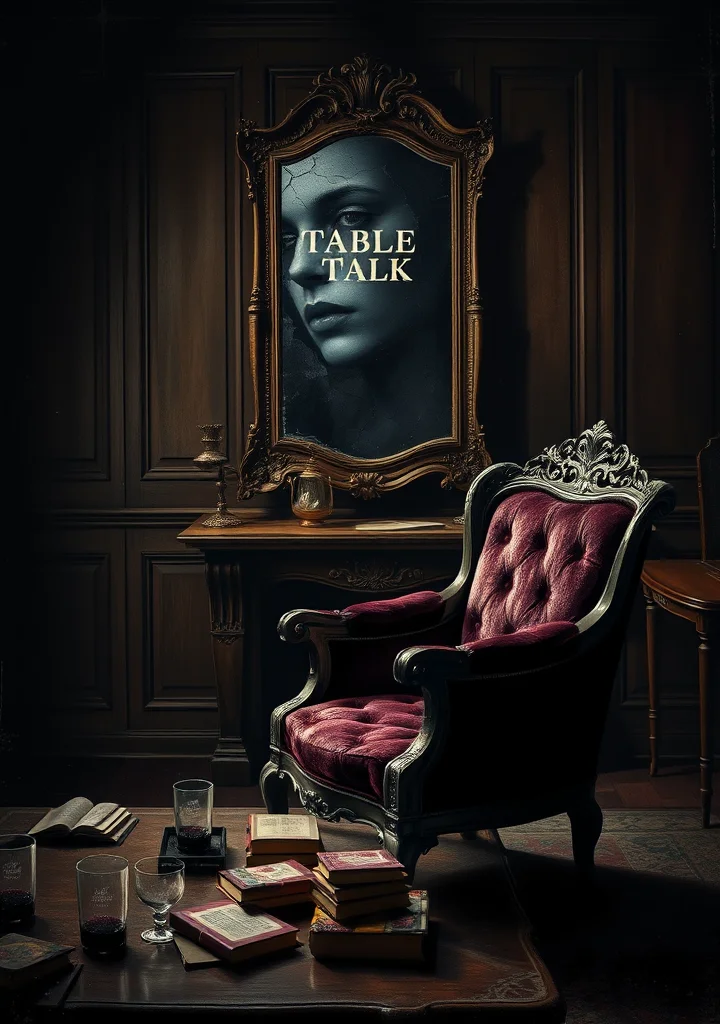
Dust motes dance in the perpetual twilight of shadowed parlors, mirroring the fractured reflections within Hazlitt’s prose. *Table-Talk* isn’t merely conversation; it is the exhumation of ghosts—not those of the dead, but of ideas, regrets, and the slow, corrosive decay of London society. Each essay, a chipped shard of a broken looking-glass, reveals a distorted portrait of the age, haunted by the specter of its own vanities. The voice is brittle, intimate, as if overheard through a crack in the wall, a feverish monologue delivered in the gloom. There’s a pervasive chill—not of winter, but of disillusionment—that seeps into the marrow of the sentences. The author dissects, not with surgical precision, but with the casual cruelty of a man tracing the lines of a skull. He lingers over the grotesque, the absurd, the moments where public spectacle curdles into private despair. A sense of claustrophobia clings to the pages; the air thick with the scent of stale tobacco and forgotten grievances. The narrative is less a journey than a slow unraveling—a descent into the labyrinth of the author’s own melancholic temperament. One feels the weight of unspoken histories, the oppressive silence of unacknowledged debts. It’s a book for those who find comfort not in illumination, but in the shadowed corners of the world, where the whispers of the past cling to the velvet curtains and the cobwebs of the mind. The final impression is one of being left alone in a decaying library, surrounded by the ghosts of conversations long since ended, and the haunting realization that every table has its own secret, and every voice, its own void.
20 Part
A creeping dread settles over London, not of bombs or revolution, but of quiet, insidious doubt. The air hangs thick with fog and the scent of dying gaslight as a new philosophy, a heresy promising liberation through reason alone, worms its way into the hearts of men. It isn’t a rebellion of the poor, but a fracturing within the very foundations of order – a subtle erosion of belief disguised as intellectual progress. The streets themselves seem to conspire in shadow, swallowing the faces of those who dare question the old ways. A growing unease grips the city as the boundaries between sanity and sedition blur, mirroring the labyrinthine alleys where secret meetings ignite. The narrative clings to the periphery of these shadowed gatherings, a sense of impending fracture growing as the story follows men driven to the brink of madness by their own logic. The novel breathes with a sense of claustrophobic dread, a fear that isn't born of the physical but of the soul. The very architecture of London, from the echoing halls of Parliament to the grimy pubs, becomes a prison of thought. The creeping darkness isn't merely political, but a spiritual decay – a slow, suffocating suffocation of faith and tradition, leaving in its wake a chilling void where certainty once stood. The whispers of dissent become screams in the dark, and the reader is left to wander among the ruins of a world unraveling not with fire, but with the cold, precise logic of despair.
50 Part
A creeping dread permeates the snow-choked streets of a Petrograd fracturing under ice and ideology. The air hangs thick with the scent of brine and decay, mirroring the rot beneath the gilded facades of Tsarist memory. This is not a history of revolution, but a descent into a frozen labyrinth of whispered conspiracies and the hollowed-out eyes of zealots. Berkman doesn't chronicle uprising, he exhumes the corpse of idealism, revealing the worms feeding on its bloated ambition. Each chapter feels like a shard of glass under the skin, reflecting a distorted reality where the promise of liberation curdles into the iron tang of power. The narrative clings to the shadowed corners of tenements, the hushed exchanges in smoky taverns, and the phantom limbs of a society severed from its past. It’s a story told not through grand battles, but through the slow fracturing of faith within individuals, the chilling realization that the new god demands the same sacrifices as the old. A pall of paranoia descends, not from external enemies, but from the suffocating certainty of those convinced they hold the key to utopia. The myth isn't a lie, but a contagion, a spectral force that infects the soul and twists the very foundations of human compassion into something monstrously efficient. The novel doesn't merely depict the fall of an empire; it embodies the suffocating weight of a dream turned nightmare, a darkness that lingers long after the snow melts.