
Heretics
  • 174
  • 0
  • 22
  • Reads 174
  • 0
  • Part 22
Completed, First published Mar 02, 2026

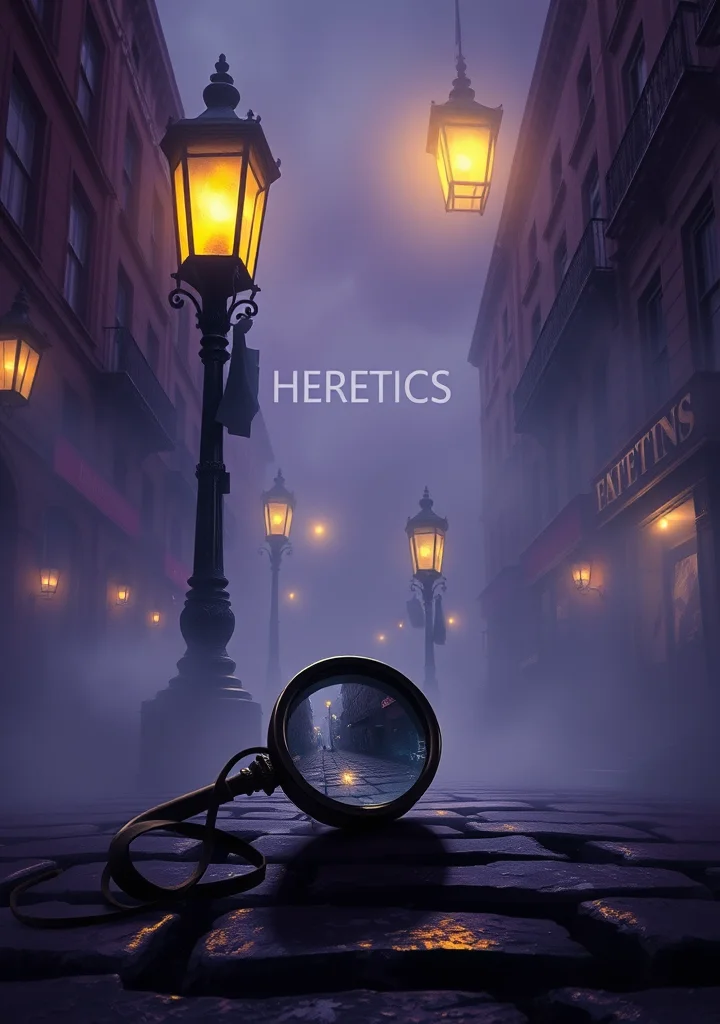
A creeping dread settles over London, not of bombs or revolution, but of quiet, insidious doubt. The air hangs thick with fog and the scent of dying gaslight as a new philosophy, a heresy promising liberation through reason alone, worms its way into the hearts of men. It isn’t a rebellion of the poor, but a fracturing within the very foundations of order – a subtle erosion of belief disguised as intellectual progress. The streets themselves seem to conspire in shadow, swallowing the faces of those who dare question the old ways. A growing unease grips the city as the boundaries between sanity and sedition blur, mirroring the labyrinthine alleys where secret meetings ignite. The narrative clings to the periphery of these shadowed gatherings, a sense of impending fracture growing as the story follows men driven to the brink of madness by their own logic. The novel breathes with a sense of claustrophobic dread, a fear that isn't born of the physical but of the soul. The very architecture of London, from the echoing halls of Parliament to the grimy pubs, becomes a prison of thought. The creeping darkness isn't merely political, but a spiritual decay – a slow, suffocating suffocation of faith and tradition, leaving in its wake a chilling void where certainty once stood. The whispers of dissent become screams in the dark, and the reader is left to wander among the ruins of a world unraveling not with fire, but with the cold, precise logic of despair.
Copyright: Public Domain
This license allows anyone to use your story for any purpose, including printing, selling, or adapting it into a film freely.
Recommended for you
55 Part
Dust-choked prairies stretch towards a horizon perpetually bruised violet, mirroring the ache within the heart. This is a story breathed from the wind-scoured earth, a lament for a lost Eden etched in the bone-white light of Nebraska summers. It unfolds not as a specter of the supernatural, but as a haunting through absence – the absence of youth, of innocence, of a world before the relentless march of progress. The narrative clings to the memory of Ántonia like clinging vines to a crumbling barn, a figure both vital and spectral, forged in hardship and stained with the relentless sun. Shadows lengthen across the farmsteads, mirroring the encroaching anxieties of the immigrant experience, a land both promising salvation and delivering brutal isolation. The beauty of the landscape, vast and unforgiving, becomes a character itself – a silent witness to fractured dreams and the slow erosion of hope. It’s a world built on the hushed whispers of shared toil and the weight of unfulfilled promises, where the past is a phantom limb, forever felt but forever out of reach. The scent of hay and manure, the mournful howl of the winter wind—these are the talismans of a life surrendered to the unforgiving plains, a life observed from a distance, filtered through the gauze of memory and regret. A stillness descends with the dusk, a premonition of the stories buried beneath the fields, whispering of lives broken and rebuilt, leaving only ghosts in the furrows.
30 Part
A suffocating dread clings to the timbers of the *Grampus*, and spills onto the icy shores of the Antarctic. Poe’s narrative isn’t merely a voyage; it’s a descent into the marrow-deep loneliness of the human condition. The narrative unravels not with grand spectacle, but with the slow, creeping rot of despair. Arthur Gordon Pym’s tale is one of escalating claustrophobia—first within the confines of a mutinous whaling vessel, then within the suffocating embrace of a desolate, white wilderness. The prose itself mimics the fracturing of Pym’s sanity. Sunken landscapes of feverish delirium rise from the pages, populated by phantom cannibals and the oppressive weight of unnameable horrors. The reader is not shown a monster, but *feels* it lurking in the ship’s hold, in the lengthening shadows of the Southern seas, in the echoing silence of the final, obsidian-walled chamber. The narrative’s true horror isn’t found in what is described, but in what remains stubbornly *unseen*—the vast, echoing emptiness beyond reason, the encroaching madness mirrored in the increasingly fractured narrative, and the chilling realization that Pym’s salvation may be a fate far more terrible than death itself. A suffocating atmosphere of isolation, punctuated by the chilling whisper of the unknown, permeates every line, leaving the reader adrift on a sea of dread, haunted by the echoes of a descent into the abyss.