
A Week on the Concord and Merrimack Rivers
  • 72
  • 0
  • 14
  • Reads 72
  • 0
  • Part 14
Completed, First published Mar 02, 2026

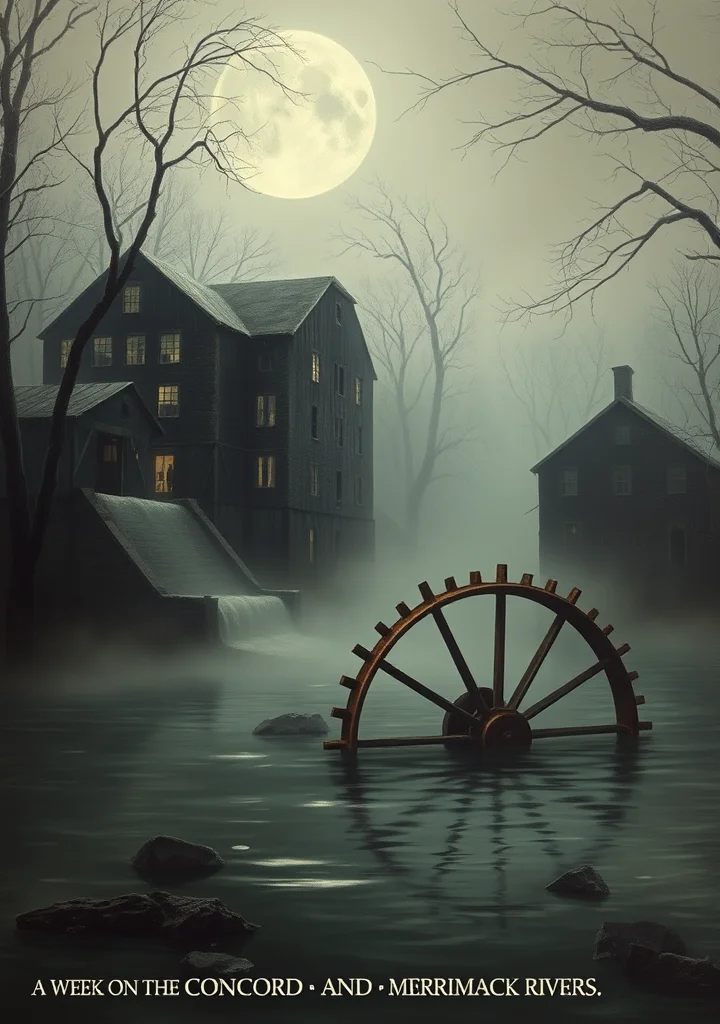
The scent of rot and river mist clings to these pages, a melancholic dampness seeping from the shadowed banks of the Concord and Merrimack. Thoreau doesn’t offer pastoral ease, but a spectral procession of vanished villages, their stones swallowed by the encroaching reeds. Each decaying mill, each forgotten Indian camp, is a tombstone marking a lost communion with the wild, haunted by the ghosts of those who once walked these shores. The water itself is not a source of life, but a murky mirror reflecting the decay of memory, a slow unraveling of the present into the vast, indifferent darkness of the past. The narrative drifts like a fog-bound barge, glimpsing fleeting moments of beauty only to find them consumed by the encroaching shadows of forgotten narratives. It’s a journey not towards revelation, but towards a quiet, inevitable surrender to the encroaching wilderness, a communion with the mournful stillness where the river’s voice is the only eulogy. The air hangs thick with the weight of vanished lives, their echoes carried on the current, whispering of a solitude that chills the bone and lingers long after the last page is turned.
Copyright: Public Domain
This license allows anyone to use your story for any purpose, including printing, selling, or adapting it into a film freely.
Recommended for you
6 Part
Dust motes dance in the perpetual twilight of a manor house library, where the very stones seem to weep with the weight of forgotten pedagogies. Locke’s treatise, bound in cracked leather, isn't merely read, it’s *absorbed* by the shadowed corners of the mind. Each proposition, each carefully reasoned argument, feels less like instruction and more like an excavation – uncovering the brittle bones of a child’s soul, laid bare to observation. The air thickens with the scent of beeswax and decaying paper, mirroring the slow rot of innocence as it's dissected into habits and virtues. A chill descends not from the winter winds, but from the chilling logic of a system designed to sculpt a being from clay. The garden, glimpsed through leaded windows, is not a place of growth but of imposed order – clipped hedges mirroring the pruning of unruly thought. One senses, lurking between the lines, the ghost of a tutor’s stern gaze, demanding conformity in the very bloom of youth. The narrative isn't one of malice, but of insidious precision. It’s the sound of a key turning in a locked room—the room of the self—and the realization, creeping like ivy across a crumbling wall, that the very foundations of belief are being meticulously, irrevocably reshaped. The silence within the house isn’t peaceful, but a pregnant stillness—a waiting for the echoes of a will imposed, a spirit molded, and the final, hollow resonance of a mind made obedient.


16 Part
A creeping dread clings to the Yorkshire moors, mirroring the decay within Ravensthorpe Manor. The estate, a skeletal silhouette against perpetual twilight, holds a silence thicker than the November fog—a silence punctuated only by the frantic whispers of servants and the brittle coughs of its ailing master, Sir Alistair. He is a man haunted by shadows, both real and imagined, obsessed with uncovering a family curse tied to a missing heir and a portrait whose eyes seem to follow every movement. The narrative unfolds through fragmented diary entries and feverish accounts from those trapped within Ravensthorpe’s stone embrace. Each revelation unravels not a solution, but another layer of suffocating grief and ancestral guilt. The scent of damp earth and dying roses permeates every room, clinging to the velvet drapes and tarnished silver. A suffocating claustrophobia settles over the reader as the investigation descends into a labyrinth of secret passages, forgotten crypts, and the chilling echoes of past tragedies. The manor itself is a character, breathing with a malevolent history. Rain lashes against the leaded windows, mirroring the tempest brewing within the hearts of those who dare to seek the truth. But the truth, when it finally surfaces, is not a grand revelation, but a splintering of sanity, a descent into the madness that has always festered within Ravensthorpe’s walls. It is a tragedy not merely witnessed, but inhaled—a slow, insidious poisoning of the soul.