
Marius the Epicurean
  • 283
  • 0
  • 40
  • Reads 283
  • 0
  • Part 40
Completed, First published Mar 02, 2026

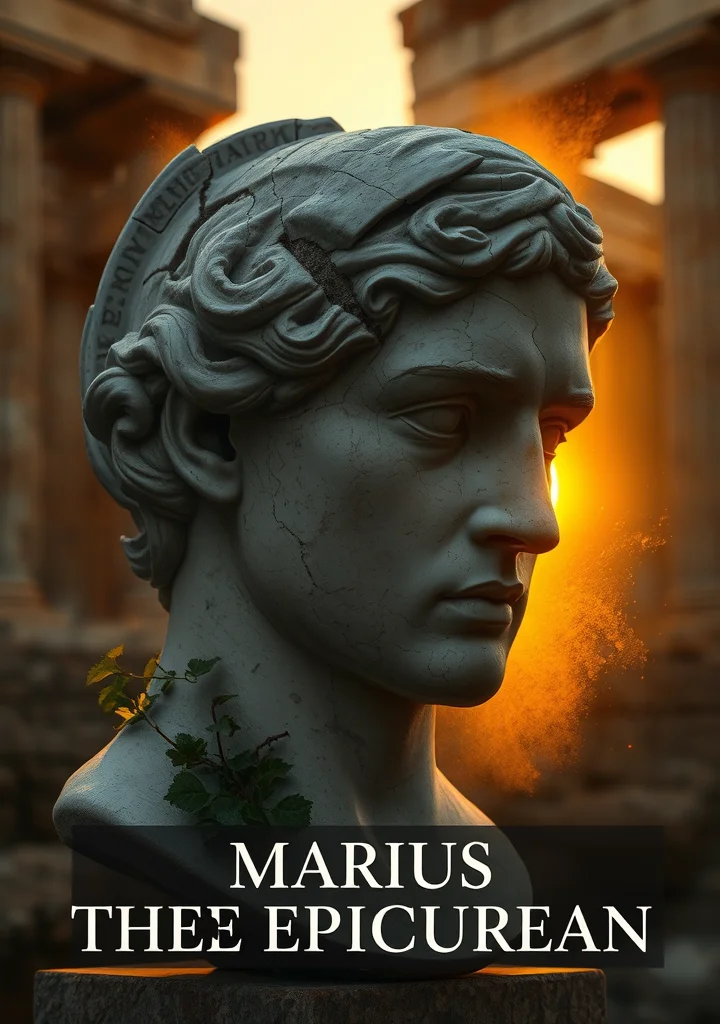
Dust motes dance in the perpetual twilight of second-century Antioch, clinging to the marble of decaying temples and the shadowed folds of Marius’s toga. A world steeped in incense and regret, where the sting of loss – a lover’s face, a father’s faith – lingers in the air like the scent of myrrh. The novel breathes with the humid stillness of a city poised between empires, a place where pagan rituals unravel alongside the nascent whispers of a new god. Marius’s journey isn't one of conquest or ambition, but of a hollowed-out seeking—a desperate grasping for meaning amidst the ruins of belief. Each encounter, a fleeting communion with beauty, with sorrow, with the spectral echoes of a vanished world, leaves him further adrift in a labyrinth of sensuous decay. The prose itself is a fever dream of amber light and languid forms, a slow poisoning of the spirit by the exquisite weight of earthly things. Shadows stretch long from the colonnades, obscuring the boundaries between dream and waking, between the living and the ghosts of memory. A creeping melancholy pervades every scene, not as a lament for what *is* lost, but as a premonition of what *will* be forgotten. The air tastes of brine and regret, of withered roses and the cool touch of stone. It is a narrative woven from the silk of sorrow, and the velvet darkness of a dying age.
Copyright: Public Domain
This license allows anyone to use your story for any purpose, including printing, selling, or adapting it into a film freely.
Recommended for you
34 Part
A creeping dampness clings to the shadowed corners of the Winslow household, a chill not of the season but of a grief-worn legacy. The very stones seem to exhale sorrow with each rustle of the overgrown gardens. Pollyanna, a fragile bloom thrust into this withered estate, doesn’t merely enter, but *infests* the space with a light that feels less divine and more… insistent. It’s a warmth that doesn’t thaw, but *reveals* what was always lurking beneath the frost: the brittle bones of forgotten resentments, the choked whispers of lost hopes. Her ‘Glad Game’ isn’t joy, but an excavation. Each forced optimism feels like a splintering of something ancient and unyielding within the walls. The house itself becomes a labyrinth of unearthed wounds, each room a mausoleum holding a fragment of the Winslows’ decaying souls. The scent of potpourri and beeswax isn’t sweetness, but the cloying perfume of decay masked with desperate floral pleas. The shadows lengthen with each perceived blessing, twisting into shapes of accusation and regret. Even the children, pale moths drawn to Pollyanna’s flame, carry the weight of generations trapped within the Winslow’s suffocating embrace. It isn’t a story of finding happiness, but of witnessing a slow, beautiful unraveling, as Pollyanna doesn't heal the house, but *becomes* its haunting echo. The final revelation isn't of joy found, but of the monstrous, beautiful thing that blooms in the darkness when hope is stretched too thin.
71 Part
The air hangs thick with dust and the scent of decay, clinging to the shadowed corners of a decaying manor house. Within, a life unfolds not as a grand narrative, but as a series of fragmented recollections – whispers of a man diminished, both physically and in stature, swallowed by the suffocating grandeur of his ancestral home. The narrative coils like ivy around crumbling stone, a slow, deliberate unveiling of isolation. Each memory is a chipped porcelain doll, beautiful yet fractured, reflecting a childhood steeped in morbid fascination and the stifled resentment of those who towered above him. The prose is a draught from a forgotten cellar, laced with the chill of loneliness. Sunlight feels like an intrusion, unwelcome on skin that has grown accustomed to perpetual twilight. The reader is not merely told of the man’s smallness, but *feels* it – the weight of averted gazes, the echoing emptiness of rooms too vast for his presence, the insidious erosion of self-worth. The house itself breathes, a living thing that both protects and imprisons. The garden, overgrown and feral, mirrors the tangled, thorny emotions within. A palpable sense of dread permeates every chapter, not from external horrors, but from the creeping rot of a soul consumed by its own quiet desperation. It is a haunting, not of ghosts and ghouls, but of the hollow ache of being unseen, unheard, and utterly alone in a world built for giants. The final pages feel like a descent into a suffocating darkness, where the only sound is the fading echo of a life lived beneath the shadow of its own making.

36 Part
A creeping dread settles amidst the shadowed halls of reason. Locke’s treatises are not merely political arguments, but the cold, meticulous charting of a soul’s decay as it abandons divine right for the brittle embrace of individual will. The very air thickens with the scent of damp parchment and the phantom weight of relinquished authority. Each page feels less a declaration of liberty and more a testament to the fracturing of the ancient order—a splintering of the celestial hierarchy that births a hollow, echoing freedom. The gardens of natural law are overgrown with thorns of self-interest, and the estate of property is haunted by the spectral claims of those who once held dominion through grace. A pervasive unease clings to the text, suggesting that the contract, once sealed with blood and promise, now bleeds a slow poison into the foundations of society. The specter of rebellion, a gaunt figure glimpsed in the periphery of Locke’s measured prose, suggests a final, desperate act of severance—a severance not merely from the Crown, but from the very fabric of a world understood through faith. The silence following each assertion is not one of clarity, but of a widening abyss. It is a silence where the whispers of forgotten gods mingle with the rasping breaths of those who would forge a new world from the wreckage of the old, and it is a silence that promises only the chill of an unyielding, self-made winter. The treatise is a mausoleum built not of stone, but of ideas, and the air within is heavy with the dust of lost illusions.