
-
Read 375
-
0
-
Part 14
Completed, First published Mar 02, 2026
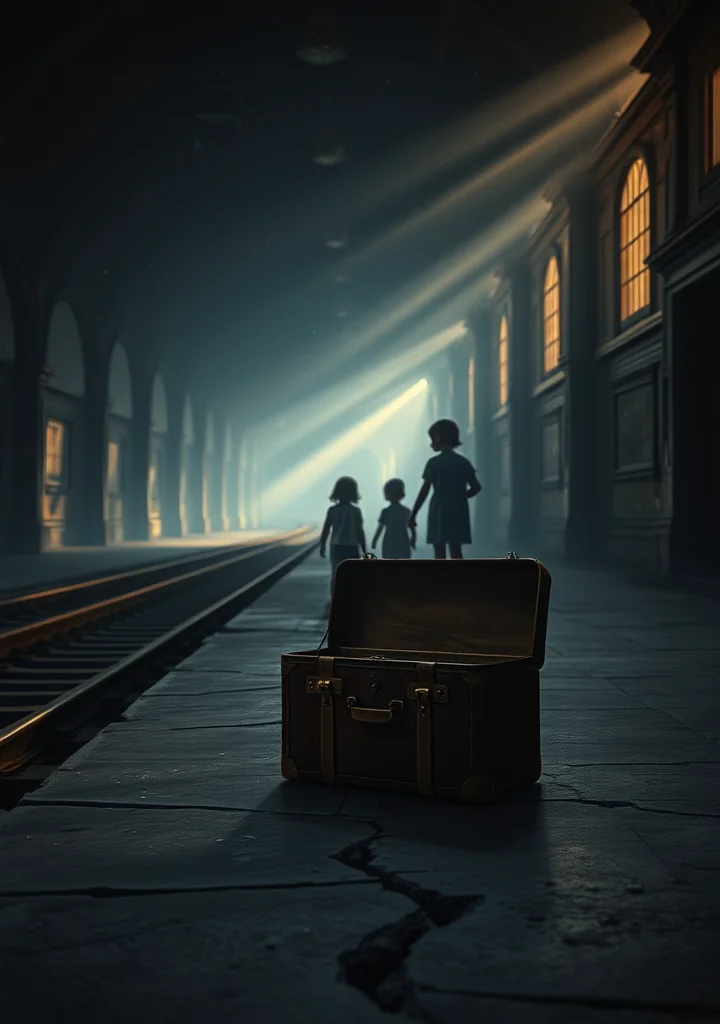
A creeping chill settles not from winter’s frost, but from the hollow echo of abandoned rails. Dust motes dance in the perpetual twilight of a station forgotten, where children haunt the shadowed platforms, not with mischief, but with a quiet desperation mirroring the coal smoke staining their fingertips. The very air tastes of absence – of a father swallowed by circumstance, a mother whose smile is a brittle thing held together by forced cheer. Each passing train is a phantom limb, twitching with the possibility of return, yet delivering only the scent of damp wool and regret. The station itself breathes with a melancholy unseen; a vast, iron-ribbed beast slowly rusting under a sky the colour of bruised plums. Their play is a fragile scaffolding against the weight of unseen burdens, and the railway line, rather than a path to escape, becomes a tightening noose around a fractured family, promising not adventure, but a slow, creeping understanding of what has been irrevocably lost. The woods bordering the tracks are not a refuge, but a labyrinth of shadows, each rustle of leaves a whispered secret carried on the wind. Even kindness, when offered, feels like a shard of glass in the palm – beautiful, but destined to draw blood.
Copyright: Public Domain
This license allows anyone to use your story for any purpose, including printing, selling, or adapting it into a film freely.
This license allows anyone to use your story for any purpose, including printing, selling, or adapting it into a film freely.
More like this