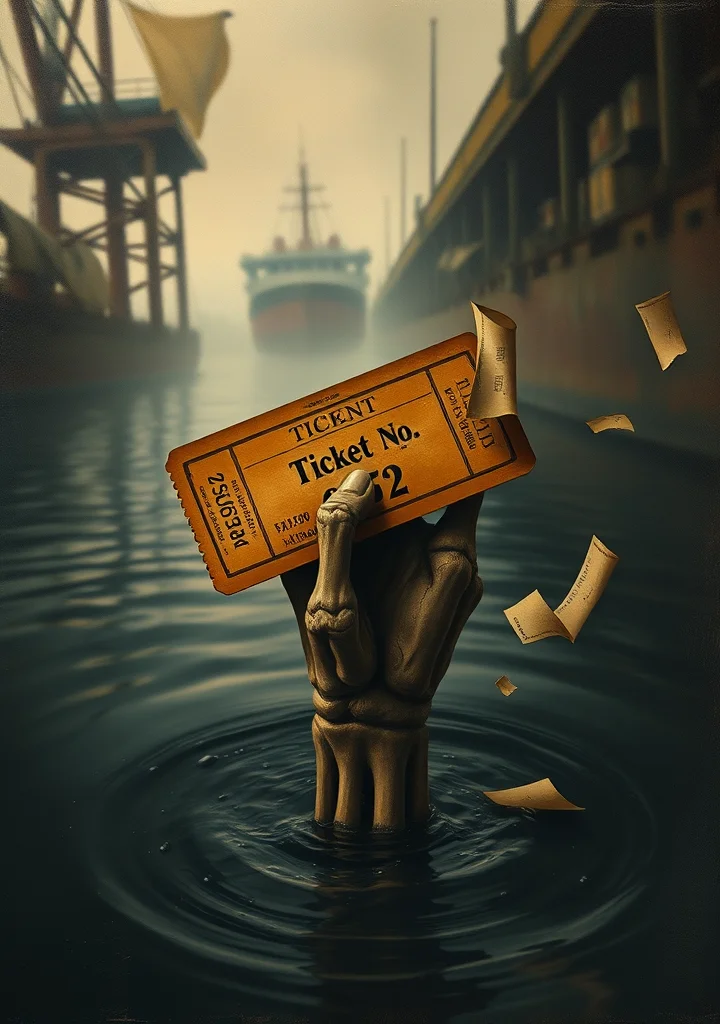

Ticket No. 9672
  • 340
  • 0
  • 21
  • Read 340
  • 0
  • Part 21
Completed, First published Mar 02, 2026

A suffocating heat clings to the docks of colonial Saigon, thick with the scent of jasmine and decay. The narrative unravels not with grand adventure, but with the stifled desperation of a man purchased – a phantom commodity traded between shadowy brokers. He’s known only as the Passenger, his origins a deliberate erasure etched in the ledger as ‘Ticket No. 9672.’ The air itself feels haunted by the weight of forgotten currencies, of lives quantified and sold. Each chapter is a peeling layer of circumstance, revealing a man consumed by a creeping, nameless dread. He exists in the humid confines of a crumbling mansion, a gilded cage furnished with the whispers of opium dens and the mournful cries of caged birds. His captors are less concerned with his loyalty than his silence—a silence he struggles to maintain as fragments of a former life bleed into the present. The story doesn't soar with rockets to the moon, but spirals downward into the claustrophobic labyrinth of a mind unraveling. The descriptions are saturated with the oppressive weight of velvet drapes, the glint of tarnished silver, and the sickly sweet aroma of rotting fruit. It’s a story of imprisonment not by bars, but by the insidious erosion of memory, the slow suffocation of identity within a system designed to erase every trace of self. The final pages hint at a reckoning not of escape, but of acceptance, as the Passenger discovers he's not merely owned—but *constructed* by the very forces he seeks to defy.
Copyright: Public Domain
This license allows anyone to use your story for any purpose, including printing, selling, or adapting it into a film freely.
Recommended for you
50 Part
A creeping dread permeates the snow-choked streets of a Petrograd fracturing under ice and ideology. The air hangs thick with the scent of brine and decay, mirroring the rot beneath the gilded facades of Tsarist memory. This is not a history of revolution, but a descent into a frozen labyrinth of whispered conspiracies and the hollowed-out eyes of zealots. Berkman doesn't chronicle uprising, he exhumes the corpse of idealism, revealing the worms feeding on its bloated ambition. Each chapter feels like a shard of glass under the skin, reflecting a distorted reality where the promise of liberation curdles into the iron tang of power. The narrative clings to the shadowed corners of tenements, the hushed exchanges in smoky taverns, and the phantom limbs of a society severed from its past. It’s a story told not through grand battles, but through the slow fracturing of faith within individuals, the chilling realization that the new god demands the same sacrifices as the old. A pall of paranoia descends, not from external enemies, but from the suffocating certainty of those convinced they hold the key to utopia. The myth isn't a lie, but a contagion, a spectral force that infects the soul and twists the very foundations of human compassion into something monstrously efficient. The novel doesn't merely depict the fall of an empire; it embodies the suffocating weight of a dream turned nightmare, a darkness that lingers long after the snow melts.
44 Part
A pall of perpetual grey descends upon the cobbled streets of Villette, mirroring the stifled grief that clings to Lucy Snowe like a shroud. This is not a tale of grand passions, but of a woman’s soul meticulously constructed within the confines of a foreign city, a fortress built against loneliness and the phantom ache of a lost past. The narrative unfolds in shadowed classrooms and the hushed reverence of a Protestant chapel, steeped in a melancholic stillness that breeds secrets. Every glance, every shared breath, is measured, weighed down by an unspoken tension that coils within the very walls of the pensionnat. A city of locked rooms and watchful eyes, Villette breathes with the scent of damp stone and decaying lace. The air is thick with the unspoken desires of its inhabitants, their suppressed longings echoing in the corridors. A spectral presence haunts the periphery—the ghostly figure of a doctor, a feverish delirium, and the chilling weight of a past trauma that threatens to unravel Lucy’s carefully ordered existence. Here, beneath the oppressive weight of convention, a fragile bloom of self-possession takes root, blossoming amidst the decay. But even in this quiet flowering, a sense of dread lingers—a premonition of a final, devastating reckoning where the boundaries between reality and illusion blur, leaving Lucy suspended between salvation and utter dissolution, forever marked by the shadows of Villette. The city itself becomes a character, breathing with a suffocating intensity, a prison of the heart veiled in perpetual twilight.
19 Part
The salt-laced air hangs thick with dread, clinging to the rotting timbers of the *Morian*, a vessel haunted by more than just the spectral chill of the North Atlantic. A creeping contagion, born of shadowed ports and whispered bargains with sea-witchery, festers within its hold, twisting flesh and fracturing minds. The narrative unfolds not as a tale of heroic defiance, but as a slow, agonizing unraveling. Each deck becomes a labyrinth of fevered delirium and decaying grandeur, mirroring the fractured psyche of Captain Keveren, bound by duty to a cargo more terrifying than any kraken. Norton doesn’t offer swashbuckling adventure, but a claustrophobic descent into madness. The ship itself is a character—a leviathan of grief and rot, breathing out despair with every creak of its ancient frame. The crew aren’t warriors, but desperate souls clinging to the tattered remnants of their humanity as the plague consumes them, their struggles rendered in muted tones of gray and sickly green. Expect a pervasive sense of isolation, not from open ocean, but from the very bodies around you, each touch bringing closer the inevitable bloom of the sickness. The story is less about escaping the ship, and more about the horrifying realization that the plague is not merely a disease, but a haunting—a parasitic echo of something ancient and malevolent awakened by the sea. The darkness doesn’t arrive with a dramatic storm, but seeps through the planks, clinging to the skin, and ultimately, claiming the soul.