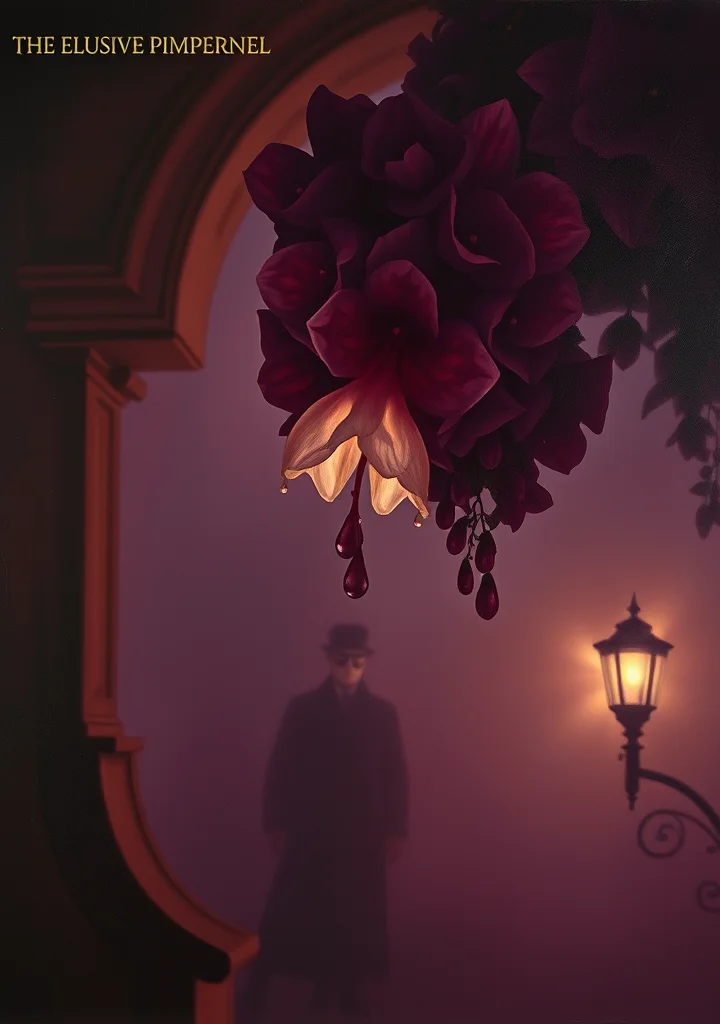

The Elusive Pimpernel
  • 135
  • 0
  • 38
  • Reads 135
  • 0
  • Part 38
Completed, First published Mar 02, 2026

A fog-choked London breathes down the necks of aristocrats and revolutionaries alike. Dust motes dance in the gaslight as whispers follow Sir Percy Casson – a man lauded as a fool, yet haunted by a spectral grace. His estate, a crumbling manor draped in wisteria and shadowed by ancient oaks, exhales secrets with every rustle of silk. The air hangs thick with the scent of decaying roses and the phantom echo of guillotines. Each act of defiance, each smuggled letter bearing the pimpernel’s bloom, is etched in a rising tide of dread. The narrative coils like smoke, obscuring intent within a labyrinth of drawing rooms and shadowed stables. A chilling elegance permeates the tale, a dance between opulence and desperation, where loyalty is a mask worn over a heart stained crimson. The true peril isn’t merely capture, but the unraveling of a man consumed by a beautiful, terrible purpose – a purpose that bleeds into the very fabric of the era, staining everything with the promise of a vengeful, spectral justice. The story unfolds in the oppressive silence of country houses, punctuated by the hurried rhythm of clandestine meetings, each breath a gamble against the encroaching darkness.
Copyright: Public Domain
This license allows anyone to use your story for any purpose, including printing, selling, or adapting it into a film freely.

Recommended for you
35 Part
A creeping dread settles upon the reader even before the first page is turned. Wakefield, a village steeped in mist and rumour, becomes a prison of piety and hidden vice. The vicar, a man of gentle intent, finds his world unraveling not through grand tragedy, but through the insidious rot of circumstance and the blossoming sins of those closest to him. Sunlight here is brittle, casting long shadows that cling to the crumbling stone of the church and the shadowed faces of its inhabitants. The narrative breathes with the stifled sighs of daughters seduced by vanity, the desperate gambles of a brother consumed by ambition, and the slow, agonizing decay of a family’s reputation. Each act of kindness, each whispered prayer, is shadowed by the knowledge of impending ruin. A suffocating domesticity, rendered with a cold, precise hand, traps the reader within the suffocating walls of the vicarage. The air is thick with the scent of damp earth and decaying lace, a fragrance of broken promises and fractured faith. The story unfolds less as a sequence of events, and more as a gradual suffocation, the tightening of a noose woven from good intentions and the inevitable unraveling of a life lived in the shadow of expectation. It is a slow poisoning, where the poison is not malice, but the crushing weight of a world too small to contain its desires. Wakefield itself is a character—a silent, watchful entity that feeds on the failings of its inhabitants and buries their secrets in the graveyard’s cold embrace.

81 Part
A creeping dread clings to the manor houses and polished drawing rooms of mid-Victorian England, a chill that isn't merely seasonal. The Eustace Diamonds, glittering heirlooms passed down through generations, become less jewels and more spectral witnesses to a fractured lineage. Their fate mirrors the unraveling of young Lady Eustace Greystock, a woman whose beauty and desperation intertwine with the grasping ambitions of men circling like carrion birds. The narrative unfolds in shadowed parlors and echoing hallways, where whispered anxieties and concealed debts fester beneath a veneer of polite society. A suffocating politeness masks the ravenous hunger for wealth and status, a hunger that threatens to devour the very foundations of respectability. Each glittering facet of the diamonds reflects a distorted truth, illuminating the decaying moral landscape of a world obsessed with appearances. The air is thick with the scent of fading roses and unspoken resentments, a stifling fragrance that clings to the silk gowns and tailored coats of those entangled in the diamonds’ orbit. A slow, relentless pressure builds as the novel progresses, mirroring the tightening coils of a snare. The narrative doesn’t rush, but *persists* - like the slow drip of water eroding stone, or the insidious growth of mold within a forgotten crypt. It’s a story steeped in the gray morality of provincial life, where fortunes are won and lost on a whisper, and where the weight of expectation threatens to crush the fragile bloom of a woman’s ambition. The diamonds themselves become a curse, attracting shadows and breeding decay, a glittering symbol of the rot at the heart of a gilded age.
30 Part
A creeping chill clings to these pages, not of snow-bound landscapes alone, but of a loneliness that permeates the very fjords and shadowed forests. Wollstonecraft’s letters unravel a journey not merely through Scandinavian vistas, but through the fractured landscapes of a woman wrestling with grief, disillusionment, and the suffocating weight of societal expectation. The prose is steeped in a melancholic haze, mirroring the perpetual twilight of the northern realms. Each observation – a peasant’s cottage, a royal court, a desolate stretch of coastline – is rendered with a delicate, almost spectral clarity, haunted by the author’s internal turmoil. There’s a pervasive sense of isolation, amplified by the vastness of the scenery. The narrative doesn't simply *describe* Norway; it *becomes* Norway – a place where the heart, stripped bare by loss, echoes with the silence of ancient stones. A subtle dread permeates the descriptions of prisons and political unrest, hinting at a darkness beneath the veneer of civility. The letters themselves become fragments of a broken mirror, reflecting not just the author's travels, but the fractured state of her own soul, adrift in a land where the boundaries between reality and reverie blur with the long, encroaching shadows. The very air seems to whisper of forgotten tragedies, and a chilling premonition of the author's own unraveling.
22 Part
Dust motes dance in perpetual twilight within the shadowed halls of Misselton House, a boarding school steeped in the chill of London fog and the whispers of forgotten childhoods. Young Sara Crewe arrives, gilded in privilege, yet swiftly descends into a labyrinth of grey routine and stifled grief. Her father’s disappearance casts a pall over her days, mirroring the encroaching damp that clings to the stone walls and seeps into the very marrow of her bones. The narrative isn’t one of grand horrors, but of a slow, creeping despair, a brittle beauty blooming within a landscape of neglect. The grandeur of Sara’s past becomes a phantom limb, haunting her every waking moment. Each stolen moment of imagination, each ragged scrap of kindness offered in the attic, is lit by a flickering candle against the encroaching darkness. The air thickens with the scent of coal smoke and the stifled cries of lonely children, their stories swallowed by the vast, indifferent house. It’s a story not of monsters under the bed, but of the monstrous indifference of the world, and the fragile, tenacious flame of hope flickering against the wind. The very silence of the house feels alive with unspoken sorrows, and the gardens, glimpsed through frost-rimed windows, feel less like escape than extensions of a creeping, melancholic embrace. Even the smallest acts of cruelty feel like shards of glass in a winter wind, leaving Sara bleeding not with wounds, but with a chilling awareness of her own vulnerability. The world narrows to the dimensions of a forgotten room, and the narrative breathes with the same slow, suffocating rhythm as a heart breaking in the shadows.