
The Architect’s Burden: Voice Void Journals
  • 94
  • 4
  • 4
  • Read 94
  • 4
  • Part 4
Ongoing, First published Mar 21, 2026

By: Ebaa Abu Zer "In the dead of night, every creator faces a ghost. Mine smells of cold coffee and stale smoke." What does it cost to build a sanctuary in a world that only knows how to scream? The Architect’s Burden is not a guide to building a platform; it is a descent into the psychological and existential labyrinth of creation. It is the raw, unpolished journal of a man sitting before a flickering screen at 4:00 a.m., wrestling with a machine that has become his heartbeat and a mind that has become his dictator. From the crushing weight of lost time to the silent "engineering of doubt," this is a story of stone and shadow. It is a chronicle of a solitary builder trying to resurrect the voices of the past while battling the silence of his own uncertainty. In these pages, the code is invisible, but the struggle is absolute. It is a meditation on why we build when we are not sure if anyone is listening, and why we keep laying stones in the desert, praying for a rain that may never come. Step inside the server room. Hear the hum of the beast. Witness the birth of a void.
Copyright: All Rights Reserved
No person is allowed to use, redistribute, or modify your work in any form without your explicit permission.
More like this
22 Part
Dust motes dance in the long shadows of plantation houses, even after the master’s reign has crumbled. This is not a tale of polished triumph, but one clawed from the earth with bleeding hands and a spirit forged in the kiln of hardship. A suffocating humidity clings to the narrative, thick with the scent of pine needles and the unspoken grief of generations. Every step forward is measured in loss—loss of kin, of dignity, of the very earth beneath bare feet. The weight of chains, though broken, echoes in the hollows of every achievement. The story breathes with the stifled cries of children sold like livestock, the rasp of a plow dragged across unforgiving soil, and the quiet desperation of a people rebuilding not just homes, but souls. It isn’t a light that illuminates this path, but a flickering ember—a fragile warmth against a backdrop of perpetual twilight. There’s a spectral presence in the classrooms built from scraps, a haunting in the faces of those who learn to read by the dim glow of a borrowed candle. The narrative doesn’t soar; it *rises* – slowly, agonizingly, from the mire of injustice. It’s a landscape etched with the ghosts of promises broken and the thorns of deferred dreams. A creeping unease permeates even the victories, for even in freedom, the shadow of the whip never fully dissipates. This is a story of resurrection, yes, but one born from the grave—a testament to endurance carved in bone and stained with tears.

27 Part
Dust motes dance in the shadowed halls of Sagamore Hill, a spectral presence clinging to the very timbers. This is not a tale of triumph, but of haunted ambition, a self-reckoning etched in the marrow of a man who wrestled beasts both within and without. Roosevelt’s chronicle unfolds like a fever dream—a wilderness of boyhood grief, a frontier of grief-stricken manhood, and the chilling precision of a hunter’s gaze turned inward. The narrative breathes with the scent of damp earth and the musk of dead game, echoing with the cries of vanished buffalo and the hollow resonance of loss. Each chapter is a shadowed room in a sprawling estate, filled with the stuffed trophies of conquered demons and the ghosts of those he left bleeding in the wilderness of his own making. He charts his life as a landscape of perpetual struggle, where the wilderness isn’t merely terrain, but a reflection of his own volatile heart. The sun-drenched plains become a canvas for the shadow play of his grief; his political battles, a war waged within the confines of his own restless spirit. The prose itself is a brittle, bone-dry thing—a meticulous inventory of wounds, both inflicted and endured. This autobiography isn’t a celebration of fortitude, but a chilling testament to the cost of it—a portrait of a man forever haunted by the specters of his own relentless drive, and the wild, untamed country that birthed it. The very pages seem to exhale the cold air of a shadowed study, where a man, even in recounting his victories, confesses to the solitude of his own magnificent, terrible dominion.
8 Part
A pall descends from the shadowed Cambridge rooms, a creeping fog of intellectual rigor and suppressed grief. Mill’s life, laid bare not as triumph but as a slow, exquisite unraveling. The scent of stale ink and decaying liberalism clings to every page, mirroring the stifled passions that choked within his father’s utilitarian gaze. This is not a chronicle of progress, but a meticulous dissection of a mind forged in the crucible of paternal expectation, haunted by the ghost of Bentham’s cold logic. Each chapter is a darkened corridor, echoing with the precise footsteps of a man striving to define himself against the suffocating weight of inherited thought. The narrative breathes with the chill of early mourning, the suffocating weight of a childhood spent mastering logic whilst denying the unruly currents of the heart. Later, the light flickers and fails amidst the bureaucratic labyrinths of the East India Company, a spectral empire built on the dust of forgotten lives. The prose itself is a mausoleum of measured restraint, each sentence a carefully placed stone concealing the raw, bleeding wounds beneath. It is a testament to the art of internalizing agony, of building a fortress of reason around a core of aching vulnerability. A study in grey, in the precise geometry of despair, this autobiography is not merely read, but *felt* - a slow, deliberate descent into the labyrinth of a life lived in the shadows of its own formidable intellect. The silence within the text is as deafening as the clamor of London streets, a testament to the unacknowledged voids at the heart of a life relentlessly dedicated to thought.
297 Part
A descent into shadowed valleys where morality itself is a crumbling edifice. The air hangs thick with the scent of decay, not of flesh, but of belief. This is a landscape carved from the obsidian of doubt, where the sun bleeds into a perpetual twilight and the echoes of forgotten gods whisper through fractured minds. It isn’t a story of villains to be vanquished, but of masks discarded, revealing the cold, magnificent indifference beneath. Each chapter unfolds like a slow unraveling—a descent not into sin, but beyond its very definition. The narrative clings to the jagged edges of reason, tracing the contours of a will to power that consumes not with fire, but with a glacial, irresistible logic. Shadows stretch from the ruins of old values, twisting into monstrous forms born of ambition and ressentiment. There are no heroes here, only climbers scaling the precipice of their own self-overcoming, their hands stained with the dust of shattered idols. The silence between the lines is a vast, echoing chasm—a void mirroring the abyss within each self-proclaimed ‘good’ man. It’s a chronicle of becoming, of forging a new dawn from the embers of a dying world, a world where the only truth is the will to create, to destroy, to *become* beyond the shackles of pity and remorse. The landscape is one of perpetual internal warfare, where the battlefield is the self, and the stakes are nothing less than the remaking of existence itself.
59 Part
A creeping malaise descends with the first ascent to Berghof, a sanatorium clinging to the precipice between life and death. Not a fever dream, but a deliberate, glacial erosion of the self, orchestrated by the mountain’s insidious stillness. Here, time dilates, stretching into an eternity measured not by clocks, but by the slow, deliberate consumption of lungs and the languid unraveling of souls. The air itself is a narcotic, laced with the scent of pine and the ghosts of consumption, drawing the protagonist into a hypnotic orbit around the tubercular aristocracy of the sanatorium. Days bleed into weeks, weeks into years, punctuated only by the hollow coughs echoing through corridors, and the unsettlingly precise rituals of measurement – weight, temperature, sputum. A baroque decay permeates every surface, mirroring the rot within the bodies of its inhabitants. The mountain is not merely a backdrop, but a character, a malevolent deity presiding over a kingdom of shadows and protracted farewells. Whispers of philosophy mingle with the damp chill of mortality, as the protagonist drifts through a labyrinth of intellectual debate, drawn into the orbit of a charismatic, cynical aesthete who seems to thrive on the very sickness that defines their gilded cage. It is a descent into a hypnotic, self-imposed exile, a voluntary surrender to the beautiful, terrible weight of waiting. The world below, the world of action and ambition, becomes a fading memory, a phantom limb severed by the mountain's isolating embrace. The narrative is less a journey toward recovery, and more a meticulous charting of the boundaries of oblivion, a slow, deliberate burial within the snow-capped peaks of the self.
23 Part
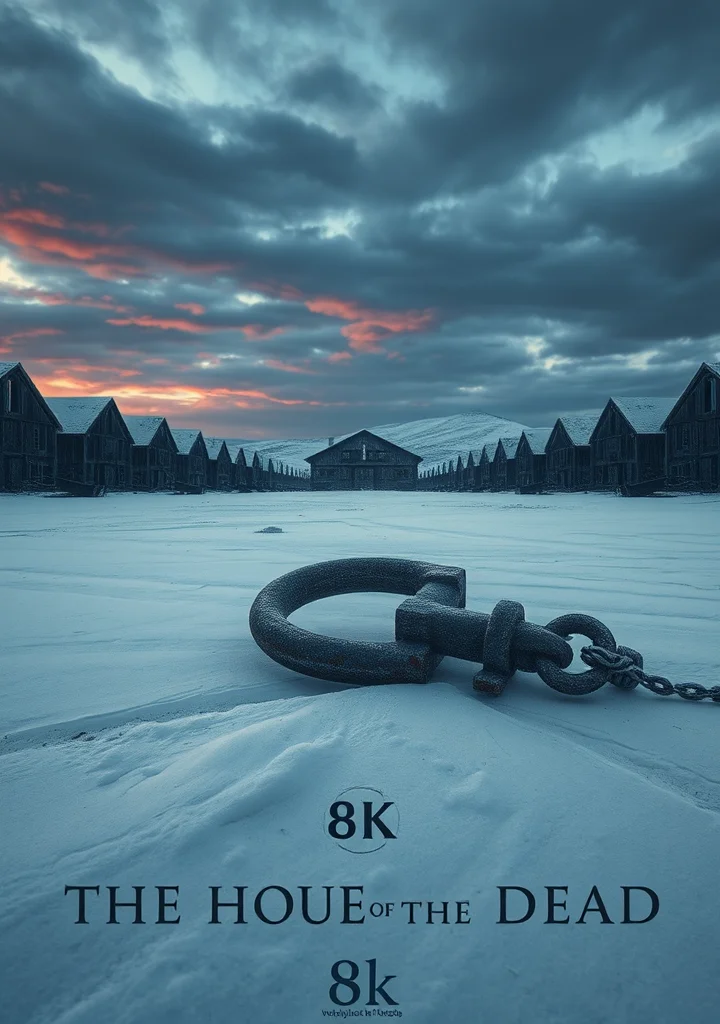
A creeping dread permeates the Siberian salt mines, where the air hangs thick with the ghosts of ambition and despair. Here, amidst the brutal calculus of exile, men are stripped not of their lives, but of their names, their histories, their very humanity. The narrative coils around a nameless narrator, a gentleman condemned to this frozen hell for a crime barely remembered, a sin buried beneath layers of bureaucratic indifference and the suffocating weight of the steppe. The narrative isn't merely a chronicle of survival, but a descent into the fractured psyche of men driven to madness by confinement and the absence of hope. Each cell becomes a confessional, each inmate a decaying testament to a past life—a merchant, a nobleman, a thief—now reduced to shivering shadows haunting the echoing corridors of the mine. A pervasive sense of claustrophobia clings to the prose, mirroring the tunnels that burrow into the earth and into the souls of those entombed within. The light is a dying ember, barely warding off the encroaching darkness that seeps into every corner of the narrative. It is a world where the boundaries between the living and the dead blur, where the true horror lies not in the physical torment, but in the slow, agonizing erosion of the spirit, a descent into a hollowed-out existence mirroring the very earth that claims them all. The house itself is not stone and mortar, but the collective grief and decay of every man condemned to its icy embrace.
25 Part
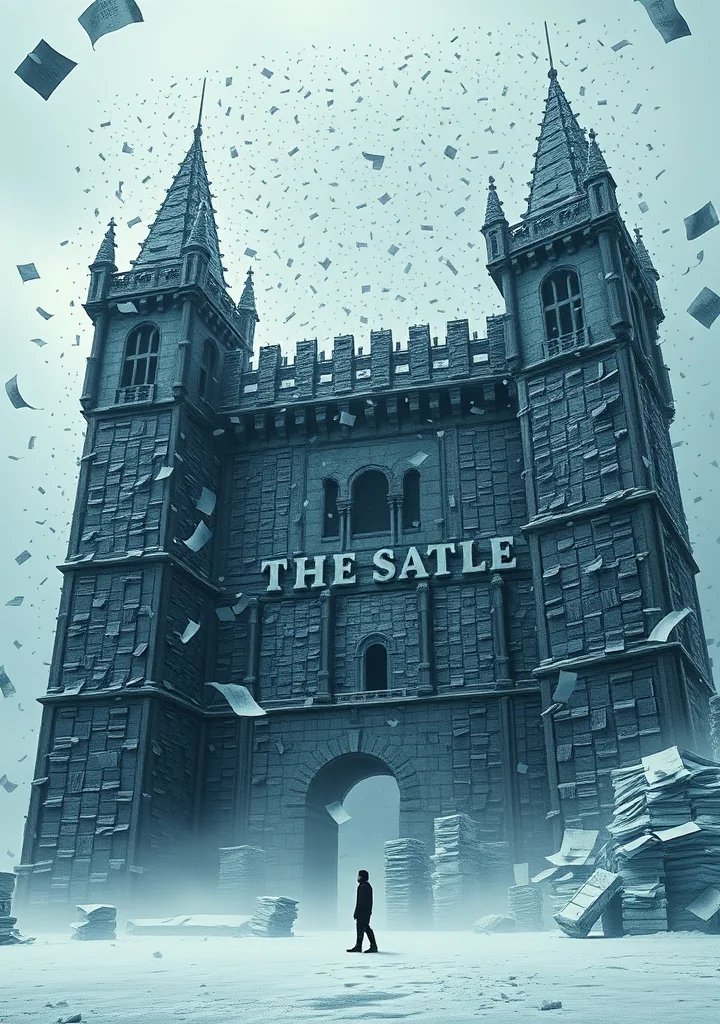
A creeping dread emanates from the snow-blinded peaks surrounding the Castle, a fortress not of stone and mortar but of suffococating bureaucracy and fractured logic. The protagonist, nameless and adrift, is drawn into its labyrinthine corridors not by invitation, but by an insidious compulsion, a need to understand its impossible laws. Each attempt to reach its masters, the unseen Archduke and his attendants, is met with echoing silence, mirrored by the villagers who speak of the Castle only in hushed, fearful whispers. The landscape itself is a character – a perpetual twilight descends, smothering the world in a gray, suffocating weight. Rooms stretch into impossible distances, hallways twist into mirroring repetitions, and the very architecture seems designed to frustrate comprehension. The air is thick with the scent of damp stone and decaying paper, a testament to decades of unfulfilled petitions. A pervasive sense of futility clings to every interaction. The Castle’s inhabitants, pale and withdrawn, engage in rituals of pointless administration, their faces etched with a hollow resignation. Hope is not extinguished, but slowly eroded, replaced by a gnawing awareness of one’s own insignificance within a system that exists solely to perpetuate its own obscurity. The narrative unfolds as a descent into a waking nightmare, a prison built not of bars, but of endless, incomprehensible protocols. The Castle isn’t merely a location; it’s a symptom of a deeper, unknowable malaise, an infection of the soul.
10 Part
A creeping twilight descends upon young Emil Sinclair as he’s drawn into the magnetic orbit of Max Demian, a figure both beautiful and terrifyingly unbound. Hesse’s narrative isn’t merely a coming-of-age, but a descent into shadowed chambers of the self, where inherited morality fractures against the raw stone of instinct. The air thickens with the scent of incense and forbidden knowledge as Sinclair’s world fractures – the rigid structure of his upbringing, the suffocating piety of his mother, all crumble beneath Demian’s gaze. Every encounter is layered with a premonition of doom, a cold wind whistling through the hollows of Sinclair’s nascent soul. The novel breathes with the claustrophobia of a gilded cage, the oppressive weight of societal expectations pressing down like lead. Dreams twist into grotesque allegories, mirroring Sinclair’s inner turmoil with unsettling clarity. Ancient symbols, unearthed from the loam of forgotten myths, become obsessions, fueling a desperate quest for liberation. The narrative is haunted by the specter of a fractured duality, a constant blurring of light and shadow, innocence and corruption. Sinclair’s journey isn’t towards enlightenment, but towards a harrowing reckoning with the darkness within—a darkness that threatens to consume him entirely as he spirals towards the inevitable, brutal severing of ties with the world he once knew. The final revelation is less a triumph, more a chilling echo in the vast, empty cathedral of his own becoming.