
Representative Men
  • 89
  • 0
  • 10
  • Reads 89
  • 0
  • Part 10
Completed, First published Mar 02, 2026

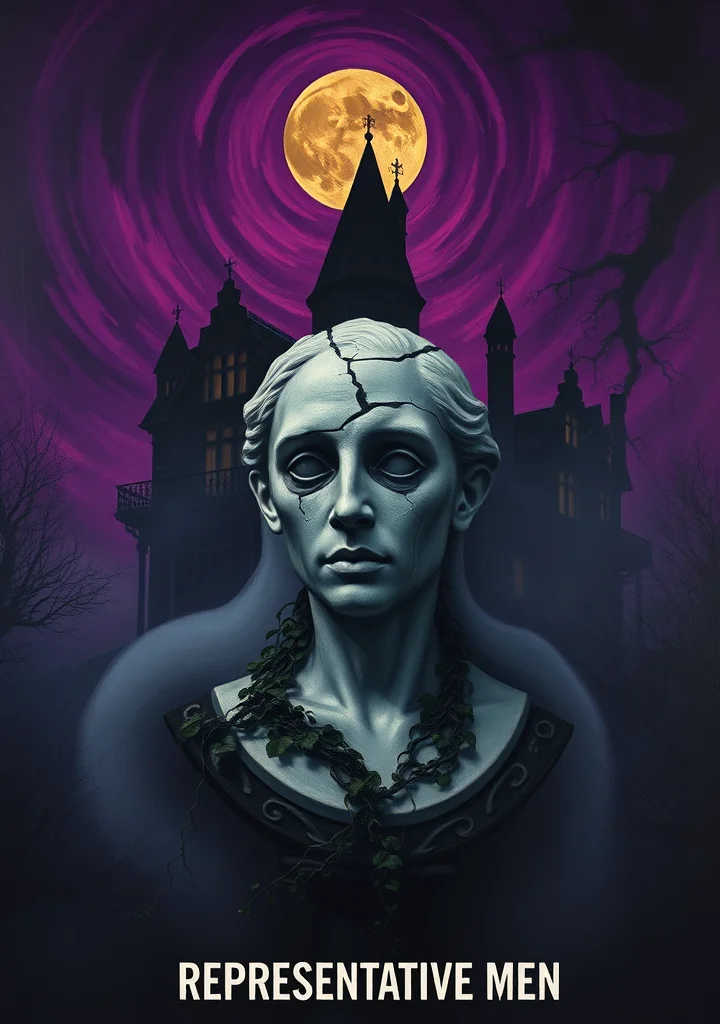
A creeping fog clings to the decaying manors of the soul, each chapter a shadowed wing of a crumbling estate. Here, men—not as flesh and blood, but as stark, brittle effigies—are dissected under a moonless sky. Emerson’s men haunt the periphery of action, specters of intellect and will, their failures echoing in the hollow chambers of ambition. The air is thick with the scent of rot, not of bodies, but of potential—of lives consumed by the very ideals they championed. A pervasive sense of isolation descends with each portrait, each man a solitary tower crumbling inward. The narrative is less a story told than a post-mortem examination of character, performed with cold instruments of observation. It is a landscape of granite will, where the stones themselves weep with the weight of unfulfilled purpose. A chill wind whistles through the gaps in their construction, carrying the lament of those who sought to define themselves through the very things that ultimately devoured them. The book breathes with the hushed, suffocating silence of a mausoleum—a place where the ghosts of giants walk amongst the ruins of their own making.
Copyright: Public Domain
This license allows anyone to use your story for any purpose, including printing, selling, or adapting it into a film freely.

Recommended for you
110 Part
A creeping fog of decline settles over Lübeck, mirroring the slow, inexorable decay of the Buddenbrook family. Within the opulent, shadowed confines of their merchant house, generations unravel, bound by tradition yet suffocated by its weight. A chill permeates the ornate rooms, not of winter, but of a creeping malaise—a spiritual exhaustion that clings to velvet curtains and polished mahogany. The scent of almonds and decay hangs heavy in the air, a subtle poison seeping into the veins of each heir. Each chapter unfolds like a funeral procession, hushed and dignified, yet laced with a subtle, suffocating dread. The city itself becomes a character—its canals reflecting the family's fading fortunes, its cobbled streets echoing with the ghosts of ambition and lost vitality. A profound loneliness permeates the narrative, a sense of being entombed alive within a legacy of prosperity. The narrative is not one of dramatic catastrophe, but of a quiet unraveling, a slow erosion of will masked by polite society’s rigid formality. The characters move through their lives as though in a dream, haunted by the specter of what once was—their faces pale and drawn, their voices laced with a melancholy that clings like the damp sea air. The weight of expectation, the burden of inheritance, become visible as a spectral presence in every room, a chilling reminder of the inevitability of dissolution. The novel breathes with the scent of dust, of old money, of secrets whispered in darkened hallways, and the slow, agonizing realization that even the most solid foundations can crumble into nothingness.

13 Part
A creeping dampness clings to the cobblestones of Harrowgate, mirroring the rot within the gilded cages of its elite. Tawney’s narrative exhumes a city suffocated not by plague, but by insatiable appetite—a hunger for legacy, for possessions, for the very husks of lives consumed by ambition. Each manor house exhales secrets in the draughty hallways, whispers of fortunes built on shadowed deals and the slow, deliberate erasure of inconvenient kin. The air is thick with the scent of beeswax polish masking decay, of velvet drapes concealing dust-motes dancing in the perpetual twilight. A brittle elegance permeates everything, a performance of refinement barely masking the desperation beneath. The protagonist, a scholar of inherited debts, is drawn into a labyrinth of estates where the acquisition of wealth has birthed a monstrous lineage, each heir a parasite feeding on the dwindling inheritance of their predecessors. Shadows stretch long from the gas lamps, revealing not merely figures in the gloom, but the spectral remnants of those whose possessions were claimed—their faces etched into the very wallpaper, their voices woven into the fabric of the antique furniture. The true horror isn’t the taking of things, but the hollowness that remains when everything has been bought and sold, leaving only the echoing emptiness of a soul willingly traded for another’s gain. A creeping dread permeates every room, a sense of being watched by the objects themselves, each piece of furniture a silent judge, each portrait a veiled accusation.