
أنا و الشّيطان...و الوطن
  • 64
  • 0
  • 4
  • Read 64
  • 0
  • Part 4
Completed, First published Apr 25, 2026

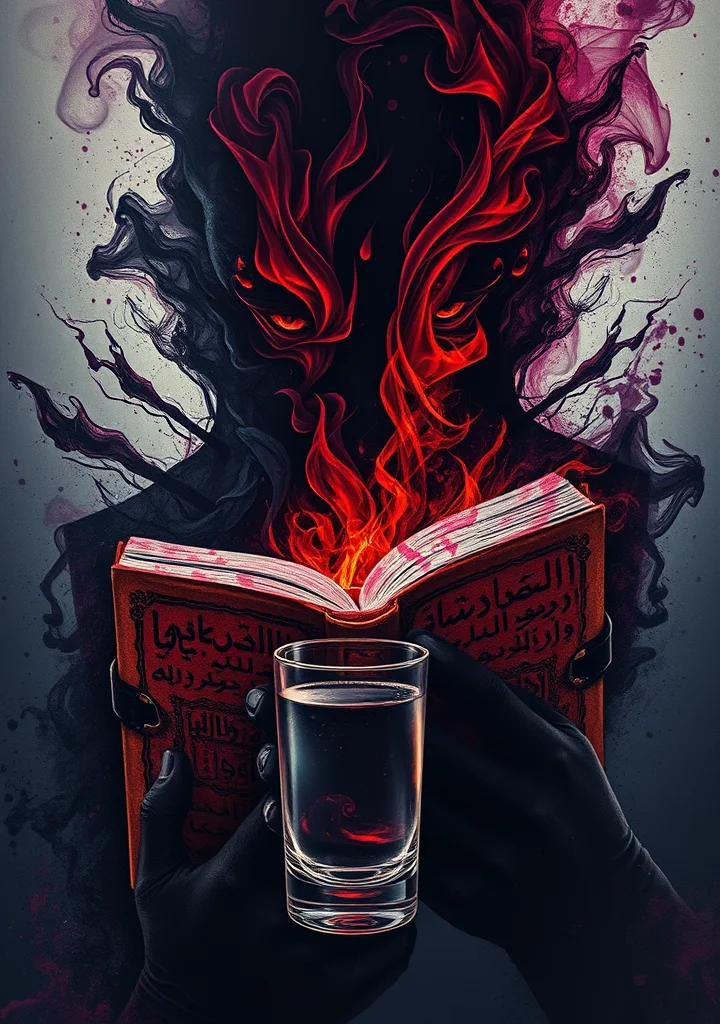
في هذه الرواية، يظهر تأملات شخصية في الذكريات والماضي، وتكشف عن كراهية ساخرة للواقع السياسي والاجتماعي. ينسج السرد حوارات متوترة بين الراوي والشيطان، الذي يظهر فجأة حاملاً كتابًا قديمًا يثير تساؤلات حول طبيعة العقل وأصله. تتخلل هذه الصفحات تحديات فلسفية ومواجهات لغوية بليغة، حيث يستفز الراوي الشيطان ويستمتع بمشاهدة غضبه. يختتم النص بطلب جريء، يهدد بقطع الطريق على الشيطان في الرواية، ويستدعي كأسًا من الفودكا لبدء حديث طويل. ووترسم هذه الصفحات صورة عن عالم يمزج السخرية باليأس، والتمرد بالتفكر.
Copyright: All Rights Reserved
No person is allowed to use, redistribute, or modify your work in any form without your explicit permission.
More like this
297 Part
A descent into shadowed valleys where morality itself is a crumbling edifice. The air hangs thick with the scent of decay, not of flesh, but of belief. This is a landscape carved from the obsidian of doubt, where the sun bleeds into a perpetual twilight and the echoes of forgotten gods whisper through fractured minds. It isn’t a story of villains to be vanquished, but of masks discarded, revealing the cold, magnificent indifference beneath. Each chapter unfolds like a slow unraveling—a descent not into sin, but beyond its very definition. The narrative clings to the jagged edges of reason, tracing the contours of a will to power that consumes not with fire, but with a glacial, irresistible logic. Shadows stretch from the ruins of old values, twisting into monstrous forms born of ambition and ressentiment. There are no heroes here, only climbers scaling the precipice of their own self-overcoming, their hands stained with the dust of shattered idols. The silence between the lines is a vast, echoing chasm—a void mirroring the abyss within each self-proclaimed ‘good’ man. It’s a chronicle of becoming, of forging a new dawn from the embers of a dying world, a world where the only truth is the will to create, to destroy, to *become* beyond the shackles of pity and remorse. The landscape is one of perpetual internal warfare, where the battlefield is the self, and the stakes are nothing less than the remaking of existence itself.
128 Part
Dust motes dance in the fractured light of a crumbling tower, mirroring the fragments of a life shattered by exile and betrayal. Within these stone walls, a man—once a pillar of power, now stripped bare—grapples not with chains or bars, but with a grief that threatens to swallow him whole. He is haunted by the swift, cruel fall from grace, the whispers of accusations echoing in the hollows of his despair. But solace, or a twisted mockery of it, comes in the form of a spectral presence—Philosophy herself, a woman woven from starlight and sorrow, her voice a chilling balm against the wounds of the world. She leads him through labyrinthine corridors of thought, where reason battles with the phantom pain of loss. The air is thick with the scent of decay, both of the body politic and the soul. Visions of fortune’s wheel—a cruel, spinning device—loom large, showcasing the ephemeral nature of earthly power. Each argument, each carefully constructed verse, feels less like a comforting embrace and more like the cold touch of inevitability. The narrative is steeped in the grey of twilight, a perpetual autumn where every leaf falling is a reminder of what is lost. It is a meditation on the nature of good and evil, not as grand battles, but as insidious erosion, a slow poisoning of the spirit. The reader is drawn into a claustrophobic space where the only escape is through the labyrinth of the mind, where the architecture of despair is both beautiful and terrifying. Ultimately, the question lingers: is this consolation a true refuge, or merely a gilded cage built around a broken heart?
134 Part
Dust motes dance in the perpetual twilight of a crumbling estate, mirroring the fractured reflections within its master’s mind. A scholar, consumed by the architecture of virtue, meticulously charts the decay of moral fiber as if mapping a labyrinthine crypt. Each carefully reasoned step through his treatise is a descent into the shadowed chambers of the self, where ambition breeds a chilling stillness and the pursuit of happiness echoes with the hollowness of forgotten prayers. The air hangs thick with the scent of aged parchment and the weight of unfulfilled potential, a suffocating perfume of what *ought* to be versus the creeping rot of what *is*. He dissects the human heart with the cold precision of a surgeon’s blade, revealing not gleaming organs but the brittle bones of regret. Every virtue, examined under the pallid light of reason, casts a long, skeletal shadow—a temptation, a weakness, a betrayal. The garden overgrown with thorny logic yields not blooms, but poisonous thorns that bind the soul to its own inevitable unraveling. A stillness permeates the halls, broken only by the scratching of a quill as he attempts to build a fortress against the encroaching darkness, only to find that the foundations of morality are built on shifting sands, haunted by the ghosts of desires left to fester in the shadows. The narrative is not a story of triumph, but of an endless, spiraling fall into the very heart of human imperfection.
72 Part
Dust motes dance in the perpetual twilight of abandoned mills and shadowed bakeries. A creeping dread clings to the cobblestones, not of starvation’s gnaw, but of a cold, methodical dismantling of habit. This is not a tale of revolution’s fire, but of its slow, fungal growth within the bones of a dying world. Kropotkin’s vision isn’t one of barricades and blood, but of a silent, relentless erosion of ownership, a reclamation not through violence, but through the ghostly presence of communal need. The narrative exhales a peculiar stillness, like a mausoleum filled with the scent of rising dough and the whispers of forgotten hands. Each chapter unfolds as a spectral blueprint of a possible future, sketched in the dim light of necessity. It’s a world where the boundaries between labour and leisure dissolve into a perpetual, aching grey, where the very act of sharing becomes a haunting ritual. There's a chilling beauty in the prose, a meticulous accounting of resources that feels less like instruction and more like an incantation. The atmosphere is one of damp earth, the metallic tang of tools left to rust, and the unnerving quietude of fields yielding not to a lord, but to the communal breath of those who understand the earth’s yielding is not conquest, but communion. The book doesn’t promise liberation, it presents a slow, unsettling haunting of the old order, a creeping tendril of possibility that leaves one wondering if the ghosts of hunger have finally found their bread.
40 Part
Dust motes dance in the perpetual twilight of a forgotten monastery clinging to the precipice of the Eastern mountains. The air hangs thick with the scent of incense and decay, a miasma of regret clinging to the stone walls. This is a tale not of heroes, but of shadows—the creeping doubt that gnaws at the heart of a hermit saint, Barlaam, and the restless yearning of Ioasaph, a prince turned penitent. The narrative unfolds as a slow unraveling, a descent into the labyrinth of the soul. Each chapter is a stone rolled away from a crypt, revealing not flesh and bone, but the fragile architecture of belief. Sunlight feels like a violation here, exposing the rot beneath the gilded icons. The prose is a whisper of wind through skeletal branches, laced with the chill of unyielding stone. It breathes with the claustrophobia of caves carved into the living rock, where the echoes of Ioasaph’s questions—questions that fracture faith—reverberate for centuries. This is a story steeped in the melancholy of conversion, the weight of renunciation. It's a landscape of barren faith where the only true company is the gnawing emptiness that blooms within the hollowed shell of a life surrendered to the void. The narrative isn’t driven by plot, but by the insidious erosion of certainty, leaving behind a landscape of bone-white despair. The final revelation, like the last breath of a dying candle, offers not light, but the chilling realization of a darkness that dwells within us all.
10 Part
A creeping twilight descends upon young Emil Sinclair as he’s drawn into the magnetic orbit of Max Demian, a figure both beautiful and terrifyingly unbound. Hesse’s narrative isn’t merely a coming-of-age, but a descent into shadowed chambers of the self, where inherited morality fractures against the raw stone of instinct. The air thickens with the scent of incense and forbidden knowledge as Sinclair’s world fractures – the rigid structure of his upbringing, the suffocating piety of his mother, all crumble beneath Demian’s gaze. Every encounter is layered with a premonition of doom, a cold wind whistling through the hollows of Sinclair’s nascent soul. The novel breathes with the claustrophobia of a gilded cage, the oppressive weight of societal expectations pressing down like lead. Dreams twist into grotesque allegories, mirroring Sinclair’s inner turmoil with unsettling clarity. Ancient symbols, unearthed from the loam of forgotten myths, become obsessions, fueling a desperate quest for liberation. The narrative is haunted by the specter of a fractured duality, a constant blurring of light and shadow, innocence and corruption. Sinclair’s journey isn’t towards enlightenment, but towards a harrowing reckoning with the darkness within—a darkness that threatens to consume him entirely as he spirals towards the inevitable, brutal severing of ties with the world he once knew. The final revelation is less a triumph, more a chilling echo in the vast, empty cathedral of his own becoming.