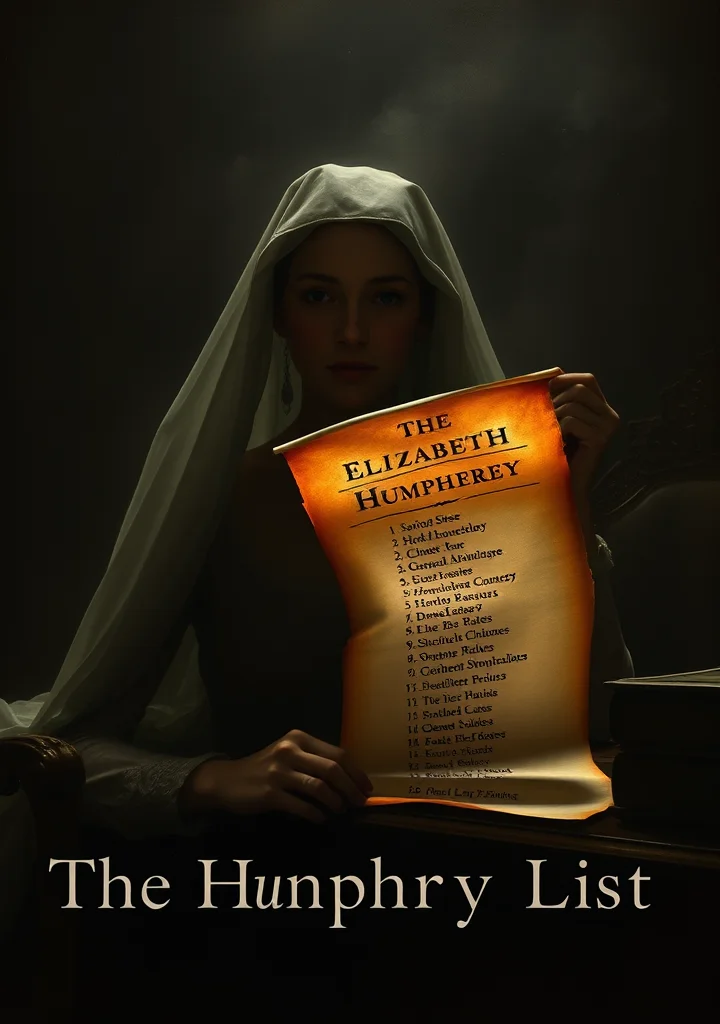

The Humphrey List
  • 24
  • 0
  • 9
  • Read 24
  • 0
  • Part 9
Ongoing, First published Jun 26, 2026

The story opens onto a household grappling with expectations around marriage. Elizabeth Humphrey has declared her intention to remain unmarried, a decision she seeks support for from her siblings. As she navigates family dynamics and her own self-perception, a list of potential husbands begins to circulate, stirring both eagerness and apprehension. These chapters reveal a family responding to crisis when a severely injured man is discovered on their property, prompting unexpected competence and urgent concern. The narrative traces Beth’s anxieties as she contemplates her future and the reactions of those around her.
Copyright: All Rights Reserved
No person is allowed to use, redistribute, or modify your work in any form without your explicit permission.
More like this

147 Part
A world steeped in the mud and iron of the Thirty Years’ War bleeds into every page. Simplicissimus doesn't merely recount adventure; it exhumes it from the rotting timbers of abandoned villages and the hollow stares of famine’s ghosts. The narrative coils around you like a creeping fog, thick with the stench of gunpowder and the sour tang of desperation. It isn't heroism that echoes through these chapters, but a brutal, animalistic survival. Each encounter – a brawl in a mercenary camp, a desperate plea for shelter, a glimpse of skeletal families huddled around dying embers – is rendered with a chilling immediacy. The prose itself feels like a shard of glass pressed against the skin, sharp and unforgiving. Grimmelshausen doesn't offer escape, but immersion. You walk alongside Simplicissimus through landscapes ravaged not by armies alone, but by a spiritual decay that festers in the hearts of men. The castles loom as skeletal frameworks against bruised skies, and the forests whisper with the cries of the lost. The novel’s relentless forward motion mirrors the descent into madness, the erosion of innocence, and the ultimate realization that even in the deepest darkness, humanity finds a way to both inflict and endure. A suffocating claustrophobia settles over the reader as the narrative descends into a labyrinth of moral compromise and the casual horrors of a world utterly consumed by war. It is a world where the only virtue is the will to survive, and even that is often purchased with pieces of the soul.
91 Part
The shadows of the Revolution linger, not in barricades of stone and blood, but in the haunted chambers of a fractured aristocracy. Twenty years have passed, yet the ghosts of ’89 walk alongside those who claim to have buried them. Paris breathes a false peace, gilded with ambition and rotting beneath with the festering wounds of unresolved vengeance. This is not a tale of simple retribution, but of a darkness blossoming in the hearts of those who believed themselves victorious. The air hangs thick with regret, laced with the scent of jasmine and decay. Dust motes dance in sunbeams that fail to penetrate the perpetual twilight of decaying estates. Each stolen glance, each whispered conspiracy, is rendered in shades of grey, blurring the lines between loyalty and betrayal. A creeping dread clings to the ornate wallpaper and the cracked marble floors—a sense of being watched by the specters of a history refusing to be silenced. The novel unfolds like a slow poison, each chapter revealing a rot beneath the polished veneer of respectability. It is a world where the weight of inherited sins crushes the living, and the pursuit of justice is less a noble cause than a descent into a labyrinth of shadowed motives. Every encounter is a performance, every alliance forged in a desperate need to survive. The city itself is a character—a beautiful corpse, adorned with the jewels of a vanished age, yet riddled with the maggots of discontent. It is a story where the past doesn’t merely haunt, but *becomes* the present, a suffocating embrace of what was lost, and what will inevitably be claimed once more.
99 Part
A creeping fog of decline settles over Lübeck, mirroring the slow, inexorable decay of the Buddenbrook family. Within the opulent, shadowed confines of their merchant house, generations unravel, bound by tradition yet suffocated by its weight. A chill permeates the ornate rooms, not of winter, but of a creeping malaise—a spiritual exhaustion that clings to velvet curtains and polished mahogany. The scent of almonds and decay hangs heavy in the air, a subtle poison seeping into the veins of each heir. Each chapter unfolds like a funeral procession, hushed and dignified, yet laced with a subtle, suffocating dread. The city itself becomes a character—its canals reflecting the family's fading fortunes, its cobbled streets echoing with the ghosts of ambition and lost vitality. A profound loneliness permeates the narrative, a sense of being entombed alive within a legacy of prosperity. The narrative is not one of dramatic catastrophe, but of a quiet unraveling, a slow erosion of will masked by polite society’s rigid formality. The characters move through their lives as though in a dream, haunted by the specter of what once was—their faces pale and drawn, their voices laced with a melancholy that clings like the damp sea air. The weight of expectation, the burden of inheritance, become visible as a spectral presence in every room, a chilling reminder of the inevitability of dissolution. The novel breathes with the scent of dust, of old money, of secrets whispered in darkened hallways, and the slow, agonizing realization that even the most solid foundations can crumble into nothingness.
71 Part
The Cornish coast breathes chill as a shroud, clinging to the crumbling stones of Sker House. A perpetual twilight bleeds from the grey cliffs into the churning sea, mirroring the half-forgotten sorrows trapped within the manor’s walls. This is a tale steeped in the brine of legend, where the echoes of ancient Welsh songs tangle with the desperate cries of a family fractured by pride and spectral longing. The air itself is thick with the scent of salt and decay, clinging to the damp velvet of forgotten chambers. A young man, driven by a shadowed past, finds himself entangled with the ghostly figure of Jinny, a maid claimed by the sea and bound to Sker by a curse of unfulfilled love. But her presence isn’t one of gentle sorrow; it’s a haunting that seeps into the very timbers of the house, twisting the minds of those who linger too long. Every wave that crashes against the shore feels like a mournful confession, and the cries of gulls carry whispers of betrayal. The narrative unravels not through bold action, but through the slow, insidious creep of dread. It’s a descent into a labyrinth of ancestral grief, where the boundary between the living and the dead is blurred by the relentless, mournful ache of the sea, and the secrets held within Sker House threaten to drown all who dare to uncover them. The moorland wind carries not just a chill, but the weight of centuries, pressing down on the heart until only the echo of Jinny’s lament remains.
75 Part
Dust motes dance in perpetual twilight within the rambling, suffocating confines of the Old Curiosity Shop, a place where time itself seems to fray at the edges. The air hangs thick with the scent of decay and forgotten dreams, clinging to the warped timbers and shadowed corners. A suffocating weight of secrets presses down, mirroring the burden carried by little Nell, a fragile bloom wilting under the gaze of avarice. The shop’s labyrinthine depths swallow light, revealing glimpses of grotesque relics—grimacing masks, tarnished silver, and the hollow eyes of forgotten dolls—each a silent witness to generations of loss. A creeping dread seeps from the very stones, fueled by the malevolent presence of Quilp, a creature born of spite and fueled by cruelty. The narrative unfolds not as a journey, but as a descent, spiraling deeper into a labyrinth of shadowed alleys and decaying grandeur. London itself breathes with a feverish pulse, a city of echoing footfalls and whispered conspiracies. Every encounter is veiled in ambiguity, every kindness shadowed by the looming threat of betrayal. The oppressive atmosphere is less a setting, and more a character—a suffocating entity that threatens to consume Nell and all she holds dear within its suffocating embrace. The antique objects are not merely curiosities, but fragments of fractured souls, each holding a piece of the shop’s decaying history. It is a world where innocence is a fragile currency, and darkness preys on the edges of hope.