
Conan Stories
  • 322
  • 0
  • 65
  • Reads 322
  • 0
  • Part 65
Completed, First published Mar 02, 2026

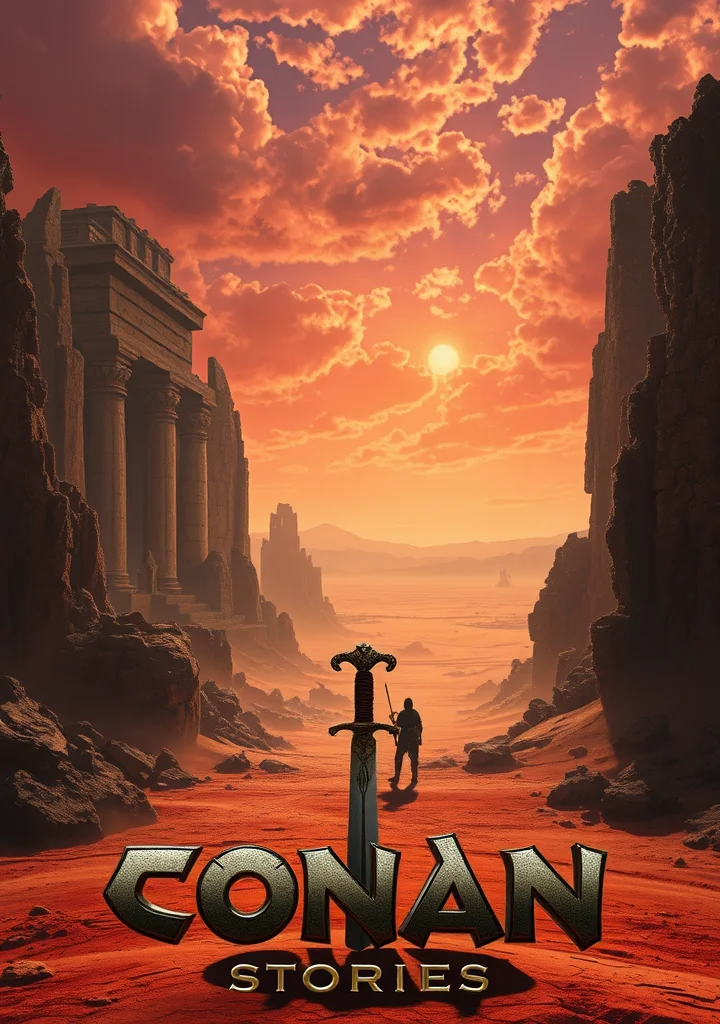
Beneath skies bruised plum-color and the weight of cyclopean ruins, Conan’s shadow stretches across a world perpetually steeped in the ochre dust of forgotten empires. This is not a tale of heroism gleaming, but of survival carved from the throats of dying gods and the grit of sun-scorched deserts. The air hangs thick with the scent of blood-soaked sand, spiced wines, and the musk of predatory beasts – both human and monstrous. Every fortress is a tomb waiting to be unlocked, every jewel a shard of a curse. A primal darkness clings to the crumbling stones of vanished civilizations, whispering temptations of power in the echoing caverns where ancient sorceries fester. Here, steel sings a song of desperation, each victory bought with a fragment of a soul surrendered to the wilderness. The narrative unfolds as a descent into a savage beauty, where the boundaries between man and demon blur with every guttural cry and the rasp of a blade against bone. It’s a land haunted by spectral echoes, where even the stars feel like cold, judging eyes upon a world consumed by ambition and the hunger for dominion. The very stones seem to weep with the memory of forgotten horrors, and the shadows themselves possess teeth.
Copyright: Public Domain
This license allows anyone to use your story for any purpose, including printing, selling, or adapting it into a film freely.
Chapter List

65

Recommended for you
13 Part
Dust motes dance in the perpetual twilight of the Algerian Sahara, clinging to the crumbling adobe walls of a forgotten fortress. Here, amidst shifting dunes and whispers of ancient Berber lore, lies Khaled, a man bound by a pact with djinn and shadowed by a legacy of blood and sand. The air itself tastes of regret, thick with the scent of myrrh and the phantom cries of generations consumed by the desert’s hunger. Crawford weaves a narrative steeped in the oppressive heat, where loyalty is a brittle thing, and the line between the living and the damned blurs with each scorching sunrise. Khaled isn’t merely a man, but a vessel for a history of violence, haunted by the spirits of those he’s sworn to protect – or to betray. The fortress becomes a suffocating tomb, echoing with the weight of forgotten oaths and the slow decay of stone. Every shadow conceals a betrayal, every whisper carries the threat of a reckoning. The landscape itself becomes a character, mirroring the fractured soul of the man at its heart. Expect not grand spectacle, but the creeping dread of isolation, the suffocating weight of tradition, and the unnerving realization that the true monsters are not those lurking in the darkness, but those born from the sun-scorched earth and the silences between breaths. The story unfolds like a slow poison, seeping into the marrow of your bones until you, too, feel the weight of Khaled’s burden, the desert’s curse, and the chilling promise of oblivion.
27 Part
The Welsh borderlands breathe with a chill older than stone, clinging to the shadowed valleys where the Solent family—a lineage steeped in lunar madness and the scent of peat—holds dominion. This is a land where the wolf howls not just in the wilderness, but within the very blood of men, a primal yearning mirrored in the restless tides of the Solent’s inheritance. A web of obsessions—for the land, for the spectral echoes of ancestors, for the forbidden bloom of passion—tightens around the young, impulsive Robert Solent. He is drawn into a vortex of ancestral dreams and the suffocating weight of his mother’s decaying grandeur. The narrative unravels like a fog-wreathed moor, steeped in the claustrophobic intensity of the Solent household. Every room whispers with the past; every glance carries the weight of inherited madness. The air is thick with the scent of decay, the rustle of secrets in long corridors, and the unnerving stillness of a world where the boundary between the living and the dead is porous, worn thin by generations of ritual and grief. Robert’s awakening is not a blossoming, but an exposure—to the raw, unbridled forces of nature, to the suffocating embrace of his mother’s grief, and to a darkness that stirs within him, mirroring the wild, untamed landscapes he is bound to inherit. The story coils inward, suffocating in its own verdant, shadowed depths, a haunting meditation on the inheritance of obsession and the wolf-hunger that gnaws at the heart of the Solent line.
36 Part
Dust motes dance in the perpetual twilight of a Parisian attic, where Maurice de Barant, a scholar consumed by decadent curiosity, charts the blasphemous genealogy of fallen grace. France weaves a narrative steeped in the scent of wormwood and regret, tracing the lineage of Lucifer not through hellfire, but through the meticulously documented seductions of women—from the Virgin Mary to the courtesans haunting the boulevards. The air thickens with a perverse erudition, as Maurice unravels a history where angels, driven by boredom and a refined taste for earthly pleasure, have quietly infiltrated the human world, their celestial origins dissolving into the amber haze of absinthe-soaked nights. A creeping unease settles in as the novel progresses; a sense that the very foundations of morality are built on shifting sands of desire and hypocrisy. The narrative isn’t one of grand demonic battles, but of whispered heresies, subtle corruptions, and the insidious bloom of beauty in decay. Each chapter feels like a chipped fragment of stained glass, refracting a light that is both sacred and profane, illuminating the shadowed corners of a France where the divine has traded its wings for the weight of gold and the murmur of a lover’s breath. The revolt isn’t a fiery uprising, but a slow, elegant erosion—a surrender to the intoxicating allure of the mortal coil, observed with a chillingly detached, scholarly gaze. A fragrance of sulfur lingers, not from hell’s furnace, but from the burning ambitions of men who dare to name the angels' names.
19 Part
The manor hums with static, a low throb beneath floorboards and within the chipped porcelain dolls that populate its shadowed halls. Old money clings to the Thayer estate like ivy, choking the life from the stone. Our protagonist, a woman named Iris, arrives as the “companion” to the reclusive Mr. Silas Blackwood—a man rumored to have grafted his grief onto the very architecture of the house, weaving it into the electrical wiring that now snakes through every room. But the house *feels*. It breathes with the rhythms of forgotten machines, whispers through copper filaments, and reflects Iris’s own loneliness in the flickering gas lamps. She soon discovers the wiring isn’t merely a means of illumination, but a conduit for Blackwood’s obsessions—a network of surveillance, of control, and of a love so fractured it’s been reassembled into something cold and metallic. The air tastes of ozone and dust. Every creak of the floorboards feels like a watched step. Iris finds herself increasingly drawn to the hidden rooms where Blackwood conducts his experiments—rooms filled with humming devices, spools of wire, and the scent of burnt circuitry. She begins to suspect the manor isn’t protecting Blackwood from the world, but *from* himself, and that Iris, wired into his strange affection, is becoming another layer in his increasingly fragile construction. The further she delves into the house’s heart, the more she realizes this isn’t a love story, but a parasitic entanglement with a man who has made himself a ghost within his own machine.