
Henry V
  • 98
  • 0
  • 36
  • Reads 98
  • 0
  • Part 36
Completed, First published Mar 02, 2026

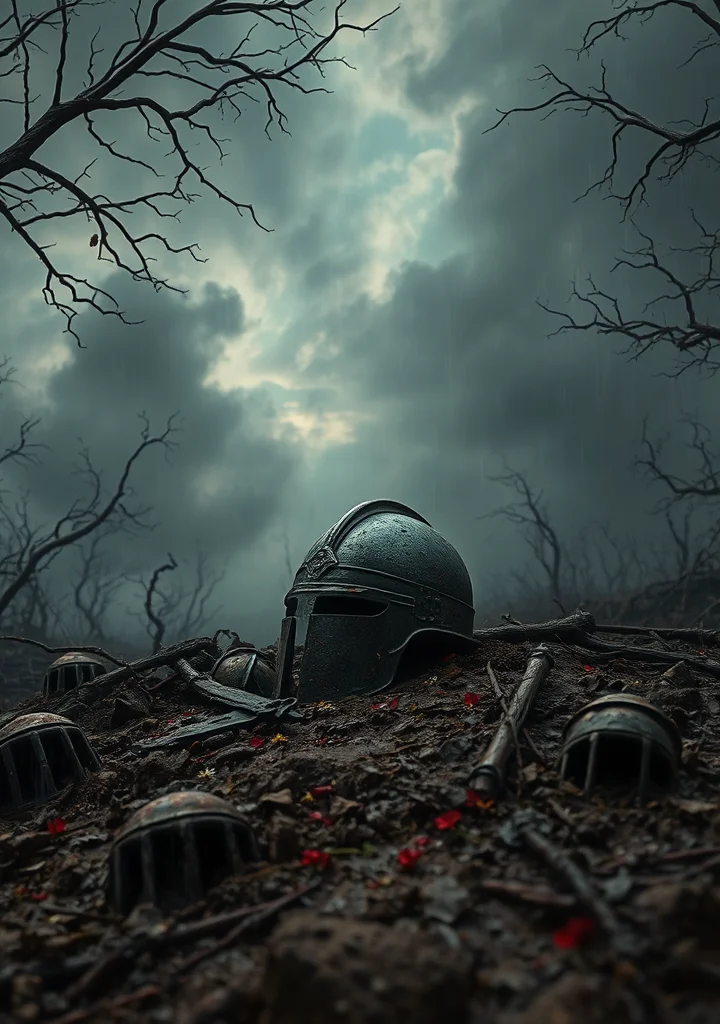
A creeping fog clings to the fields of Agincot, thick with the scent of iron and the ghosts of ambition. Though banners blaze with royal gold, a chill wind whispers through the ranks, carrying the lament of forgotten men. This is not a tale of glory, but one of desperate hunger gnawing at the edges of a kingdom’s pride. Every victory is purchased with a tremor in the hand, every prayer answered with a shadow lengthening across the stained earth. The weight of a crown presses down like a tombstone, and the hollow echoes of Henry’s speeches are swallowed by the vast, indifferent darkness. Watch as the very soil drinks deep of blood, as courage curdles into a brittle, fragile thing. The air itself tastes of ash and regret, and the promise of England’s triumph is laced with the bitter tang of mortality. This is a war where the lines between valor and madness blur, where the heart of a king is measured not in gold, but in the grey, decaying matter of human sacrifice. The shadows stretch long, and they remember everything.


Copyright: Public Domain
This license allows anyone to use your story for any purpose, including printing, selling, or adapting it into a film freely.
Recommended for you
50 Part
A London fog clings to the consciousness as tightly as the secrets within the Worthingtons’ decaying Mayfair townhouse. This is a story steeped in the sickly sweetness of regret, where shadows lengthen with each whispered confession and the scent of dying lilies hangs heavy in the air. The narrative coils around a dying heiress, Catherine, a creature of fragile beauty and suffocating piety, whose final days become a vortex for the desires and deceits of those orbiting her dwindling flame. A stifling domesticity breeds a desperate hunger for connection, a yearning masked by polite conversation and shadowed glances. The air vibrates with unacknowledged needs – a crippled barrister's ambition, a lovelorn doctor’s despair, a calculating suitor's cold calculation. Each character is a moth drawn to Catherine’s incandescent, yet fading, light, only to find themselves consumed by the moral rot beneath the polished veneer of their lives. The story unfolds not as a dramatic rush, but as a slow, suffocating erosion of faith, a descent into the claustrophobia of unspoken desires. The very architecture of the house feels oppressive, mirroring the constraints placed upon these characters by duty, expectation, and the weight of their own concealed longings. It is a haunting portrait of sacrifice and betrayal, where the wings of the dove – a symbol of fragile innocence – are ultimately clipped by the sharp realities of a world defined by its compromises. The narrative breathes with the damp chill of inevitability, leaving the reader immersed in the suffocating stillness of a life quietly extinguished.
22 Part
The salt-laced air of the Northumbrian coast clings to every page, thick as the fog that coils around the crumbling manor of Blackwood Hall. Edgar Saltus weaves a tale of shadowed inheritances and a man unravelled by his own morbid curiosity. Mr. Incoul, a collector of forgotten ephemera, stumbles upon a legacy not of wealth, but of creeping dread—a lineage bound to the sea’s cold embrace and the whispers within Blackwood’s decaying walls. Each chapter descends further into the labyrinthine history of the Incoul family, unveiling portraits whose eyes follow you through darkened hallways and journals filled with the ravings of a mind fractured by solitude. The narrative breathes with the damp rot of ancient stone and the echoing cries of gulls circling above the storm-battered cliffs. A suffocating sense of isolation permeates the story, mirrored in the desolate landscapes and the decaying elegance of the manor itself. Incoul's investigation is not merely a search for the past, but a slow immersion into a madness that clings to the very timbers of Blackwood Hall. The further he delves, the more the line between observer and observed blurs, until the reader, like Incoul, finds themselves adrift in a sea of spectral whispers and the chilling weight of a history best left undisturbed. The story doesn't offer escape, but a descent – a haunting unraveling of sanity within a landscape steeped in the scent of brine and decay.
36 Part
Dust motes dance in the perpetual twilight of a Parisian attic, where Maurice de Barant, a scholar consumed by decadent curiosity, charts the blasphemous genealogy of fallen grace. France weaves a narrative steeped in the scent of wormwood and regret, tracing the lineage of Lucifer not through hellfire, but through the meticulously documented seductions of women—from the Virgin Mary to the courtesans haunting the boulevards. The air thickens with a perverse erudition, as Maurice unravels a history where angels, driven by boredom and a refined taste for earthly pleasure, have quietly infiltrated the human world, their celestial origins dissolving into the amber haze of absinthe-soaked nights. A creeping unease settles in as the novel progresses; a sense that the very foundations of morality are built on shifting sands of desire and hypocrisy. The narrative isn’t one of grand demonic battles, but of whispered heresies, subtle corruptions, and the insidious bloom of beauty in decay. Each chapter feels like a chipped fragment of stained glass, refracting a light that is both sacred and profane, illuminating the shadowed corners of a France where the divine has traded its wings for the weight of gold and the murmur of a lover’s breath. The revolt isn’t a fiery uprising, but a slow, elegant erosion—a surrender to the intoxicating allure of the mortal coil, observed with a chillingly detached, scholarly gaze. A fragrance of sulfur lingers, not from hell’s furnace, but from the burning ambitions of men who dare to name the angels' names.