
-
Read 410
-
0
-
Part 29
Completed, First published Mar 02, 2026
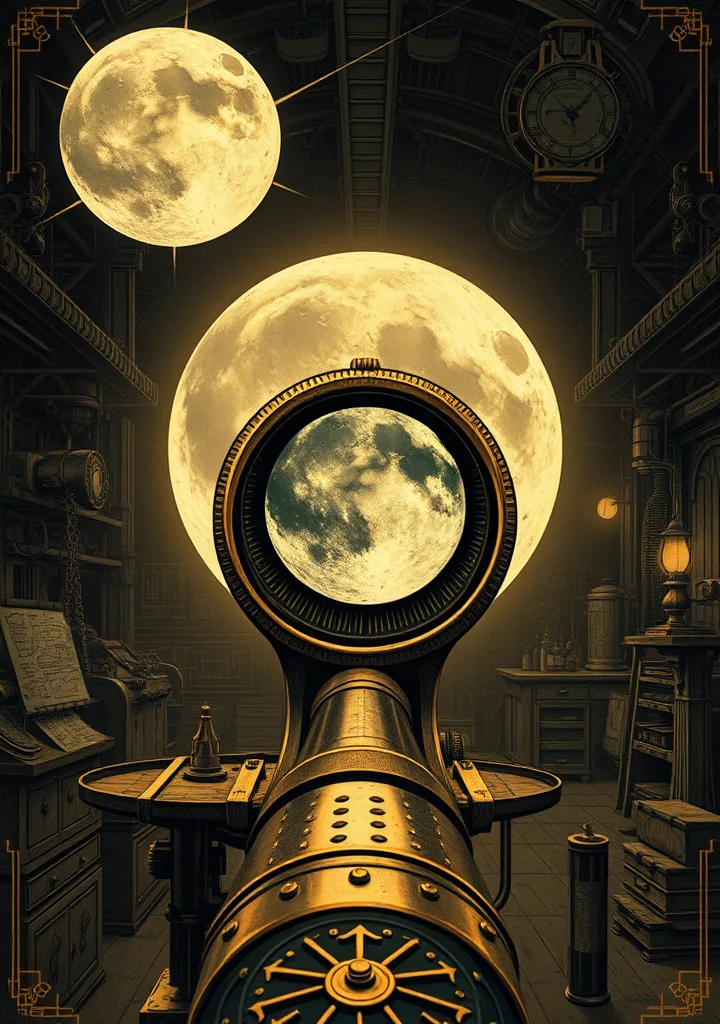
A chill, not of lunar ice, but of creeping dread permeates the Baltimore Gun Club’s shadowed workshops. Verne doesn’t offer stars, but the suffocating weight of anticipation—the metallic tang of gunpowder, the feverish calculations scribbled in lamplight, the hollow echo of ambition clawing at the void. It’s a narrative not of conquest, but of obsession, a descent into a mechanical delirium where the boundaries between earthly constraint and celestial escape blur into a sickly, brass-tinged fever dream. The cannon’s roar isn't liberation, but a rupture—a tearing of flesh and bone from the familiar gravity of the world. The lunar surface isn’t presented as a pristine wonder, but as a dust-choked mausoleum, haunted by the ghosts of calculations gone awry. The isolation isn’t merely physical; it's a corrosive loneliness that clings to the capsule's steel walls, a suffocating silence born of a universe indifferent to the frail human forms within. Even the promised wonders of the lunar landscape feel less like discovery and more like an unraveling—a glimpse into a cold, indifferent geometry that mocks the warmth of home. The air itself is a tightening noose, woven from the threads of scientific hubris and the hollow promise of a manufactured heaven. It is a story not of reaching for the moon, but of being swallowed by its shadow.
Copyright: Public Domain
This license allows anyone to use your story for any purpose, including printing, selling, or adapting it into a film freely.
This license allows anyone to use your story for any purpose, including printing, selling, or adapting it into a film freely.
Chapter List
-
« From the Earth to the Moon »📖 Continue Reading
-
« The Gun Club »
-
« President Barbicane’s Communication »
-
« Effect of President Barbicane’s Communication »
-
« Answer from the Cambridge Observatory »
-
« The Romance of the Moon »
-
« What It Is Impossible to Ignore and What Is No Longer Allowed to Be Believed in the United States »
-
« The Hymn of the Cannonball »
-
« History of the Cannon »
-
« The Question of Powders »
-
« One Enemy Against Twenty-Five Millions of Friends »
-
« Florida and Texas »
-
« “Urbi et Orbi” »
-
« Stony Hill »
-
« Pickaxe and Trowel »
-
« The Ceremony of the Casting »
-
« The Columbiad »
-
« A Telegram »
-
« The Passenger of theAtlanta »
-
« A Meeting »
-
« Thrust and Parry »
-
« How a Frenchman Settles an Affair »
-
« The New Citizen of the United States »
-
« The Projectile Compartment »
-
« The Telescope of the Rocky Mountains »
-
« Final Details »
-
« Fire! »
-
« Cloudy Weather »
-
« A New Star »
29
-
« From the Earth to the Moon »
-
« The Gun Club »
-
« President Barbicane’s Communication »
-
« Effect of President Barbicane’s Communication »
-
« Answer from the Cambridge Observatory »
-
« The Romance of the Moon »
-
« What It Is Impossible to Ignore and What Is No Longer Allowed to Be Believed in the United States »
-
« The Hymn of the Cannonball »
-
« History of the Cannon »
-
« The Question of Powders »
-
« One Enemy Against Twenty-Five Millions of Friends »
-
« Florida and Texas »
-
« “Urbi et Orbi” »
-
« Stony Hill »
-
« Pickaxe and Trowel »
-
« The Ceremony of the Casting »
-
« The Columbiad »
-
« A Telegram »
-
« The Passenger of theAtlanta »
-
« A Meeting »
-
« Thrust and Parry »
-
« How a Frenchman Settles an Affair »
-
« The New Citizen of the United States »
-
« The Projectile Compartment »
-
« The Telescope of the Rocky Mountains »
-
« Final Details »
-
« Fire! »
-
« Cloudy Weather »
-
« A New Star »
More like this