
A Vindication of the Rights of Woman
  • 149
  • 0
  • 29
  • Reads 149
  • 0
  • Part 29
Completed, First published Mar 02, 2026

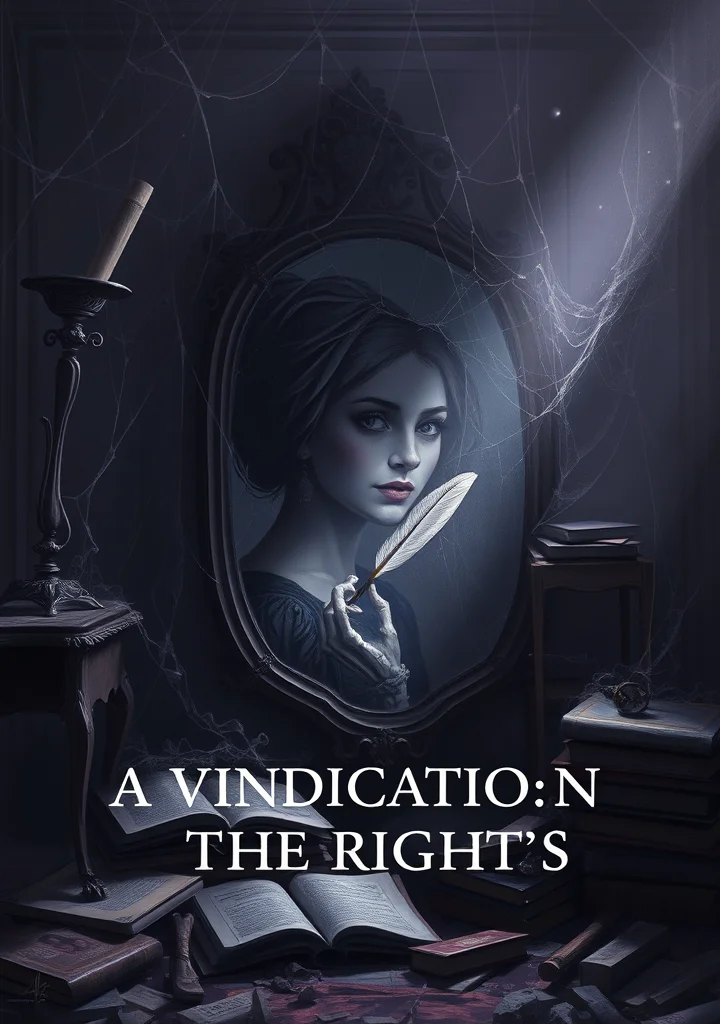
Cobwebs cling to the shadowed corners of reason, and a chill wind whispers through the decaying halls of societal expectation. Here, amidst crumbling estates of inherited belief, a woman’s voice rises – not as a scream of defiance, but as a slow, deliberate excavation of the soul. The narrative is steeped in the grey light of drawing rooms haunted by the ghosts of stifled intellects, where the air hangs thick with the perfume of regret and the dust of unfulfilled potential. It is a descent into the labyrinth of female existence, charted not with maps of rebellion, but with the precise instruments of logic, dissecting the anatomy of constraint. Each argument is a cold stone turned, revealing the worm-ridden foundations of a world built on imbalance. A pervasive melancholy clings to the prose, born of witnessing generations bound by gilded chains. The landscape is one of perpetual twilight, where the boundaries between domesticity and despair blur, and the weight of unwritten lives presses down like the stones of a mausoleum. The story unfolds as a slow, methodical unraveling, a chilling autopsy of the heart, revealing the hollow ache where liberty should bloom. It is a darkness not of passion, but of precision—a gothic stillness where the very act of thinking becomes a form of spectral haunting.
Copyright: Public Domain
This license allows anyone to use your story for any purpose, including printing, selling, or adapting it into a film freely.
Recommended for you
27 Part
A creeping dread clings to the emerald shadows of the jungle, a suffocating humidity that mirrors the suffocating weight of forgotten histories. Burroughs doesn’t merely return Tarzan to his primal kingdom, he delivers him back to a fractured, decaying Eden haunted by the ghosts of his own making. This is not the triumphant lord of the apes we recall, but a man shadowed by loss, driven by a desperate unraveling of alliances both human and bestial. The air hangs thick with the scent of rot and the whisper of ancient, vengeful gods. The narrative bleeds into a fever dream of betrayal amongst the tribes, where the lines between hunter and hunted blur into a crimson smear across the landscape. A malignant presence – a subtle, insidious corruption – festers within the very heart of the jungle, twisting familiar faces into masks of savage intent. The return isn’t a homecoming, it’s an intrusion, a violation of a balance poised on the precipice of collapse. Sun-drenched clearings give way to suffocating, vine-choked ravines, mirroring the descent into the protagonist’s own fractured psyche. Every rustle of leaves, every guttural cry from the depths of the forest, carries the echo of a past that refuses to remain buried. This is a jungle steeped in the residue of violence, where even the most primal instincts are tainted by a creeping, unspoken despair. It is a return not to paradise, but to a tomb of shattered expectations, where Tarzan must confront not just his enemies, but the hollowed-out shell of the man he once was.
24 Part
London breathes under a fog thick with coal dust and righteous fury. A singular, colossal figure – Michael Fane, the self-proclaimed Napoleon – stalks the streets of Notting Hill, not for conquest, but for a peculiar, escalating series of acts of civic “improvement.” He doesn’t steal, not precisely. He *rearranges*. He dismantles a building here, subtly alters a square there, all in the name of a deranged, geometric vision of order. The air hangs heavy with the dread of unspoken intentions. The narrative unravels through the eyes of a bewildered, increasingly horrified populace, and the desperate, flailing attempts of the police to understand a man who claims to be enacting a divine geometry. Each rearrangement isn’t merely vandalism, but a surgical excision of the city's soul, a chipping away at its haphazard, human beauty. A creeping claustrophobia settles in as Fane’s “improvements” become more audacious, more…necessary. The gas lamps cast elongated shadows that seem to mimic his reshaping of the streets. The scent of damp brick and decaying plaster clings to the air, mirroring the decay of reason within Fane’s mind. It’s not a story of violence, but of insidious, creeping control. The dread doesn't lie in what is *done*, but in the chilling logic behind it – a perverse, obsessive love for a perfect, sterile London that will be born from the rubble of the old. A city remade in the image of one man’s madness.
48 Part
Dust motes dance in the perpetual twilight of a forgotten monastery clinging to the precipice of the Eastern mountains. The air hangs thick with the scent of incense and decay, a miasma of regret clinging to the stone walls. This is a tale not of heroes, but of shadows—the creeping doubt that gnaws at the heart of a hermit saint, Barlaam, and the restless yearning of Ioasaph, a prince turned penitent. The narrative unfolds as a slow unraveling, a descent into the labyrinth of the soul. Each chapter is a stone rolled away from a crypt, revealing not flesh and bone, but the fragile architecture of belief. Sunlight feels like a violation here, exposing the rot beneath the gilded icons. The prose is a whisper of wind through skeletal branches, laced with the chill of unyielding stone. It breathes with the claustrophobia of caves carved into the living rock, where the echoes of Ioasaph’s questions—questions that fracture faith—reverberate for centuries. This is a story steeped in the melancholy of conversion, the weight of renunciation. It's a landscape of barren faith where the only true company is the gnawing emptiness that blooms within the hollowed shell of a life surrendered to the void. The narrative isn’t driven by plot, but by the insidious erosion of certainty, leaving behind a landscape of bone-white despair. The final revelation, like the last breath of a dying candle, offers not light, but the chilling realization of a darkness that dwells within us all.
23 Part
Dust motes dance in the long shadows of the schoolhouse, clinging to the chill stone walls where generations of boys have scraped their futures onto the rough-hewn desks. This is not a tale of grand horrors, but of a creeping dread found in the hollow spaces between loyalty and betrayal, the weight of tradition pressing down like a tombstone. Young Tom Brown enters this world, raw and untamed, and is slowly, inexorably, broken down and reshaped by the brutal currents of school life. It’s a darkness born not of malice, but of indifference—the casual cruelty of boys desperate to prove their dominance, the stifling conformity demanded by an unyielding system. The echoing hallways become a labyrinth of whispers and shoves, a constant negotiation of power where a single misstep can mean weeks of torment. Fog hangs heavy in the yards, obscuring the faces of those who haunt Tom's waking hours, their actions unseen yet felt in the tightening of chests and the tremor of hands. The narrative unfolds like a slow, agonizing bleed, the innocence of youth curdling into a grim acceptance of the inevitable—a descent into a shared, silent complicity born of necessity and fear. It is a world where the true monsters are not found in the shadows, but in the very hearts of the boys who forge their manhood within these unforgiving walls. The scent of damp wool and old wood clings to the pages, a testament to the enduring chill of those days.
27 Part
A creeping rot clings to the cobblestones of this unnamed city, where shadows stretch from gas lamps to strangle the last embers of hope. Jean Grave doesn't offer grand narratives of rebellion, but rather a descent into the marrow of decay, a slow unraveling witnessed through the eyes of those already half-consumed by the void. The air itself is thick with the stench of burnt ambition and the whispered anxieties of a populace fractured not by class, but by a creeping nihilism. Every alleyway breathes with the weight of forgotten gods and the hollow laughter of those who’ve traded their souls for fleeting moments of control. There’s no explosive uprising here, only the insidious bloom of apathy, a willing surrender to the encroaching darkness. Characters drift through decaying salons and labyrinthine sewers, their faces gaunt, their desires reduced to a desperate scramble for warmth and oblivion. The prose is less a story and more a haunting echo of fractured consciousness. It's a suffocating claustrophobia of crumbling brick, the metallic tang of blood on the tongue, and the chilling realization that the true anarchy isn't *against* society, but *within* it—a silent, internal crumbling of the will to resist the inevitable. This is not a revolution; it’s a slow, deliberate drowning in the silt of despair, where the last flickering embers of humanity are extinguished one by one, swallowed by the yawning maw of nothingness. The city *is* the monster, and it feeds on the ghosts of its own making.


30 Part
A creeping fog clings to the shattered remnants of empires, mirroring the ruinous calculations etched into every treaty line. This is not a history of battles won, but of debts accrued, of futures bartered away in gilded salons and shadowed counting houses. The air hangs thick with the scent of ash and regret, a chill seeping from the very stone of Versailles. Each paragraph feels like a slow excavation of a buried grief, uncovering the rot beneath the veneer of restoration. The narrative doesn't explode with violence, but unravels in the quiet decay of promises broken. It’s a story told in ledger books and whispered anxieties, a creeping dread that settles not in grand catacombs, but in the hollowed-out eyes of merchants and the tightening grip of creditors. A suffocating weight presses down, not of armies, but of unrealized loans and the spectral hunger of nations left to starve on the bones of their pride. The prose itself is a labyrinth of clauses and caveats, mirroring the intricate, suffocating web of obligations woven after the war. It's a world lit by the flickering gaslight of statistical tables, where every decimal point feels like a nail hammered into the coffin of stability. A subtle, pervasive despair permeates the text, the sense that even in the meticulous charting of consequence, the abyss stares back, indifferent to the logic of man. The true horror isn't found in the carnage of the guns, but in the cold, elegant precision with which hope is systematically dismantled, and the silence that follows.
81 Part
Dust motes dance in the shadowed halls of memory, each recollection a chipped fragment of granite pulled from the bedrock of a life forged in iron. Though ostensibly a chronicle of command and strategy, Grant’s memoir bleeds with the chill of ambition’s long winters. It is not the roar of battle that lingers most keenly, but the hushed silences between orders, the spectral weight of responsibility pressing down upon a man who navigated not glory, but the grey expanse of consequence. The prose itself is a slow, deliberate march through the fog of recollection, each sentence a measured step toward a darkness masked as pragmatism. A relentless current of self-assessment, it leaves one shivering not from cold, but from the awareness of how easily a man can be hollowed out by the very wars he wages. The victories feel less like triumphs and more like the echoing emptiness within a fortress built upon the bones of the fallen. There is a peculiar, unnerving detachment – a dispassionate inventory of ruin that hints at a man already halfway to the grave, cataloging his life as if it were merely another terrain to be mapped and conquered. The very act of remembering feels like a haunting, a spectral revisiting of the fields stained crimson with the harvest of his deeds. The weight of the Union, the weight of failure, the weight of a man who, even in his self-reckoning, cannot quite escape the shadow of his own making. It is a memoir written not from triumph, but from the precipice of oblivion, and the echo of its pages is a long, cold draught from a forgotten tomb.