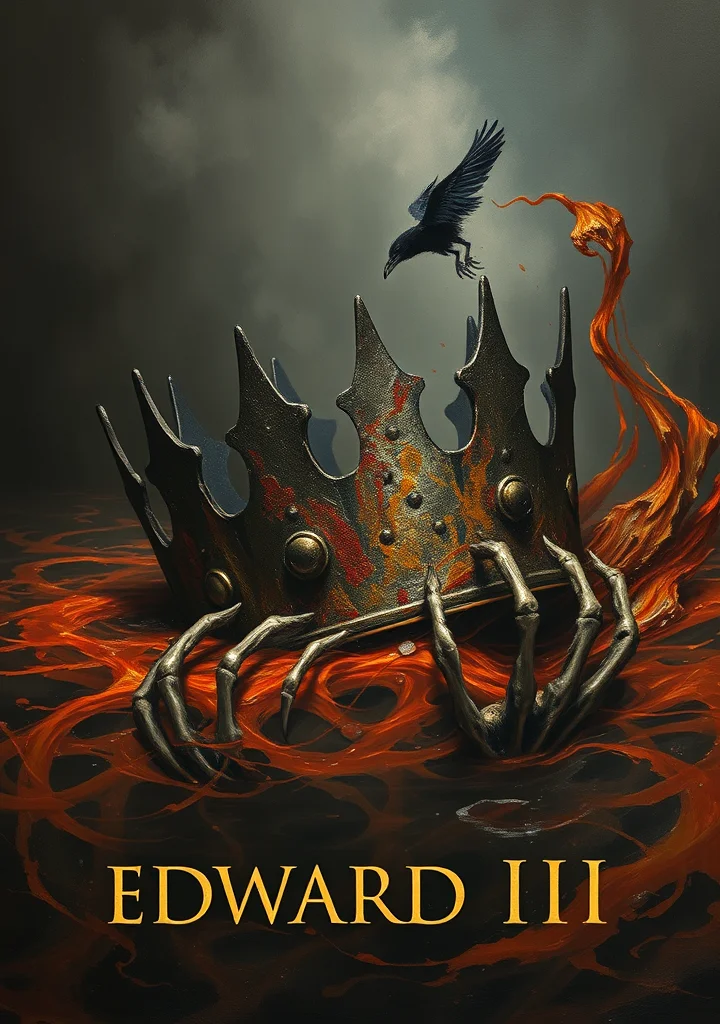

Edward III
  • 305
  • 0
  • 25
  • Reads 305
  • 0
  • Part 25
Completed, First published Mar 02, 2026

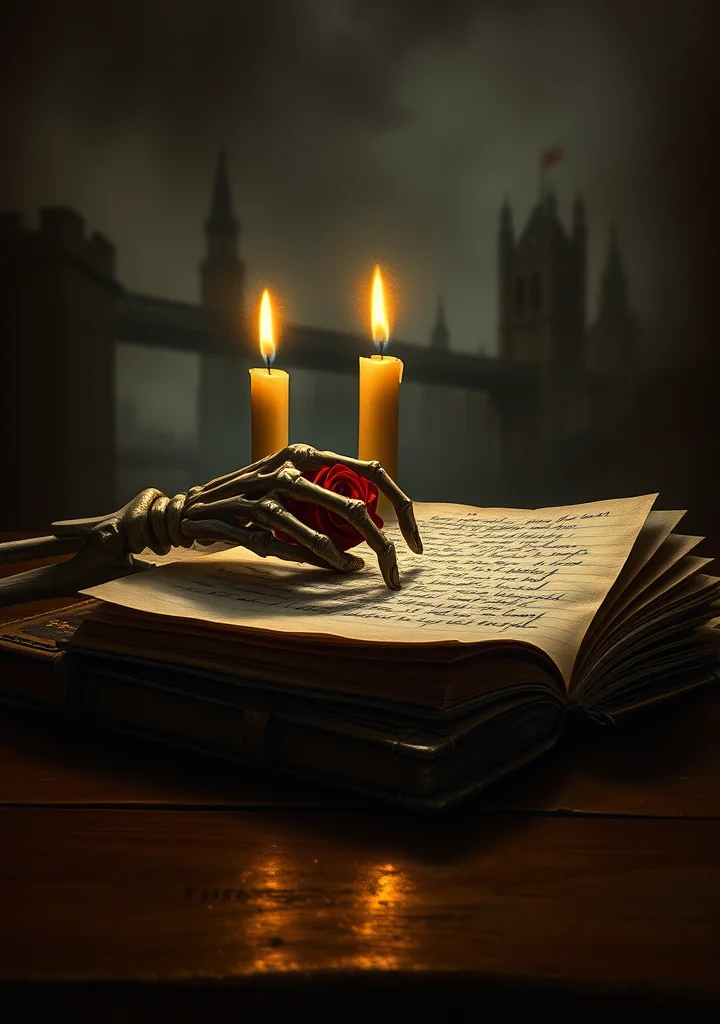
A creeping dread clings to the shadowed corners of this chronicle, less a history of kings and more a lament for ambition’s rot. Though bearing Shakespeare’s name, this is a work steeped in the grime of forgotten courts, echoing with the hollow clang of steel on steel and the whispers of betrayal. The narrative unfolds not as bright triumph, but as a slow descent into the mire of Edward’s ruthless ascent. Each victory feels stained with the blood of innocence, each alliance forged in the chilling breath of conspiracy. The atmosphere is one of perpetual twilight—a world where honour is a brittle facade, and loyalty a currency of shifting sands. London itself seems to exhale decay, its cobbled streets mirroring the labyrinthine machinations of the royal house. Shadows stretch long and hungry from the castle walls, concealing not just enemies, but the ghosts of Edward’s discarded allies. A palpable sense of isolation pervades, even amidst the clamour of war, as each character stands poised on the precipice of ruin, haunted by the spectres of their own making. The language, while bearing the Bard’s mark, is deliberately fractured—a mirror of the fractured kingdom struggling to coalesce under a crown born of cold calculation. It is a tale not of glory, but of the chilling price of power, told in the language of bone and shadow.
Copyright: Public Domain
This license allows anyone to use your story for any purpose, including printing, selling, or adapting it into a film freely.
Recommended for you
34 Part
A creeping dampness clings to the shadowed corners of the Winslow household, a chill not of the season but of a grief-worn legacy. The very stones seem to exhale sorrow with each rustle of the overgrown gardens. Pollyanna, a fragile bloom thrust into this withered estate, doesn’t merely enter, but *infests* the space with a light that feels less divine and more… insistent. It’s a warmth that doesn’t thaw, but *reveals* what was always lurking beneath the frost: the brittle bones of forgotten resentments, the choked whispers of lost hopes. Her ‘Glad Game’ isn’t joy, but an excavation. Each forced optimism feels like a splintering of something ancient and unyielding within the walls. The house itself becomes a labyrinth of unearthed wounds, each room a mausoleum holding a fragment of the Winslows’ decaying souls. The scent of potpourri and beeswax isn’t sweetness, but the cloying perfume of decay masked with desperate floral pleas. The shadows lengthen with each perceived blessing, twisting into shapes of accusation and regret. Even the children, pale moths drawn to Pollyanna’s flame, carry the weight of generations trapped within the Winslow’s suffocating embrace. It isn’t a story of finding happiness, but of witnessing a slow, beautiful unraveling, as Pollyanna doesn't heal the house, but *becomes* its haunting echo. The final revelation isn't of joy found, but of the monstrous, beautiful thing that blooms in the darkness when hope is stretched too thin.


27 Part
A creeping dread clings to these tales, woven from the dampest corners of the human psyche and the echoing silences between worlds. Blackwood doesn’t offer horror in the conventional sense, but a chilling unraveling of perception, where the veil thins and something ancient, something *other*, observes from just beyond the reach of lamplight. John Silence, a blind man gifted – or cursed – with an interior vision, navigates a landscape of shadowed sanatoriums, fog-choked moorlands, and the suffocating weight of inherited trauma. His stories aren’t of monsters, but of resonances—a subtle discordance in the fabric of reality that preys on the vulnerable. Each encounter leaves a residue of unease, a blurring of the boundaries between sanity and dissolution. The atmosphere is one of perpetual twilight, a stifling stillness where every creak of the floorboard, every flicker of gaslight, suggests a presence unseen, yet intimately felt. These aren't tales to be *read*, but to be *absorbed*, like a slow poison seeping into the marrow of your bones. The true terror lies not in what Silence *sees*, but in the realization that what he perceives may already be within you, waiting to bloom in the darkness. Expect not jump scares, but the lingering chill of a forgotten room, a face glimpsed in the periphery, and the unsettling certainty that some doors are best left unopened. The stories breathe with a melancholic beauty, a haunting melody born from the decay of reason and the echoes of a world just beyond our grasp.
35 Part
A creeping fog clings to the shadowed halls of intention, where the architecture of self is both built and dismantled by the relentless tide of experience. This is not a tale of monsters under the bed, but of the monstrous potential *within* the very marrow of becoming. Each chapter unfolds like a slow dissection of the will, revealing the damp, echoing chambers of habit and impulse. The narrative breathes with the chill of observation—a clinical study rendered in shades of gray, where the boundaries between observer and observed blur into a suffocating unity. There’s a pervasive dampness here, not of rain, but of the unacknowledged desires that bloom in the darkness of the psyche. The characters are less figures of flesh and blood than specimens pinned under glass, their struggles for autonomy shadowed by the inevitability of constraint. A sense of claustrophobia doesn't stem from physical confinement, but from the suffocating weight of expectation, the unseen pressures that mold the human form. The atmosphere is one of decaying idealism, a slow erosion of principle under the acid rain of consequence. One feels the weight of accumulated choices, the ghostly fingerprints of past selves clinging to every action. It’s a study of how easily the noble edifice of the mind can be undermined by the shifting sands of circumstance, leaving behind only the hollow shell of what *should* have been. The silence here is not peaceful, but pregnant with the unspoken justifications for every compromise, every surrender. A cold, sterile light illuminates the wreckage of unfulfilled potential.