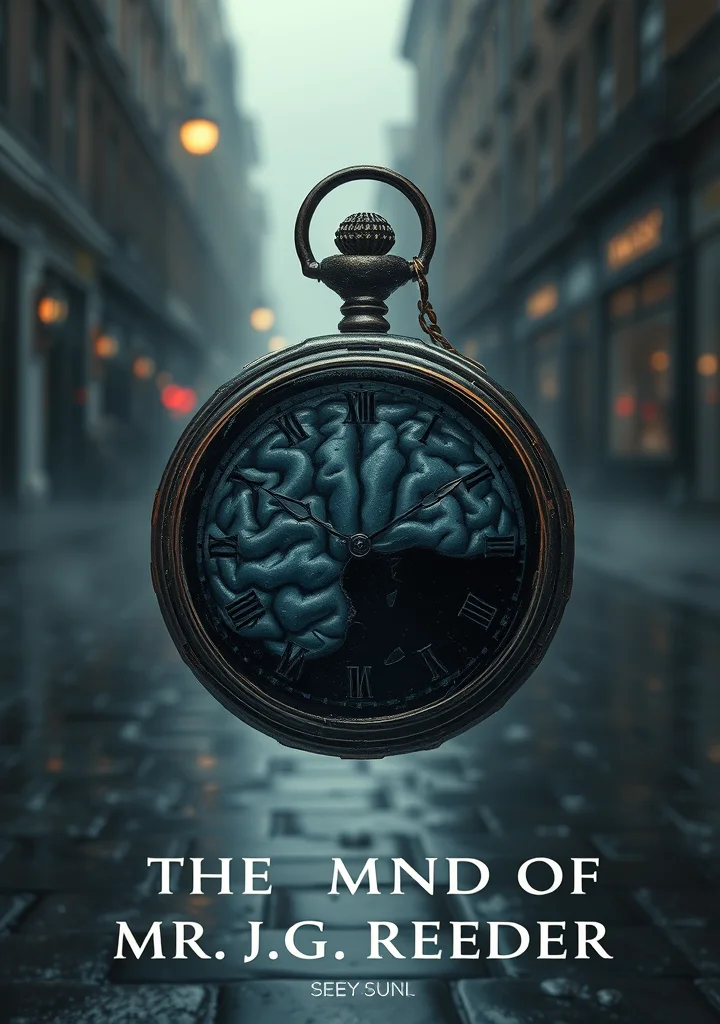

The Mind of Mr. J. G. Reeder
  • 86
  • 0
  • 10
  • Reads 86
  • 0
  • Part 10
Completed, First published Mar 02, 2026

A suffocating fog clings to the shadowed streets of London, mirroring the miasma of dread that coils around the sanity of its inhabitants. Wallace doesn’t offer a crime to solve, but a rot to witness – a slow, insidious unraveling of a man named Reeder, whose very thoughts become a labyrinth of stolen identities and fractured memories. Each chapter is a descent further into the echoing chambers of his mind, a place where the walls bleed with the faces of the dead and the living are indistinguishable from ghosts. The narrative isn’t propelled by plot, but by a creeping sense of unease, a growing conviction that Reeder is less a man and more a vessel for something ancient and hungry. The city itself is a character, a crumbling mausoleum where every doorway exhales a chill, and every lamplit alley holds the promise of forgotten horrors. Expect a suffocating claustrophobia, not of physical space, but of the mind—a relentless unraveling of self, witnessed through a haze of opium dreams and the brittle, echoing pronouncements of a man who has lost his name, his face, and perhaps, his very soul. It is a study in psychological disintegration, steeped in the scent of decay and the whispered secrets of a London perpetually shrouded in twilight.
Copyright: Public Domain
This license allows anyone to use your story for any purpose, including printing, selling, or adapting it into a film freely.
Recommended for you
12 Part
A creeping dread clings to the Scottish Highlands, a suffocating weight born not of stone and shadow, but of ambition and icy calculation. Buchan doesn’t offer roaring castles or spectral apparitions, but a far more insidious haunting – the slow, deliberate erosion of a man’s soul within the brutal architecture of his own making. The estate of Aird’s Glen isn’t merely a house, but a fortress of will, built upon a foundation of stolen secrets and shadowed deeds. The air within its walls is thick with the scent of peat smoke and the ghosts of fortunes won and lives broken. It’s a place where the very landscape seems to conspire to conceal, and the silence holds a tremor of violence barely contained. Every polished surface, every perfectly aligned stone, reflects a ruthlessness that chills the bone. The narrative doesn’t rush towards a climax, but coils like a viper in the darkness, tightening with each whispered conversation, each carefully placed rumour. The true horror isn’t what is *in* the Powerhouse, but what it *becomes* – a monument to the terrifying elegance of a man who dares to play God amongst the heather and the rain. The oppressive isolation isn't merely geographical, but a suffocating imprisonment within a mind determined to conquer not just land, but the very spirit of the glen itself. It’s a story where the landscape itself is a witness to sin, and the wind carries the lament of those consumed by its ambition.
61 Part
A perpetual twilight clings to the shadowed halls of Udolpho, where innocence is tested by the suffocating weight of ancestral secrets. The narrative unfolds within a labyrinth of crumbling castles and sunless forests, mirroring the fractured psyche of its heroine, Emily St. Aubert. Every echoing corridor whispers of past betrayals, every darkened chamber breathes with the icy presence of unspoken fears. A suffocating dread permeates the Italian landscape, born not of overt horror, but of insidious suspicion and the slow unraveling of sanity. The oppressive grandeur of Udolpho itself becomes a character, its vastness mirroring the boundless anxieties that consume Emily. The air is thick with the scent of decaying grandeur, and the story unfolds with the deliberate pace of a nightmare, punctuated by stolen glances, intercepted letters, and the chilling resonance of distant screams. It is a world where the boundaries between reality and hallucination blur, where the imagination, fueled by isolation and paranoia, conjures terrors far more potent than any visible threat. A creeping sense of helplessness pervades as Emily is drawn deeper into a web of familial intrigue, shadowed by the looming specter of a tyrannical uncle and the veiled machinations of those who would claim her inheritance. The narrative is steeped in a melancholic beauty, a haunting symphony of vulnerability and veiled menace, forever lingering in the half-light between revelation and despair.