
The Ambassadors
  • 202
  • 0
  • 50
  • Reads 202
  • 0
  • Part 50
Completed, First published Mar 02, 2026

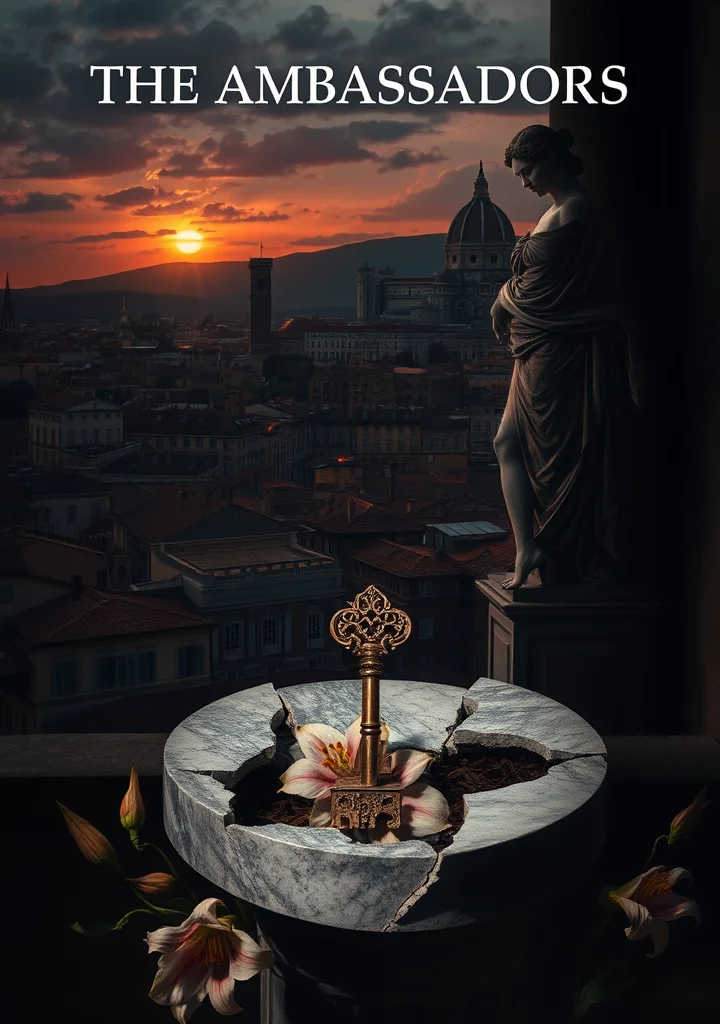
A creeping dread permeates the air in Florence, clinging to the sun-drenched stones like a suffocating perfume. Retrace the steps of Strether, a man adrift in the gilded cage of European leisure, but find the shadows lengthening with each passing conversation. The novel breathes with a subtle, insidious decay – not of bodies, but of ideals, of innocence, of the very fabric of American perception. A suffocating intimacy coils around the protagonists, their polite exchanges laced with an unspoken, corrosive hunger. Observe the languid afternoons bleed into twilight, mirroring the slow unraveling of Strether’s resolve as he witnesses the ambiguous bloom of Rosamond and the chilling, elegant machinations of the enigmatic Mr. Glass. Every encounter is a veiled transaction, every smile a calculated gesture in a dance with unspoken desires. The scent of jasmine and old money cannot mask the bitterness of unfulfilled longing, the suffocating weight of a world built on appearances. A stillness, heavy with implication, descends as the narrative spirals towards a quiet, devastating conclusion—a sense of loss not through dramatic rupture, but through the gradual erosion of light, leaving only the hollow echo of what might have been. The final descent is a slow drowning in the amber light of a doomed paradise.
Copyright: Public Domain
This license allows anyone to use your story for any purpose, including printing, selling, or adapting it into a film freely.
Recommended for you
73 Part
Dust motes dance in the perpetual twilight of abandoned mills and shadowed bakeries. A creeping dread clings to the cobblestones, not of starvation’s gnaw, but of a cold, methodical dismantling of habit. This is not a tale of revolution’s fire, but of its slow, fungal growth within the bones of a dying world. Kropotkin’s vision isn’t one of barricades and blood, but of a silent, relentless erosion of ownership, a reclamation not through violence, but through the ghostly presence of communal need. The narrative exhales a peculiar stillness, like a mausoleum filled with the scent of rising dough and the whispers of forgotten hands. Each chapter unfolds as a spectral blueprint of a possible future, sketched in the dim light of necessity. It’s a world where the boundaries between labour and leisure dissolve into a perpetual, aching grey, where the very act of sharing becomes a haunting ritual. There's a chilling beauty in the prose, a meticulous accounting of resources that feels less like instruction and more like an incantation. The atmosphere is one of damp earth, the metallic tang of tools left to rust, and the unnerving quietude of fields yielding not to a lord, but to the communal breath of those who understand the earth’s yielding is not conquest, but communion. The book doesn’t promise liberation, it presents a slow, unsettling haunting of the old order, a creeping tendril of possibility that leaves one wondering if the ghosts of hunger have finally found their bread.
53 Part
A creeping dread clings to the marshes of northern England, a suffocating fog mirroring the insidious presence that stalks the lives of Arthur Grimstone and his neighbors. It begins with whispers—a monstrous shape glimpsed in the peat bogs, livestock mutilated with unnatural precision, a chillingly human intelligence behind acts of escalating violence. The village of Stilton, already steeped in the melancholy of isolation, is slowly consumed by a terror born of the mire, a thing both animalistic and eerily, deliberately *aware*. Grimstone, a man haunted by his own rigid morality and the suffocating weight of Victorian expectation, finds himself drawn into a desperate pursuit of this creature—a pursuit that unravels not just the boundaries of his sanity, but the very foundations of his world. The Beetle is not merely a beast; it is a distortion, a parasite of the soul, weaving itself into the fabric of their lives, mirroring their darkest desires and festering resentments. Each encounter leaves a residue of cold, damp fear, the scent of decay clinging to the air long after the creature vanishes. The narrative descends into a labyrinth of shadowed alleys, decaying workhouses, and the claustrophobic interiors of Victorian homes—a suffocating world where the line between hunter and hunted blurs, and the monstrous Beetle becomes a terrifying reflection of the darkness within us all. The creeping dread isn't merely *of* the creature, but of the creeping rot *within* the very heart of the village, and within Grimstone himself.
32 Part
Dust motes dance in perpetual twilight within the crumbling manor of Blackwood, a shadow clinging to the Yorkshire moors. Old Man Hemlock, a recluse haunted by whispers of forgotten sins, claims the earth itself has shuddered – not from earthquake or war, but from a grief so ancient it cracks the very foundations of reality. The tremors coincide with the arrival of young Alistair, a scholar driven by feverish ambition to unearth Blackwood’s lineage. He finds not history, but echoes – a lineage stained by ritual, by bargains struck with something cold and vast beneath the peat bogs. The air thickens with the scent of damp earth and decaying roses, each room a sepulchre echoing with the laughter of children long dead. Alistair’s investigations are shadowed by the silent, watchful housekeeper, a woman whose face is etched with a sorrow that predates the manor itself. As the world *does* shake – subtly, sickeningly – a creeping dread seizes the village. Livestock vanish, shadows lengthen beyond reason, and the villagers speak of a stone circle awakened by Hemlock’s lamentations. The truth, when it surfaces, is less a revelation than an unraveling. Blackwood isn’t merely built upon ancient ground; it *is* the wound in the world, a place where the veil thins and the hunger of the old gods stirs. The tremors aren’t the earth’s agony, but the pulse of something vast and terrible rising from the depths, demanding to be remembered, to be *felt* once more. Alistair, caught in its orbit, must choose between oblivion and becoming another stone in the edifice of its dreadful, silent reign.