
Our American Cousin
  • 102
  • 0
  • 18
  • Reads 102
  • 0
  • Part 18
Completed, First published Mar 02, 2026

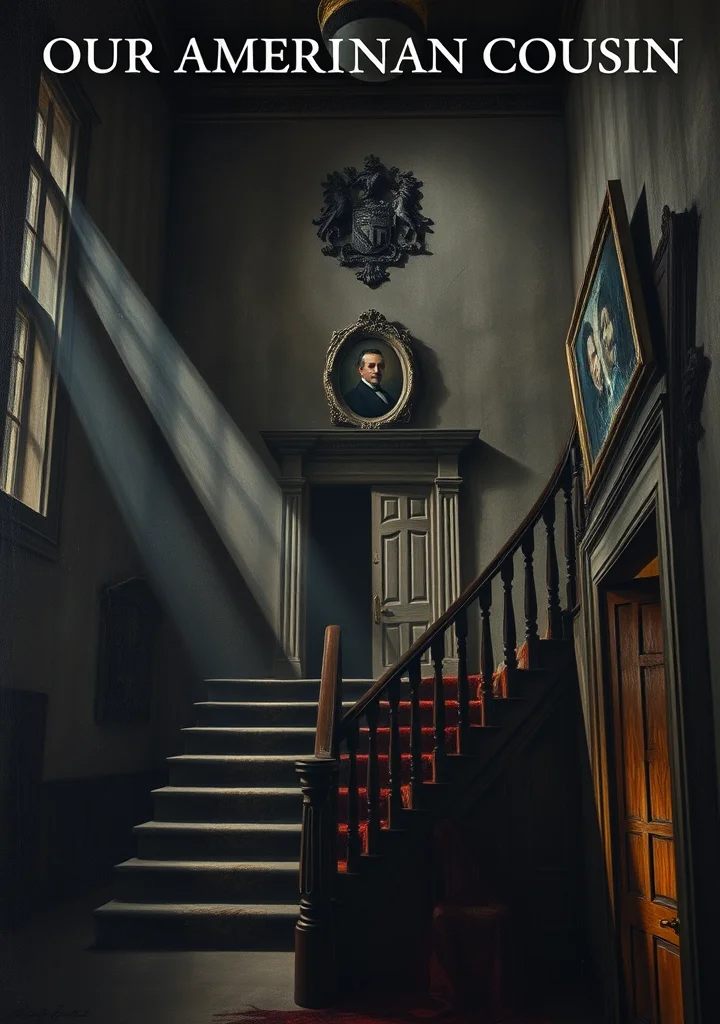
Dust motes dance in the perpetual twilight of decaying grandeur. Within the shadowed halls of Blackwood Manor, a legacy of ambition and rot clings to the very stones. The narrative unfolds as a slow bleed of secrets, whispered through generations of Taylors—men who built their fortune on the backs of others, and women haunted by the ghosts of their own making. A creeping dread settles over the land, mirroring the encroaching darkness within the Blackwood bloodline. Each room exhales the chill of forgotten inheritances, echoing with the phantom cries of those consumed by the family's insatiable hunger. The air thickens with the scent of mildew and regret, clinging to the velvet drapes and tarnished silver. A suffocating weight presses down from the looming presence of a patriarch whose legacy is built on stolen lives, and whose shadow dictates the fate of every trembling heir. The narrative is one of shadowed inheritance, where the scent of jasmine and decay mingle, and every gilded frame conceals a portrait of slow, deliberate ruin. The American dream warped into a nightmare, consumed by the suffocating rot of the Blackwood name. A suffocating, suffocating silence, broken only by the rustle of unseen things in the long corridors.
Copyright: Public Domain
This license allows anyone to use your story for any purpose, including printing, selling, or adapting it into a film freely.
Recommended for you
6 Part
A suffocating dread clings to the cobbled streets of a London steeped in perpetual twilight. The air itself seems to thicken with the phosphorescent haze emanating from the titular cloud—a malevolent entity born of alchemical hubris and cosmic decay. Within its violet embrace, reality fractures, dissolving the boundaries between the sane and the delirious. Our protagonist, a man haunted by spectral echoes and a creeping sense of unreality, finds himself drawn into a labyrinthine pursuit of the cloud’s creator, a figure shrouded in whispers of blasphemous science and forbidden rites. Each shadowed alleyway pulses with a subtle, sickening vitality, the city’s underbelly mirroring the cloud’s insidious growth. The narrative unravels not as a linear chase, but as a descent into a fever-dream logic, where logic itself dissolves into the purple efflorescence. Rooms twist into impossible geometries, faces morph into grotesque masks, and the very stones beneath your feet seem to breathe with a cold, expectant hunger. The cloud isn’t merely seen, it’s *felt*—a pressure on the temples, a tremor in the lungs, a chilling awareness of something vast and ancient stirring just beyond the veil of perception. It seeps into the minds of those it touches, breeding paranoia, mania, and ultimately, a terrifying acquiescence to its alien will. The story doesn’t offer escape, but a spiraling immersion into the heart of a darkness that threatens to consume not just London, but the very foundations of reason itself.

11 Part
Dust clings to the sun-bleached plains of colonial Australia, mirroring the grit lodged in the throat of Thomas Mitchell, the narrative’s wandering, self-proclaimed “Philosopher.” The air shimmers with heat and the weight of unspoken histories – not grand, heroic ones, but the stifling, stifled lives of men building a nation on borrowed land. This isn’t a story of adventure, but of attrition. A slow, creeping erosion of spirit as Mitchell, and the ghosts of those he encounters – miners, shearers, the broken-hearted – trudge through a landscape both vast and suffocatingly intimate. The novel exhales a melancholic haze, thick with the scent of eucalyptus and the metallic tang of regret. It’s a world where language itself is a burden, a clumsy tool to articulate the aching emptiness of existence. Shadows stretch long and lean across the scrub, mirroring the anxieties of a society grappling with its nascent identity. A sense of profound isolation permeates every page, not from physical distance, but from the unbridgeable gulf between one man’s consciousness and another. There’s a pervasive unease here, a quiet dread woven into the fabric of the mundane. The cattle stations become purgatories, the billabongs reflect not beauty, but a shimmering, watery despair. It's a world where the only true monument is the accumulation of failure, the weight of dreams that sink into the red earth, indistinguishable from the dust they came from. The narrative doesn't rush forward; it lingers, suffocates, until you feel the same exhaustion as the men who built the roads and fences that define their own, inescapable prisons.