
The Truth About Tristrem Varick
  • 126
  • 0
  • 21
  • Reads 126
  • 0
  • Part 21
Completed, First published Mar 02, 2026

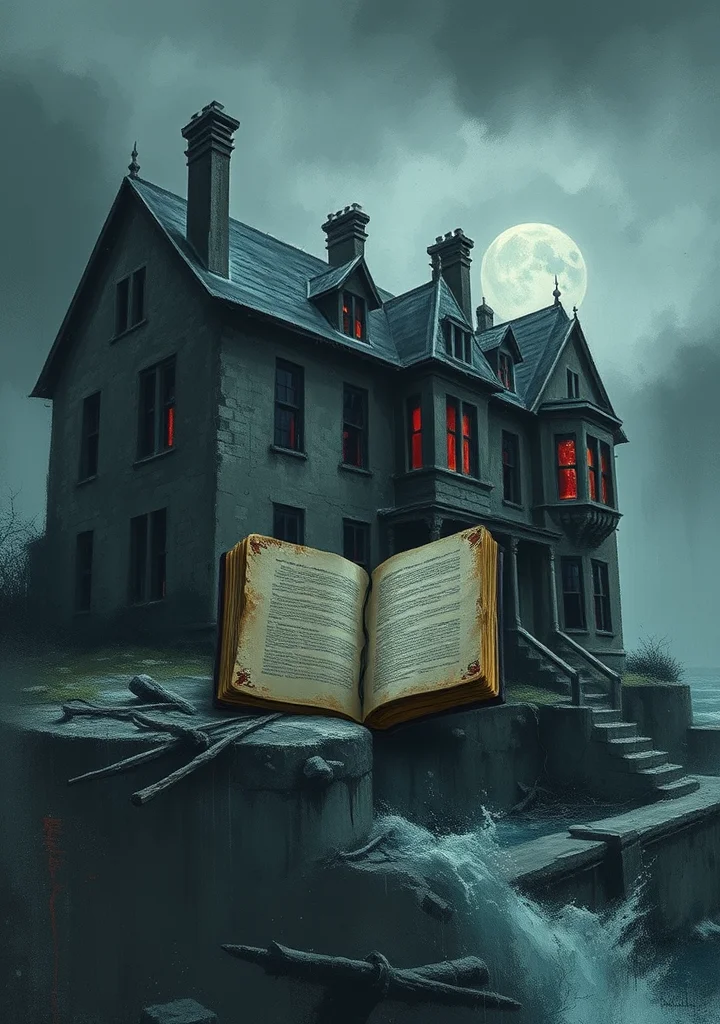
A creeping dread clings to the salt-laced shores of Varick Isle, where the crumbling manor of its namesake stands sentinel against a perpetual grey sky. The story unfolds not as a linear descent, but as a slow unraveling—a tapestry of whispered confessions unearthed in brine-soaked journals and the fevered ramblings of those who dared to seek Varick’s secrets. Saltus paints a world steeped in maritime rot and the suffocating weight of ancestral guilt. Each chapter feels like a chipped fragment of a drowned memory, revealing glimpses of a man consumed by his own meticulous, morbid obsession with charting the currents of madness. The narrative breathes with the damp chill of forgotten crypts, where shadows twist into the shapes of Varick’s monstrous creations—not of flesh and bone, but of painstakingly transcribed nightmares. A suffocating claustrophobia permeates the text, mirroring the labyrinthine passages of the manor itself. The air is thick with the scent of decaying parchment and the metallic tang of blood, both real and imagined. The truth, as it surfaces, is less a revelation than a contagion—a spreading stain of corruption that seeps into the reader's mind, blurring the line between the rational and the grotesque. It is a story of inheritance not of wealth, but of decay, a descent into a watery grave where the boundaries of sanity dissolve into the churning depths. One finds oneself not merely reading of Varick’s madness, but *experiencing* it, drawn into its suffocating vortex, haunted by the echoes of its mournful cries carried on the wind.
Copyright: Public Domain
This license allows anyone to use your story for any purpose, including printing, selling, or adapting it into a film freely.
Recommended for you
85 Part
A creeping fog clings to the cobbled streets, mirroring the miasma of despair that rises from the tenements. Within these shadowed districts, a relentless, grinding poverty festers, a ravenous beast consuming the very foundations of progress. The narrative unfolds not as a tale of villains and victims, but as a slow dissection of the city’s heart, revealing the rot beneath the gilded veneer. Each brick laid in the name of advancement seems to cast a longer, darker shadow, drawing the already destitute further into a labyrinth of want. The air hangs thick with the weight of unearned suffering, a suffocating atmosphere of decay where the promises of innovation curdle into bitter ironies. We are led through decaying mansions and bustling factories, witnessing the widening chasm between the gilded spires and the crumbling hovels below. A sense of inevitability pervades, as the very mechanisms designed to elevate humanity seem instead to forge chains of increasing oppression. The narrative is less a story of direct conflict, and more a haunting procession through the hollowed-out eyes of the abandoned. The encroaching darkness isn't a sudden, violent storm, but a gradual suffocation – a slow, insidious erosion of hope, leaving behind only the skeletal remains of ambition and the chilling echo of unanswered prayers. It’s a landscape of broken promises, where the architecture of ambition becomes the mausoleum of the human spirit.
30 Part
A creeping dread settles over the fog-choked streets of London, a chill deeper than winter’s bite. Not from specters or ghouls, but from something far more insidious – a man unseen, unraveling the very fabric of reality with his absence. The narrative coils tight as a noose around the throat of normalcy, beginning with whispers of strange thefts, disrupted lodging houses, and a growing, inexplicable panic. Wells paints not a monster of claws and fangs, but a suffocating terror born of vanished form, of bandages swathing emptiness, of scientific hubris fracturing the boundaries of human perception. The air itself feels thick with paranoia as the story descends into a desperate scramble for containment, a hunt for a phantom who leaves only footprints in the snow and terror in the eyes of those who glimpse his unraveling. Each chapter bleeds into a mounting hysteria, mirroring the Invisible Man’s escalating desperation, his descent into brutal, desperate acts fueled by both scientific ambition and the crushing weight of his own invisibility. The story isn’t about *what* he does, but *how* his unseen presence poisons the very foundations of trust and order. A creeping sense of isolation permeates every shadowed corner, every locked room. The world shrinks to the perspective of those who can only guess at the shape of their fear, until even the most solid objects seem to warp and betray. The narrative becomes a labyrinth of shattered glass, broken windows, and the suffocating weight of a secret too terrible to bear, a descent into a nightmare where the only certainty is the absence of something… and the growing certainty that it’s watching *you*.