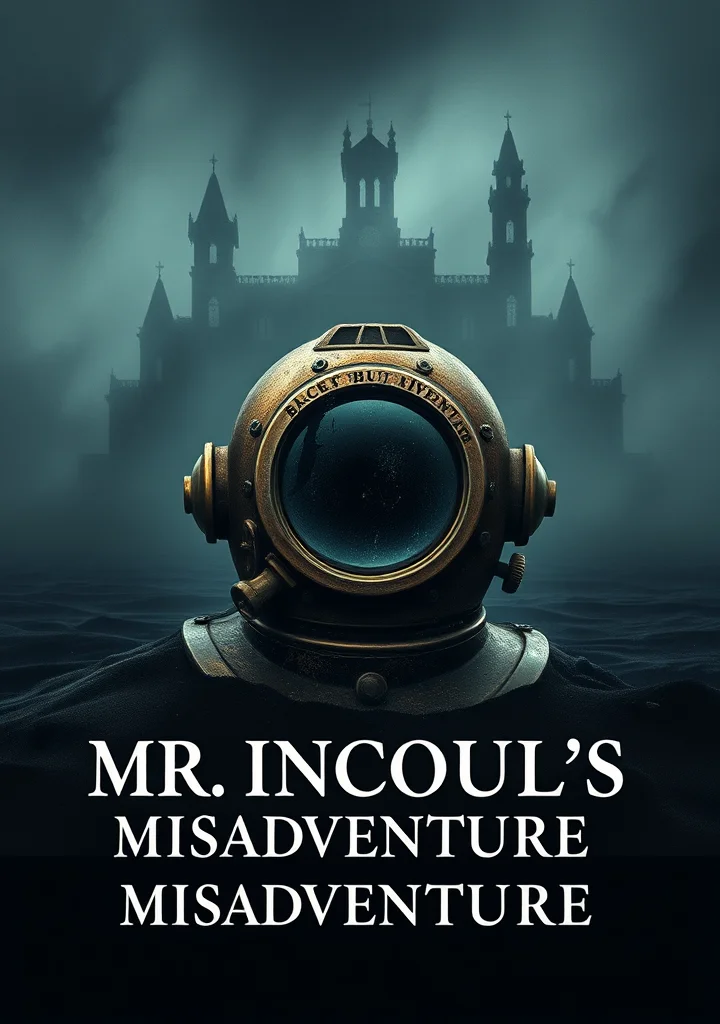

Mr. Incoul’s Misadventure
  • 114
  • 0
  • 22
  • Reads 114
  • 0
  • Part 22
Completed, First published Mar 02, 2026

The salt-laced air of the Northumbrian coast clings to every page, thick as the fog that coils around the crumbling manor of Blackwood Hall. Edgar Saltus weaves a tale of shadowed inheritances and a man unravelled by his own morbid curiosity. Mr. Incoul, a collector of forgotten ephemera, stumbles upon a legacy not of wealth, but of creeping dread—a lineage bound to the sea’s cold embrace and the whispers within Blackwood’s decaying walls. Each chapter descends further into the labyrinthine history of the Incoul family, unveiling portraits whose eyes follow you through darkened hallways and journals filled with the ravings of a mind fractured by solitude. The narrative breathes with the damp rot of ancient stone and the echoing cries of gulls circling above the storm-battered cliffs. A suffocating sense of isolation permeates the story, mirrored in the desolate landscapes and the decaying elegance of the manor itself. Incoul's investigation is not merely a search for the past, but a slow immersion into a madness that clings to the very timbers of Blackwood Hall. The further he delves, the more the line between observer and observed blurs, until the reader, like Incoul, finds themselves adrift in a sea of spectral whispers and the chilling weight of a history best left undisturbed. The story doesn't offer escape, but a descent – a haunting unraveling of sanity within a landscape steeped in the scent of brine and decay.
Copyright: Public Domain
This license allows anyone to use your story for any purpose, including printing, selling, or adapting it into a film freely.
Recommended for you
30 Part
A creeping fog clings to the shattered remnants of empires, mirroring the ruinous calculations etched into every treaty line. This is not a history of battles won, but of debts accrued, of futures bartered away in gilded salons and shadowed counting houses. The air hangs thick with the scent of ash and regret, a chill seeping from the very stone of Versailles. Each paragraph feels like a slow excavation of a buried grief, uncovering the rot beneath the veneer of restoration. The narrative doesn't explode with violence, but unravels in the quiet decay of promises broken. It’s a story told in ledger books and whispered anxieties, a creeping dread that settles not in grand catacombs, but in the hollowed-out eyes of merchants and the tightening grip of creditors. A suffocating weight presses down, not of armies, but of unrealized loans and the spectral hunger of nations left to starve on the bones of their pride. The prose itself is a labyrinth of clauses and caveats, mirroring the intricate, suffocating web of obligations woven after the war. It's a world lit by the flickering gaslight of statistical tables, where every decimal point feels like a nail hammered into the coffin of stability. A subtle, pervasive despair permeates the text, the sense that even in the meticulous charting of consequence, the abyss stares back, indifferent to the logic of man. The true horror isn't found in the carnage of the guns, but in the cold, elegant precision with which hope is systematically dismantled, and the silence that follows.
23 Part
Dust motes dance in the long shadows of the schoolhouse, clinging to the chill stone walls where generations of boys have scraped their futures onto the rough-hewn desks. This is not a tale of grand horrors, but of a creeping dread found in the hollow spaces between loyalty and betrayal, the weight of tradition pressing down like a tombstone. Young Tom Brown enters this world, raw and untamed, and is slowly, inexorably, broken down and reshaped by the brutal currents of school life. It’s a darkness born not of malice, but of indifference—the casual cruelty of boys desperate to prove their dominance, the stifling conformity demanded by an unyielding system. The echoing hallways become a labyrinth of whispers and shoves, a constant negotiation of power where a single misstep can mean weeks of torment. Fog hangs heavy in the yards, obscuring the faces of those who haunt Tom's waking hours, their actions unseen yet felt in the tightening of chests and the tremor of hands. The narrative unfolds like a slow, agonizing bleed, the innocence of youth curdling into a grim acceptance of the inevitable—a descent into a shared, silent complicity born of necessity and fear. It is a world where the true monsters are not found in the shadows, but in the very hearts of the boys who forge their manhood within these unforgiving walls. The scent of damp wool and old wood clings to the pages, a testament to the enduring chill of those days.
16 Part
A creeping dread clings to the Yorkshire moors, mirroring the decay within Ravensthorpe Manor. The estate, a skeletal silhouette against perpetual twilight, holds a silence thicker than the November fog—a silence punctuated only by the frantic whispers of servants and the brittle coughs of its ailing master, Sir Alistair. He is a man haunted by shadows, both real and imagined, obsessed with uncovering a family curse tied to a missing heir and a portrait whose eyes seem to follow every movement. The narrative unfolds through fragmented diary entries and feverish accounts from those trapped within Ravensthorpe’s stone embrace. Each revelation unravels not a solution, but another layer of suffocating grief and ancestral guilt. The scent of damp earth and dying roses permeates every room, clinging to the velvet drapes and tarnished silver. A suffocating claustrophobia settles over the reader as the investigation descends into a labyrinth of secret passages, forgotten crypts, and the chilling echoes of past tragedies. The manor itself is a character, breathing with a malevolent history. Rain lashes against the leaded windows, mirroring the tempest brewing within the hearts of those who dare to seek the truth. But the truth, when it finally surfaces, is not a grand revelation, but a splintering of sanity, a descent into the madness that has always festered within Ravensthorpe’s walls. It is a tragedy not merely witnessed, but inhaled—a slow, insidious poisoning of the soul.
47 Part
A creeping dread clings to the shadowed halls of Ashworth Manor, where the legacy of Silas Blackwood, a man rumored to have made pacts with something ancient and hungry, festers in the very stones. The air hangs thick with the scent of decay and forgotten sin, mirroring the rot within the Blackwood family itself. A suffocating inheritance binds young Arthur to a lineage steeped in whispered accusations of devilry, and the manor’s sprawling, overgrown grounds seem to pulse with a life both alluring and menacing. Every antique mirror reflects not faces, but fleeting glimpses of something *other*, and the relentless drumming of rain against the leaded windows feels less like weather and more like a desperate plea for release. The novel unravels with a slow, agonizing unraveling of sanity, the narrative choked by claustrophobic interiors and the oppressive weight of a past that refuses to stay buried. A creeping paranoia descends, blurring the line between the living and the dead, as Arthur discovers his inheritance is not merely land and title, but a monstrous legacy etched into his very blood. The narrative unfolds like a fever dream, punctuated by stolen glances at shadowed figures, the scent of damp earth clinging to every breath, and a chilling sense that something malevolent stalks the corridors, always just beyond the periphery of vision. A suffocating dread permeates every page, where the true horror lies not in what is seen, but in what is *felt* - the suffocating presence of a darkness that has waited centuries to claim its due.