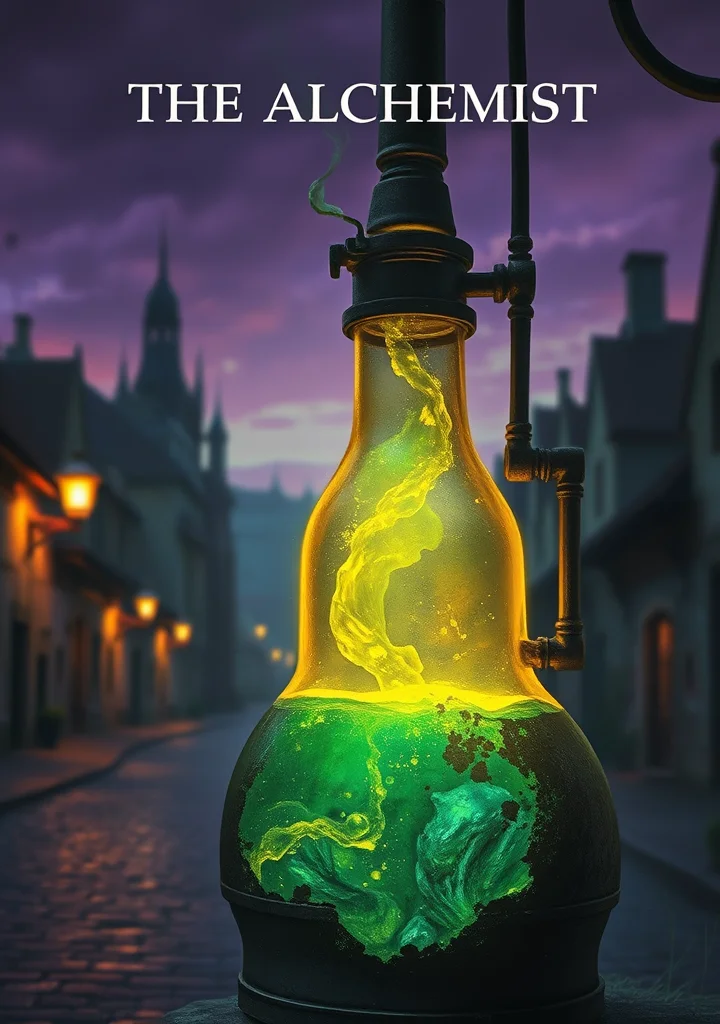

The Alchemist
  • 102
  • 0
  • 22
  • Reads 102
  • 0
  • Part 22
Completed, First published Mar 02, 2026

A creeping dread clings to the cobbled streets of Prague, where shadows stretch long from the spired rooftops and the air tastes of sulfur and regret. Jonson’s *The Alchemist* isn’t merely a tale of transmutation, but a descent into a suffocating labyrinth of obsession. Within a decaying, rented house, a feverish concoction of false promises and desperate men brews – not gold, but a virulent contagion of greed. The rooms themselves seem to breathe with a sickly, yellow light, reflecting off tarnished instruments and the fever-glazed eyes of those lured by whispers of fortune. Each transaction feels less a bargain and more a forfeiture of the soul, sealed with counterfeit coin and choked with the dust of broken hopes. A suffocating claustrophobia descends as the charlatan’s web tightens, trapping victims in a macabre dance with their own avarice. The scent of burnt herbs and simmering deceit lingers long after the final, hollow laugh echoes through the darkened halls, leaving only the bitter residue of ruined lives and the cold, metallic tang of failure. The city itself is a tomb, breathing with the secrets of those who sought to cheat fate – and found only oblivion.
Copyright: Public Domain
This license allows anyone to use your story for any purpose, including printing, selling, or adapting it into a film freely.
Recommended for you
17 Part
The crumbling grandeur of Old Chicago bleeds into the shadowed alleys where ghosts of ambition and regret cling to brick and steel. Leiber’s Big Time isn’t a future of chrome and efficiency, but a slow rot of decay masking a desperate, fractured empire. The air hangs thick with the metallic tang of ozone and the phantom scent of long-dead gods. Every shadowed doorway promises a bargain struck with entities older than humanity, deals paid for in stolen years and fractured sanity. This isn't about conquest, but about scavenging for scraps of power in a landscape where the lines between reality and illusion blur with each passing hour. The city itself is a wound, pulsing with the fever dreams of those who clawed their way to the top, only to find the view from the penthouse a desolate vista of echoing emptiness. The narrative unfolds in a twilight of collapsing timelines and borrowed lives, where identities are traded like trinkets and the cost of immortality is measured in lost souls. The narrative breathes with a suffocating claustrophobia, the weight of the city pressing down, threatening to swallow its inhabitants whole. It’s a world where every victory is tainted by loss, every alliance forged in treachery, and the only certainty is the creeping dread of something ancient and hungry stirring in the ruins. The shadows don’t just hide monsters; they *are* the monsters, woven into the very fabric of this decaying, timeless metropolis.
55 Part
A London of perpetual twilight clings to the aging Mr. Edwin Rycroft, a retired draper suffocating in the dust of inherited wealth and encroaching loneliness. The steps themselves – narrow, brick-worn, descending into a warren of forgotten streets near Cheapside – become a morbid obsession, a physical manifestation of Rycroft’s descent into a melancholic delirium. Each echoing footfall upon those stairs isn’t merely a movement towards a pawnshop, but a surrender to the insidious creep of obsolescence. The narrative breathes with the chill of damp stone, the scent of mildewed ledgers, and the suffocating silence of rooms choked with antique clocks. A spectral quietude hangs over the city, punctuated by the rhythmic tick of time bleeding away Rycroft’s life. The pawnshop’s proprietor, a man shrouded in shadow and rumour, becomes a grim confessor, witnessing the slow disintegration of Rycroft's fortune and spirit. A creeping dread permeates the prose, born not of overt horror, but of the stifling weight of respectability and the gnawing fear of being forgotten. The city itself is a labyrinth of shadows, mirroring Rycroft’s fractured mind. The novel doesn’t offer grand horrors, but a slow erosion of hope, a chilling recognition of the emptiness at the heart of a life spent accumulating possessions, all shadowed by the ominous promise of the steps leading downwards, ever downwards, into the suffocating darkness of oblivion. It is a world built of grey light and the rustle of unseen things, where the past isn’t merely remembered, but actively decays around you.
35 Part
A creeping fog clings to the shadowed halls of intention, where the architecture of self is both built and dismantled by the relentless tide of experience. This is not a tale of monsters under the bed, but of the monstrous potential *within* the very marrow of becoming. Each chapter unfolds like a slow dissection of the will, revealing the damp, echoing chambers of habit and impulse. The narrative breathes with the chill of observation—a clinical study rendered in shades of gray, where the boundaries between observer and observed blur into a suffocating unity. There’s a pervasive dampness here, not of rain, but of the unacknowledged desires that bloom in the darkness of the psyche. The characters are less figures of flesh and blood than specimens pinned under glass, their struggles for autonomy shadowed by the inevitability of constraint. A sense of claustrophobia doesn't stem from physical confinement, but from the suffocating weight of expectation, the unseen pressures that mold the human form. The atmosphere is one of decaying idealism, a slow erosion of principle under the acid rain of consequence. One feels the weight of accumulated choices, the ghostly fingerprints of past selves clinging to every action. It’s a study of how easily the noble edifice of the mind can be undermined by the shifting sands of circumstance, leaving behind only the hollow shell of what *should* have been. The silence here is not peaceful, but pregnant with the unspoken justifications for every compromise, every surrender. A cold, sterile light illuminates the wreckage of unfulfilled potential.

12 Part
A suffocating dread clings to the steel decks and shadowed machinery of a transatlantic liner, where the brute force of labor grinds against a creeping, animalistic despair. The air itself is thick with coal dust and the greasy tang of engine rooms, mirroring the primal urges stirring within the hulking, ape-like figure of Paddy Donovan. He’s a man reduced to muscle and instinct, a creature of the hold, yet haunted by a phantom touch, a fleeting glimpse of something *other* than grime and iron. The narrative descends into a feverish, claustrophobic descent through the ship’s bowels—a world of flickering gaslight and the rhythmic throb of pistons, echoing the frantic beat of a caged heart. Donovan’s desperate attempts to connect, to *feel* something beyond the metallic clang of his existence, twist into a grotesque parody of yearning. The city above, glimpsed through grates and hatches, becomes a mocking reflection of a humanity he can no longer grasp. He is drawn to the grotesque carnival of the docks, to the desperate, predatory gazes of those who’ve lost their footing in the mire. The narrative bleeds into a brutal, fractured landscape of waterfront dives and shadowy alleys—a world where the ape’s rage finds a chilling resonance in the distorted cries of street preachers and the hollow laughter of the dispossessed. It is a slow, agonizing unraveling, a descent into a feral howl that echoes not with human protest, but with the guttural loneliness of a beast trapped in the ruins of its own making. The final, echoing space is one of concrete and cold, the raw, exposed nerve of a fractured soul finding its final, devastating release.
32 Part
Dust motes dance in perpetual twilight within the crumbling manor of Blackwood, a shadow clinging to the Yorkshire moors. Old Man Hemlock, a recluse haunted by whispers of forgotten sins, claims the earth itself has shuddered – not from earthquake or war, but from a grief so ancient it cracks the very foundations of reality. The tremors coincide with the arrival of young Alistair, a scholar driven by feverish ambition to unearth Blackwood’s lineage. He finds not history, but echoes – a lineage stained by ritual, by bargains struck with something cold and vast beneath the peat bogs. The air thickens with the scent of damp earth and decaying roses, each room a sepulchre echoing with the laughter of children long dead. Alistair’s investigations are shadowed by the silent, watchful housekeeper, a woman whose face is etched with a sorrow that predates the manor itself. As the world *does* shake – subtly, sickeningly – a creeping dread seizes the village. Livestock vanish, shadows lengthen beyond reason, and the villagers speak of a stone circle awakened by Hemlock’s lamentations. The truth, when it surfaces, is less a revelation than an unraveling. Blackwood isn’t merely built upon ancient ground; it *is* the wound in the world, a place where the veil thins and the hunger of the old gods stirs. The tremors aren’t the earth’s agony, but the pulse of something vast and terrible rising from the depths, demanding to be remembered, to be *felt* once more. Alistair, caught in its orbit, must choose between oblivion and becoming another stone in the edifice of its dreadful, silent reign.
12 Part
A fever dream stitched from memory and the shadowed corners of the mind. This is not a tale of simple addiction, but a descent into a labyrinth of spectral gardens and opium-hued reveries. The prose itself breathes with a melancholic cadence, mirroring the author's fractured recollections. London fog clings to every sentence, obscuring the boundaries between waking and dreaming. Here, the weight of sorrow is not merely felt, but *seen* – vast, ruined castles built from regret loom in the distance, their spires piercing a sky perpetually stained with twilight. The narrative unravels like a silk shroud, revealing a childhood both idyllic and haunted. Each chapter is a fragment of a shattered looking-glass, reflecting distorted images of lost innocence and the corrosive power of secret desires. There's a pervasive sense of isolation, a man adrift in a sea of his own making, his memories both solace and torment. Expect not a linear progression, but a spiraling vortex of sensation, where the mundane becomes monstrous and the ethereal feels terrifyingly real. The author’s confessions are less about the drug itself, and more about the landscapes it unlocks – landscapes populated by phantom mothers, shimmering Arabian visions, and the insidious whisper of a soul consumed by longing. This is a book to be read by candlelight, with the windows shuttered, and a heart braced for the cold touch of remembrance. It is a descent into the architecture of grief, rendered in the shimmering, hallucinatory light of opium’s embrace.