
The Monk
  • 117
  • 0
  • 18
  • Reads 117
  • 0
  • Part 18
Completed, First published Mar 02, 2026

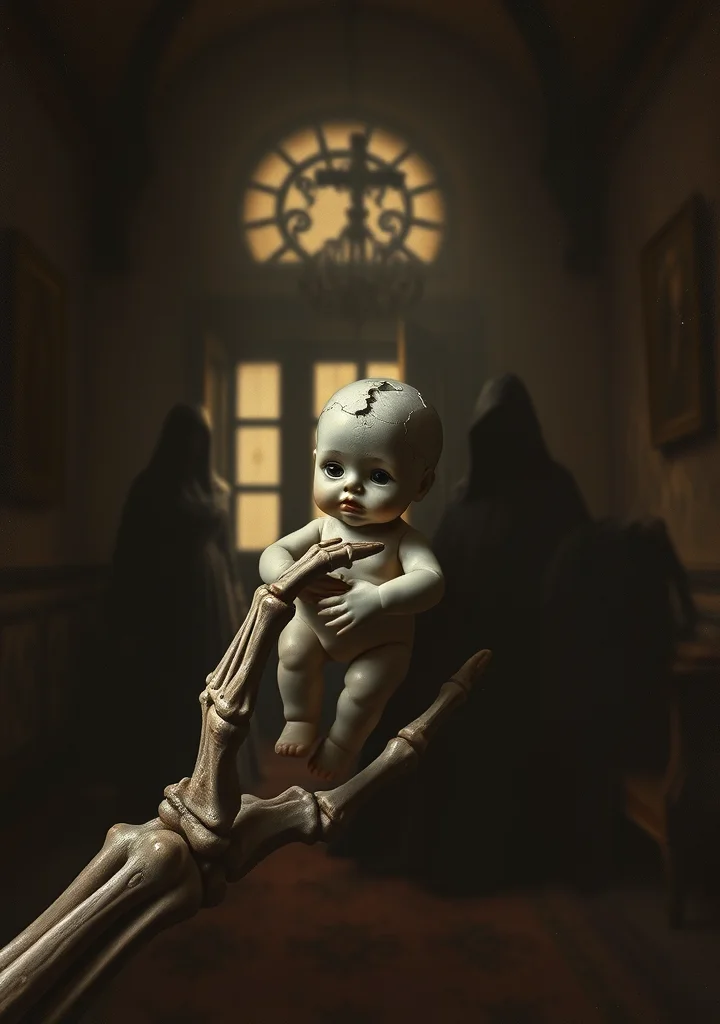
A suffocating dread clings to the crumbling stone of ancient convents and shadowed castles. Here, ambition festers alongside heresy, twisting a young monk’s soul into a labyrinth of forbidden desires. The air hangs thick with incense and the rot of decaying virtue, mirroring the corruption blossoming within Lorenzo’s heart. Whispers of demonic pacts and spectral visitations weave through labyrinthine corridors, fueled by a lust for power and a desperate chase for the unattainable. Every shadowed alcove seems to breathe with the ghosts of past transgressions, mirroring Lorenzo’s descent into depravity. The narrative coils like a viper, revealing not merely sin, but the grotesque blossoming of it—a chilling testament to ambition’s ravenous appetite. Expect a suffocating atmosphere where piety is a brittle façade concealing unspeakable acts, and where the boundaries between the sacred and profane blur into a horrifying unity. The world is painted in shades of decaying grandeur, haunted by the spectral remnants of a faith devoured by darkness. The very architecture seems to conspire against innocence, trapping its victims within a suffocating embrace of vice and despair. It’s a world where the scent of jasmine and decay mingle, and where every act of defiance leaves a stain upon the soul—a stain that will not wash away.
Copyright: Public Domain
This license allows anyone to use your story for any purpose, including printing, selling, or adapting it into a film freely.
Recommended for you
49 Part
A suffocating mist clings to Lost Man’s Lane, a ribbon of shadowed dirt winding through the decaying grandeur of the Van Alstyne estate. The air hangs thick with the scent of damp earth and forgotten things – a perfume of regret and lingering dread. Here, amidst crumbling stone and overgrown ivy, a disappearance unravels not as a simple vanishing, but as a slow erosion of truth. The narrative unfolds in fragments, whispers overheard through warped floorboards and shadowed windows. Each encounter feels weighted with unspoken accusations, the very stones of the Van Alstyne manor seeming to observe with silent judgment. A claustrophobic sense of confinement pervades; not just of place, but of circumstance. The characters move like moths drawn to a flickering flame, each harboring secrets within their shadowed hearts. The Lane itself seems to breathe, exhaling fragments of the past, twisting the present into a macabre echo of former lives. The narrative is less a straightforward investigation and more a descent into a labyrinth of inherited despair, where the boundaries between victim and perpetrator blur in the gathering gloom. Every rustle of leaves, every creak of a weathered door, promises a revelation steeped in the rot of family legacy and the chilling weight of what remains unsaid. A sense of inescapable finality permeates the atmosphere, suggesting that some losses leave not only a void, but a haunting claim upon those left behind.
30 Part
A creeping fog clings to the shattered remnants of empires, mirroring the ruinous calculations etched into every treaty line. This is not a history of battles won, but of debts accrued, of futures bartered away in gilded salons and shadowed counting houses. The air hangs thick with the scent of ash and regret, a chill seeping from the very stone of Versailles. Each paragraph feels like a slow excavation of a buried grief, uncovering the rot beneath the veneer of restoration. The narrative doesn't explode with violence, but unravels in the quiet decay of promises broken. It’s a story told in ledger books and whispered anxieties, a creeping dread that settles not in grand catacombs, but in the hollowed-out eyes of merchants and the tightening grip of creditors. A suffocating weight presses down, not of armies, but of unrealized loans and the spectral hunger of nations left to starve on the bones of their pride. The prose itself is a labyrinth of clauses and caveats, mirroring the intricate, suffocating web of obligations woven after the war. It's a world lit by the flickering gaslight of statistical tables, where every decimal point feels like a nail hammered into the coffin of stability. A subtle, pervasive despair permeates the text, the sense that even in the meticulous charting of consequence, the abyss stares back, indifferent to the logic of man. The true horror isn't found in the carnage of the guns, but in the cold, elegant precision with which hope is systematically dismantled, and the silence that follows.
21 Part
From shadowed fjords and ice-haunted coasts rises a tale of kings and sorcery steeped in the ancient North. Eddison’s *Styrbiorn the Strong* breathes with the chill of forgotten gods and the clang of steel on frost-rimed shields. A land gripped by the creeping dread of the Nerathi—a race of spectral warriors born from the blackest winters—awaits a champion. Styrbiorn, a giant of a man, forged in the crucible of brutal winters and haunted by ancestral echoes, is that answer. But this is not a simple saga of heroism. The very stones of the North weep with the weight of a dying age, and Eddison’s prose weaves a tapestry of decaying grandeur. Palaces crumble beneath the weight of encroaching ice, while the halls of kings echo with the whispers of ambition and betrayal. A creeping darkness seeps from the desolate bogs, a sickness of the soul mirroring the decay of the land. The air is thick with the scent of brine, woodsmoke, and something older—something woven from the runes carved into glacial ice. Each clash of arms, each whispered curse, feels etched in the very bedrock of the world. *Styrbiorn* is a descent into a twilight world where honor is measured in blood and shadows hold the keys to both salvation and oblivion. It is a world where the line between the living and the dead is blurred by the perpetual twilight of the North, and where even victory tastes of ash and regret. A slow, deliberate unraveling of light, consumed by the encroaching darkness.
21 Part
A creeping dread clings to the salt-laced shores of Varick Isle, where the crumbling manor of its namesake stands sentinel against a perpetual grey sky. The story unfolds not as a linear descent, but as a slow unraveling—a tapestry of whispered confessions unearthed in brine-soaked journals and the fevered ramblings of those who dared to seek Varick’s secrets. Saltus paints a world steeped in maritime rot and the suffocating weight of ancestral guilt. Each chapter feels like a chipped fragment of a drowned memory, revealing glimpses of a man consumed by his own meticulous, morbid obsession with charting the currents of madness. The narrative breathes with the damp chill of forgotten crypts, where shadows twist into the shapes of Varick’s monstrous creations—not of flesh and bone, but of painstakingly transcribed nightmares. A suffocating claustrophobia permeates the text, mirroring the labyrinthine passages of the manor itself. The air is thick with the scent of decaying parchment and the metallic tang of blood, both real and imagined. The truth, as it surfaces, is less a revelation than a contagion—a spreading stain of corruption that seeps into the reader's mind, blurring the line between the rational and the grotesque. It is a story of inheritance not of wealth, but of decay, a descent into a watery grave where the boundaries of sanity dissolve into the churning depths. One finds oneself not merely reading of Varick’s madness, but *experiencing* it, drawn into its suffocating vortex, haunted by the echoes of its mournful cries carried on the wind.